Video marketing is no longer something to 'dabble in' if there are extra resources available. It is essential for businesses, both small and large, across all industries to have video marketing as part of their overall digital marketing strategy because consumers are engaging video more than ever
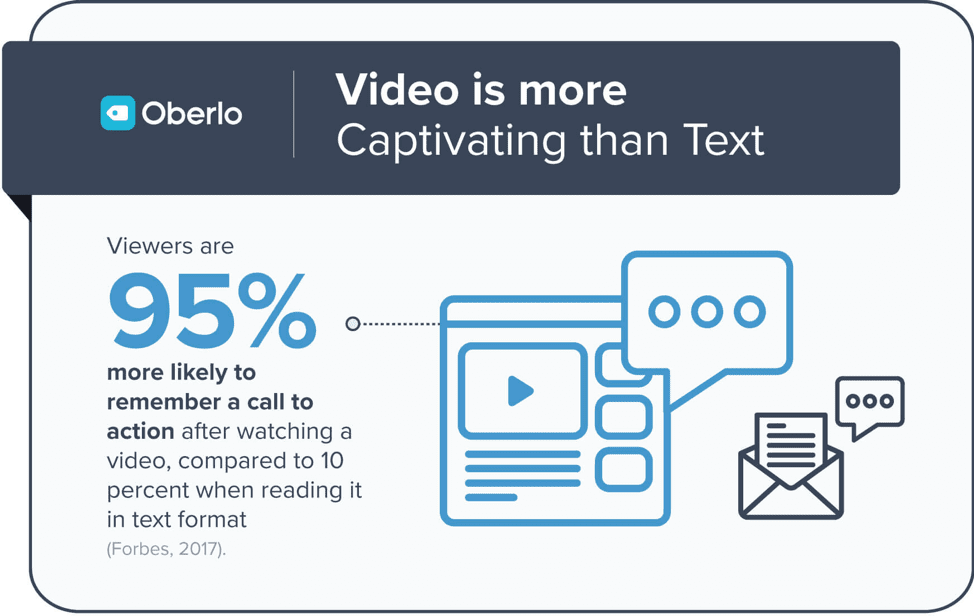
Video consumption is on an upward trend and savvy brands have been incorporating video into their marketing strategy. In a recent study, Hubspot reported that 80% of users were able to recall a video ad that they viewed in the past 30 days. If this data excites you, it should! But there is more to video marketing than recording footage and uploading it to the Internet.
To help you maximize your video marketing ROI, check that you’re not making any of the following video marketing mistakes.
Download our Individual Member Resource – Video and YouTube marketing guide
Our guide shows you how to review the full opportunities from video marketing whether you are a company looking to integrate video marketing more into your campaigns or a marketing agency looking to improve your video marketing services.
Access the
1. Ignoring video altogether
If your brand has not embraced video marketing, here are a few sobering statistics. In a recent white paper, Cisco predicts that 82% of all consumer web traffic by 2020 will be video-based.
This reflects a Facebook executive’s claim that Facebook "will be definitely mobile, it will probably be all video" by the year 2021. On Twitter videos receive six times the engagement compared to images.
Consumers are relying on video for making purchasing decision too. According to Google, 84% of Americans are shopping for something at any given time. Nearly a quarter of shopping occasions, shoppers say they turn to their smartphone first.
Based on their own study, Hubspot found that 90% of consumers said that product videos were helpful in the decision process with 64% of users more likely to buy a product online after watching a video.
On the other side of the transaction, businesses are reporting positive wins from video marketing efforts. An earlier post on Smart Insights reported that 93% of businesses say they have gotten a new customer thanks to a video on social media.
2. Not having a clear strategy in place
Ignoring the significance of video in your marketing plan is bad enough but jumping head-first into video marketing without understanding how it aligns with your brand’s overall strategy is a recipe for disaster. Different brands and decision-makers will have their own set of goals and priorities, which you need to consider.
To get you started, here are a few things your video marketing strategy should clearly define:
What are the problems that our audience want to be solved?
What type of conversion can be attributed to each video?
Where will each video will be distributed?
How will performance be measured (and when)?
Who will be responsible for content planning, production, editing, review, and distribution?
3. Treating videos as a sales pitch (it’s also not about you)
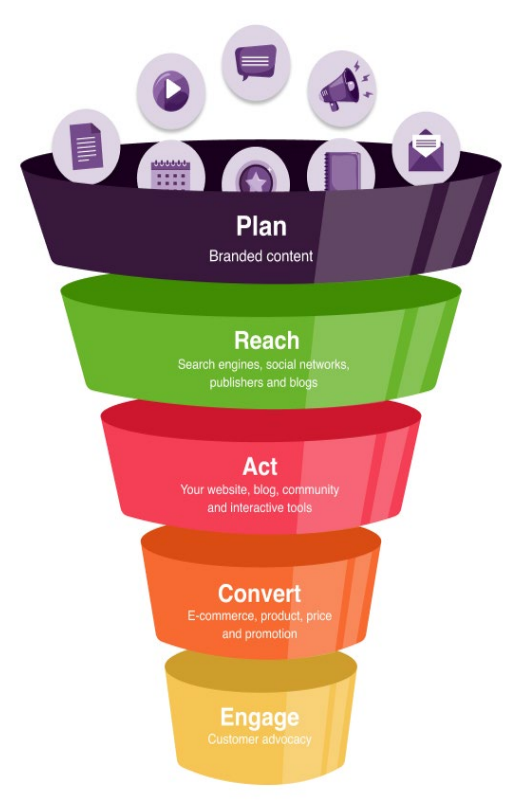
Video marketing doesn’t necessarily have to be at the top of your funnel. One of the benefits of having a well-defined video marketing strategy is that you know what the intent of each video is. By knowing your buyer personas and where they are in their buyer’s journey, each video you create will have a specific purpose and conversion metrics.
Without a clear strategy, a common mistake made by marketers is falling into the trap of selling too hard. Videos can be extremely effective in fostering engagement with your audience. According to Google, how-to videos earn the most attention of any content category on YouTube. Therefore, explainer videos, tutorials, and how-to videos that offer value are best at converting the audience into customers (or at the very least, as brand advocates).
4. Neglecting baby boomers
Millennials may be the biggest consumers of digital media but according to the AARP, baby boomers spend more per capita, across a variety of mainstream segments and are responsible for 51% of all consumer spending. Neglecting baby boomers as your target audience is another common mistake you should avoid.
Similar to other generations, baby boomers are watching TV recaps, highlights and their favourite shows on YouTube. In fact, 68% of boomers say they watch YouTube videos to be entertained. This coincides with data showing that one in three baby boomers say that they use YouTube to learn about a product or service.
5. Failing to include a call-to-action
Remember how we said that each video should have a distinct purpose? For most marketing campaigns, leads, add-to-basket, and checkouts should be the conversion metrics being measured. Therefore, each video should have its own call-to-action to help drive the desired conversion. This should be based on where the user is on their buyer’s journey.
For example, on Facebook and Instagram, you may wish to increase user interaction by asking viewers to "Join The Conversation". This call-to-action is particularly effective for controversial topics.
Another effective video marketing call-to-action is to drive users to sign up for a webinar, or to sign up for a free trial by giving them a unique code. By doing this, you can measure the conversion rate of the call-to-action.
Similarly, your video marketing strategy may be based on snackable content. According to the International News Media Association, the average adult attention span is 2.8 seconds. Therefore, bite-sized content is a great way to reinforce your brand’s voice and drive sustained traffic to your target pages.
Unfortunately, there is no silver bullet call-to-action. Even for the same video that is being posted on different platforms, the call-to-action on a 15-second Instagram feed video should be different from the call-to-action placed on a video header background. This is because each user has their own behaviour pattern on a specific platform.
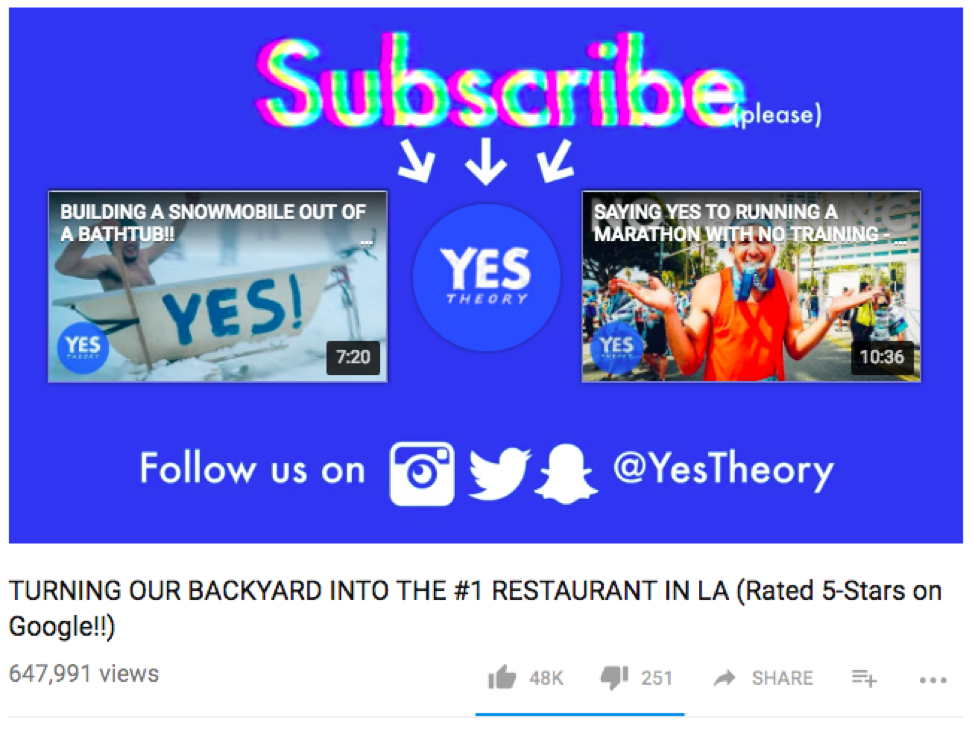
Specifically for YouTube, one of your goals should be to keep the user on your channel for as long as possible. This is because YouTube rewards video watch time with its ranking algorithm. That is, the more views a video receives, the more likely it will serve that particular video in search and related searches. The best way to improve a user on your channel is by customizing your end screens.
Many inexperienced video makers fall trap to this common mistake - prioritizing video quality over sound design. Based on a 2012 research paper, sound quality is far more important than the visual quality of a video. That is, if speech is hard to hear or background noise is too distracting, it will not matter how perfect the video footage may be - viewers will react negatively to the content.
The best way to improve the production value of your video marketing is to hire a team of professionals. In addition to professional equipment, they bring their experience into the project. If you are determined to create the videos in-house, here are a few quick tips:
Research equipment carefully: Some cameras have a cheaper price tag for a reason. The best way to determine what type of camera you will need is to know what type of content you will be filming. If the majority of your video content is interview-based talking heads, you will not need cameras that have super responsive autofocus or high ISO performance. At Shotkit, we have compiled a roundup of the best mirrorless cameras available on the market.
Invest in the best microphones that you can afford: As we mentioned earlier, sound is everything. Most microphones built-into cameras are omnidirectional. This means that they will record unwanted sound from every direction such as background noise from passing traffic and/or people.
Get the microphone as close to the subject as possible: This will ensure that you aren't missing anything they say and are picking up as little extra noise as possible.
Nobody enjoys watching shaking footage so invest in a video tripod or monopod: With smartphones capable of filming video in 4K resolution, you may not need a standalone video camera. But do consider stabilizing your footage with either a tripod or monopod. If you intend to introduce an element of movement in your videos, consider investing in a gimbal.
Practice makes perfect: Talking into a camera is difficult and requires many hours of practice. The same applies to filming video and editing it.
Remember that the value of your content is more important than the production value.
A common mistake brands can make is having KPIs that are not linked to your strategy. When it comes to video marketing, the wrong metrics are often measured. For example, the number of views and the number of social likes and shares are vanity metrics that often have little correlation to your business goals.
Wistia is more than just a place to host online videos, it comes with integrated tools to provide you with crucial analytical data. According to the platform, "videos up to two minutes long hold viewers' attention". Therefore, you can monitor how engagement drop-off occurs for each type of video you create. Similarly, video analytics will show you sections of your video that have been skipped over or replayed. Use these insights to determine what video content worked, what didn’t, and why.
8. Using a one-size-fits-all approach
Engagement drop-off differs with each platform, therefore, the length and format of each video need to be tailored for the audience and where it will be displayed. For example, videos on Instagram and IGTV have different maximum lengths. Instagram videos support videos up to 60 seconds in duration and the format of the videos may be in 1:1, 4:5, or 16:9 aspect ratio. IGTV however, supports much longer videos but the app prefers vertical 9:16 aspect ratio videos.
But just because the maximum duration of a video is 60 seconds does not mean that your video content should take up the entire 60 seconds. According to Hubspot, videos on Instagram that received the most engagement were on average 30 seconds long.
Despite decreasing attention spans, long-form content has always had a place in the funnel. It's ideal for delivering data-supported insights. A trick to retaining attention for longer videos is to alternate between camera angles. For the how-to type of video content, you can throw in screen recordings to provide hands-on learning.
9. Not providing closed captions
Closed captions (or subtitles) improve the accessibility of your video marketing efforts. If your video is targeted towards mobile users, investing the extra time in providing closed captions is essential. According to Animoto, 61% of consumers will not finish watching a video if it does not have subtitles.
This is because many users will consume video without audio enabled. On Facebook, a staggering 85% of all videos are consumed without sound. In most cases, this is because the user does not wish to disturb others around them.
Rev is a popular transcription service. However, for bootstrapped brands, did you know that you can use Google Docs to create your own transcriptions for free?
10. Thinking live video is just a fad
Users spend three times longer watching live video on Facebook than a video that’s no longer live. This is because live video is more appealing. According to a survey conducted by Livestream and New York Magazine, 800 respondents (out of 1,000) reported that they would rather watch live video from a brand than read a blog with 45% of audiences willing to pay for live video from a favourite team, speaker, or performer.
One of the biggest barriers stopping brands from embracing live video is red tape. Since live video, in essence, cannot be censored, larger brands prefer to play it safe with pre-recorded and scripted content.
For smaller brands, fear is probably the biggest barrier to adopting live video. Where pre-recorded content may be edited for mistakes, a live broadcast comes with the benefits (e.g., increased authenticity, higher engagement), as well as the disadvantages (e.g., unpredictable and off-script moments).
Getting started with live video can be as simple as using your existing smartphone. Since video quality is the most important factor for 67% of viewers when watching a live stream broadcast, handheld video recording should be avoided unless necessary. The best way to avoid shaky footage is by mounting your video camera (or smartphone) onto a tripod or gimbal.
Final thoughts
Since the introduction of smartphones and faster mobile connectivity, the customer journey has greatly evolved and skewed towards video content consumption. Before jumping into video marketing, brands must take a step back and revisit their overall strategy. Video content definitely has a role to play but it requires time, planning, patience and a lot of testing (read: failures). However, when video marketing understands what users want, it can improve engagement, increase traffic, and bring in new customers.
Daniel Cheung is a self-taught wedding film-maker and photographer who writes for Shotkit - an online resource for photographers to learn, be inspired, and grow their business. You’ll find Daniel reading up on management and marketing news when he is not at work. Coffee is life.
By Expert commentator
This is a post we've invited from a digital marketing specialist who has agreed to share their expertise, opinions and case studies. Their details are given at the end of the article.
Strengthen your strategy with RACE-powered templates, frameworks and planning tools designed to help you review performance, identify improvements and build a more effective marketing approach.