Google is transforming from a search engine to an answer engine, which you should use to shape your SEO strategy for the year ahead
These days we are witnessing the biggest evolution of Google as we know it. Google is transforming from a search engine to an answer engine.
That evolution is bringing new challenges to online publishers and businesses changing our marketing priorities and goals.
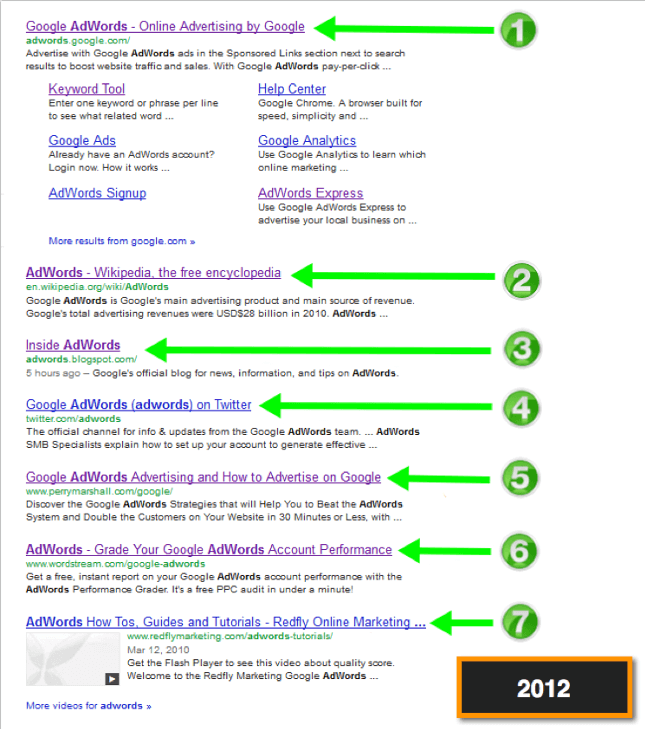
We went from this:
to this:
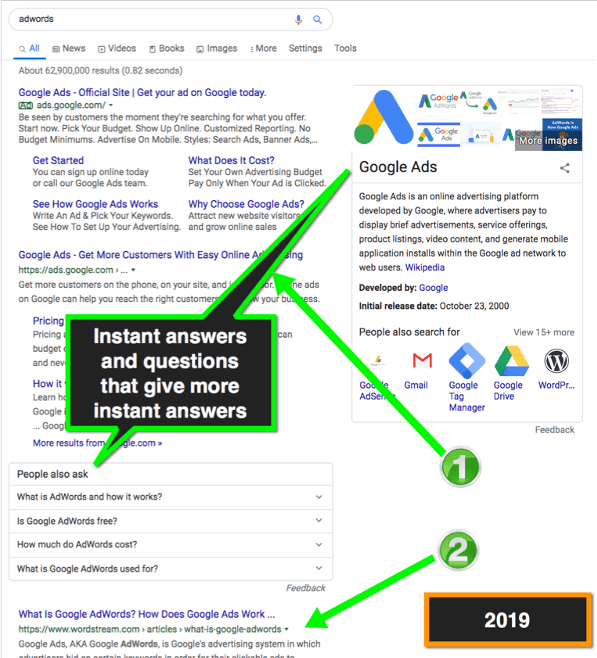
in a matter of seven years.
As you can see, there are fewer organic results and more answers in the above-the-fold part of search engine result page.

Google is the answer engine
Google is planning to become the ultimate answer engine and we find the evidence of that in its recent patents, including:
"Users of search systems are often searching for an answer to a specific question, rather than a listing of resources… When queries that are in the form of a question are received, some search engines may perform specialized search operations in response to the question format of the query. For example, some search engines may provide information responsive to such queries in the form of an "answer," such as information provided in the form of a "one box" to a question."
The big takeaway here (before we go into more practical tips), is that Google’s goal to become an ultimate answering machine that is able to consolidate multiple sources and document types to give the best answers.
But the main point here is that Google cannot do that on its own: it needs us, web publishers that provide the context. So organic visibility is still very real: Google needs web pages and will still reference them inside its smart search elements.
So basically our job as web publishers is to give Google the best answers we can i.e. make Google’s job finding answers easier. In return, Google will put us into the spotlight.
Optimizing for answers
Research niche questions
Google will strive to answer all sorts of queries, not necessarily question-type queries. With voice search and conversational commerce becoming the biggest trends of this new decade, optimizing for answers gives you more than organic visibility. It’s also a great way to better understand your target customers and better serve them.
Researching niche questions will help you get a deeper understanding of what to focus your content on and how to optimize it for question answering.
I have written a detailed article on question research here. Specifically, your first tool is Google itself. By simply searching Google you can get a good idea of questions your customers are asking online and the patterns you can emulate in your copy:
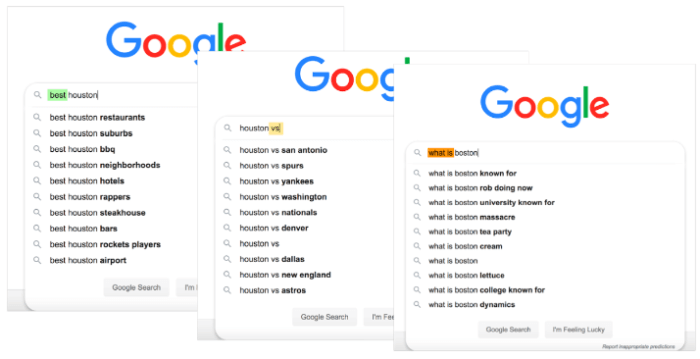
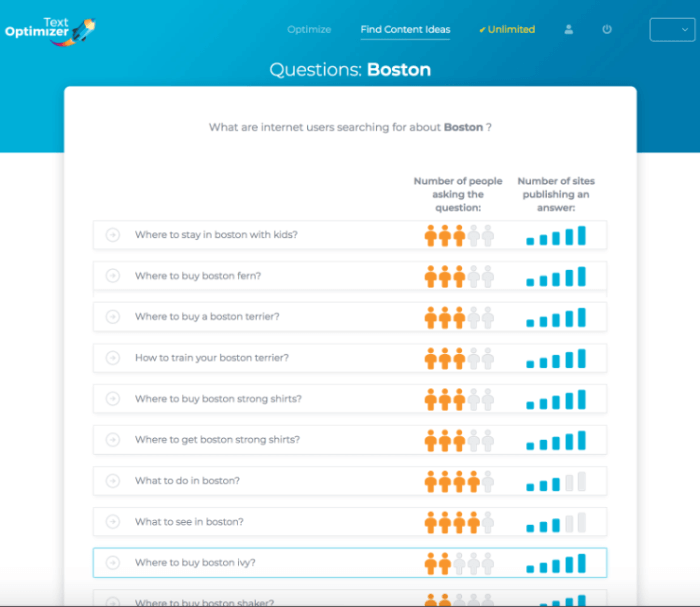
You can also use tools like Text Optimizer to better understand your niche and question-type queries.
Structure content with H2/H3 headings
Beyond actually giving our best creating content that answers all kinds of niche questions, the most important step here is to structure your content the way Google can easily understand it.
Google is still a machine, so it needs a clear understandable document structure to be able to extract answers.
On top of everything else, every page needs to have a clear heading structure that reflects key points that are being covered. How to create a clear consistent heading structure?
Download our Individual Member Resource – SEO report template
This SEO report template created in PowerPoint gives you a simple structure to follow when conducting your own monthly review of a site's SEO performance.
Access the SEO report template
Come up with the best answer format(s)
Think of the answer format that would answer each query in the best possible way (and also easily fit into a sentence or two for Google to be able to feature it).
Let’s take a look at a few examples…
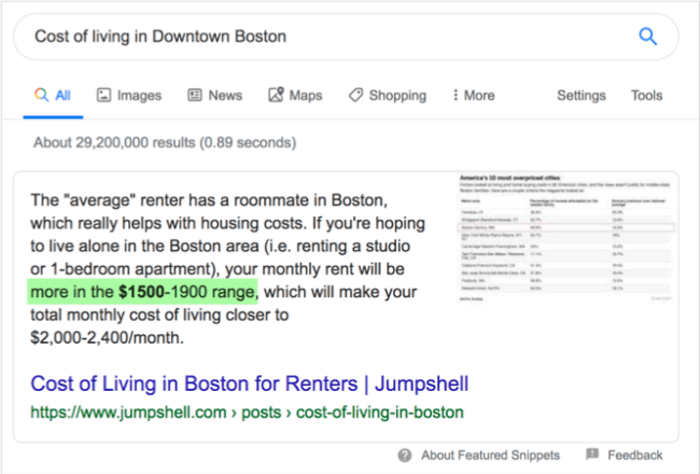
Price-driven queries
For cost-related queries, the best strategy is to simplify an answer and clearly state a numeric answer (even if it’s an estimate):
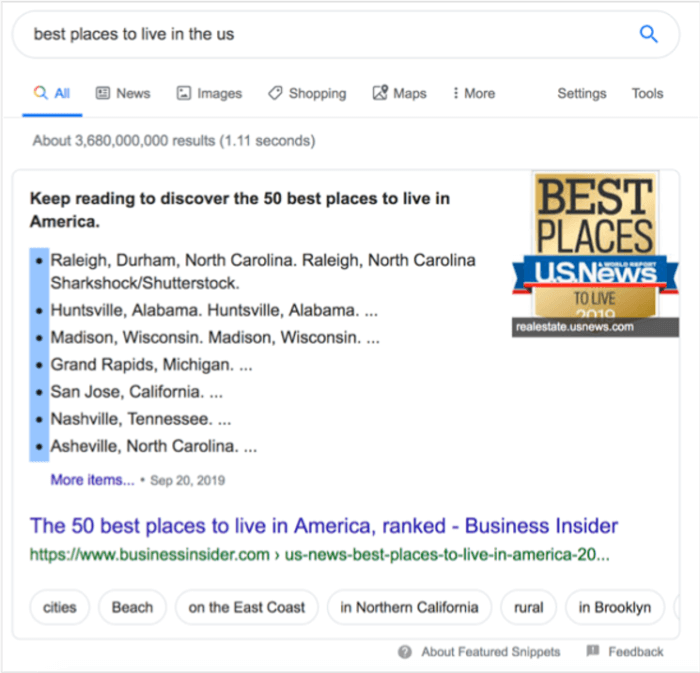
List-driven queries
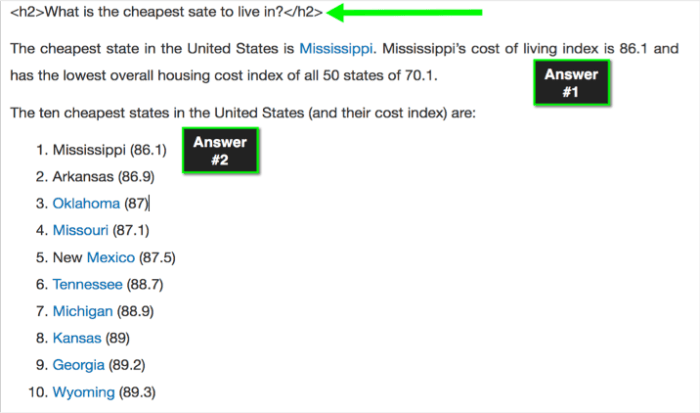
If the search query calls for an enumeration, create a bullet-point or numbered list:
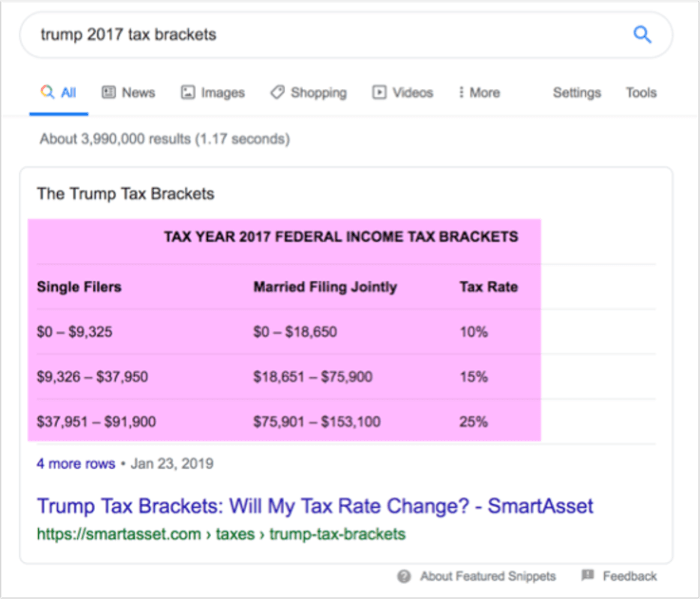
Data-driven queries
If there’s a lot of data to give, create a table. Here’s a great resource walking you through creating beautiful tables to summarize large amounts of data:
Give different answers
There’s no ONE answer here, as you cannot always guess what Google will deem best fitting to the query.
So combine all sorts of formats to give several answers to one possible question.
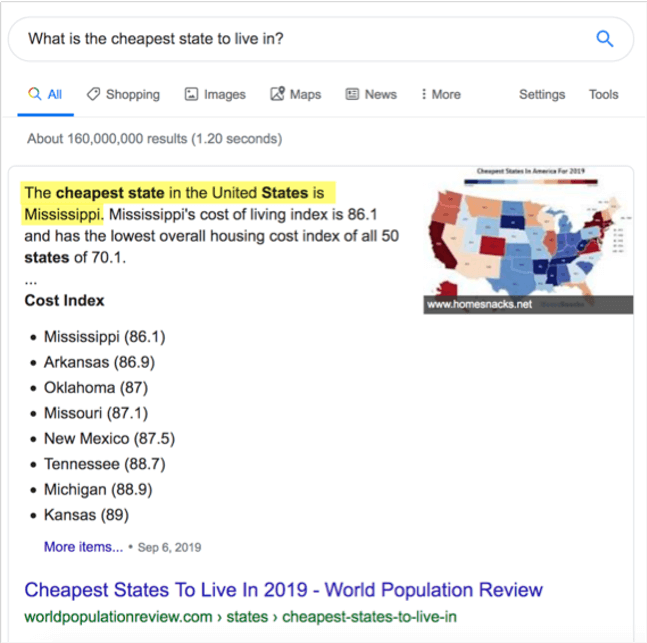
Here’s the featured snippet that is being triggered by the above answer. As you can see it also combines both of the answer types (text and list):
Utilize video content
Google tends to generously feature videos, especially if the video seems to be the best way to answer this specific query:
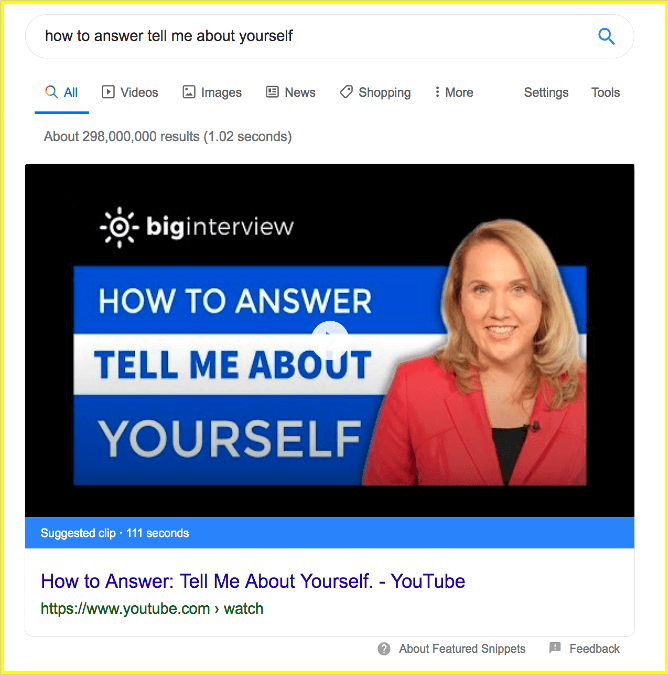
So creating a video version of your content is a good way to increase your chances to get featured and build additional organic visibility.
Tools like InVideo make the job much easier, as you can copy-paste your text content and the tool will create a video automatically.
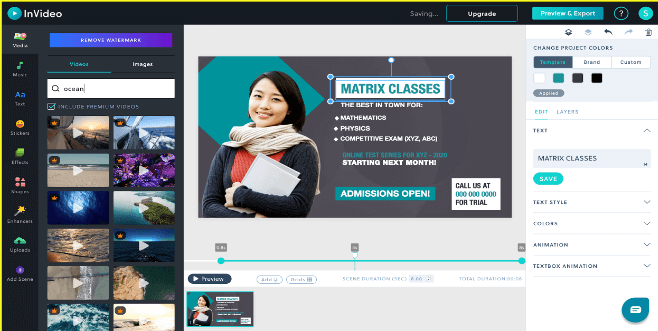
- Copy-paste up to 50 sentences of content (These will be your video subtitles).
- Select a template and an audio.
- Optionally, upload your own images.
It’s an easy way to diversify your content formats addressing various informational search queries.
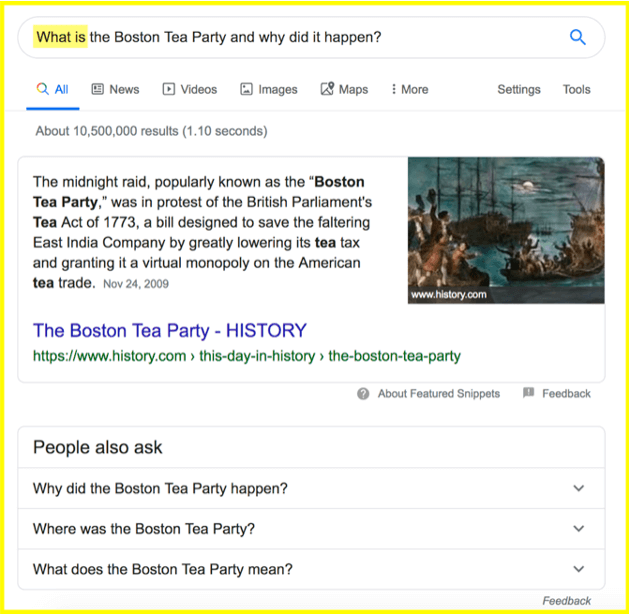
Provide definitions
Get into a good habit of giving definitions (even if you assume your reader knows what it is about).
Any time you discuss any concept, create a h2/h3 “What is...” subheading explaining it in a sentence or two:
Always create summaries and takeaways
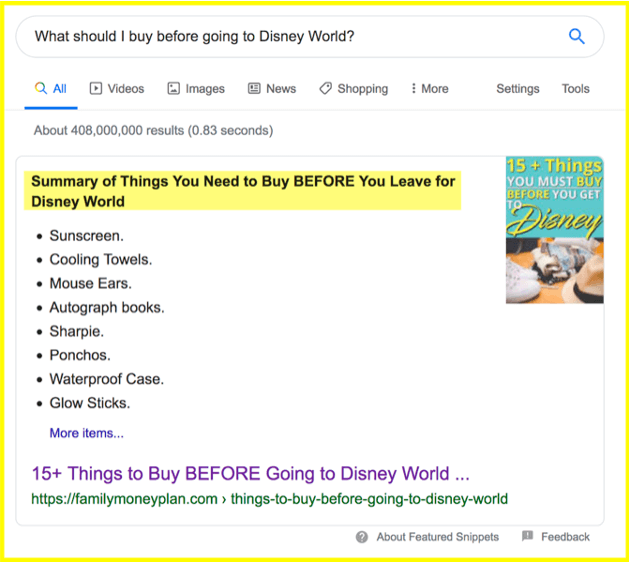
Whatever it is your page is about, always close with the optimized subheading summarizing steps, types, specs, key differences, etc.

It makes it so much easier for Google to find a clear concise answer.
Conclusion
Clearly answer optimization is about giving the best answers you can. It is also about pointing Google exactly to where you answered each query.
On the bright side, answer optimization has many benefits beyond being featured in Google:
- The more niche questions you answer, the more diverse rankings you will be able to build.
- The more useful answers you provide on your site, the more people will bookmark, share and link to it.
- The better you structure your content, the more people will be able to read and understand it.
Answer research and optimization is the future of SEO! Are you ready?
Ann Smarty is the Brand Manager at
InternetMarketingNinjas.com as well as the founder of Viral Content Bee. Ann has been into SEO industry for more than a decade. She is the former Editor-in-Chief of Search Engine Journal and contributor to prominent search and social blogs including Small Biz Trends and Mashable. Ann is also a frequent speaker at Pubcon and the host of a weekly Twitter chat #vcbuzz. Follow Ann on
Twitter and
Linkedin.