It's not all about you, you, you
Marketing offers, hooks, lead generation or calls-to-action, whatever language you use, are fundamentally not about you. Although there is a LOT of discussion of page layout and call-to-action testing, for me this is the biggest block to get over. What I've observed in many companies is a tendency to lean towards what are most often disguised sales promotion tactics (often believed to be marketing offers) that are only designed to entice transaction with buyers today.
Marketing offers on the other hand are designed to data capture in order the marketer earns permission to sell at the right time tomorrow, next month or even next year for large ticket items.
Three key differences between sales promotion and marketing offers
- Sales promotion is about you incentivising me to buy something from you as soon as possible - they're effective and useful when you've a commoditised product where competing on the relative value of goods and services is hard to see, and where the brand is most often weak. Marketing offers are seeking to create a value exchange of information about you in return for information you might find useful on the buyer journey, problem solving and aiding in decisions making.
- Marketing offers are targeting the volume opportunity of people hitting your website or service, the opportunity being data capture and profiling, while sales promotion is targeted at the most likely, very small percentage in buying mode today.
- Sales promotion can damage a brand, sometimes referred to in a nice way as being 'over traded', it should therefore be used very tactically, rather than continuously and tested carefully. Marketing offers on the other hand are a must to be designed into the marketing process, they're a part of campaigns or launches, they're designed to add value to the brand experience, especially in the digital environment.
Also, though the elements below are of course needed, an effective offer is also NOT focused on:
- Your amazing product or service and its shiny features
- Fact-sheets or testimonials specifically about the use of your amazing product or service
- A really big call-to-action button on your website: Speak to a sales advisor today!
Lead generation and medium-term thinking
Without marketing offers, site visitors have little chance of getting converted into leads, the key stage where you have earned permission to continue relevant dialogue. Offers are also a key component for nurturing existing leads into a place that makes them more likely to want to buy, the next step on the buyer journey.
With the concept so often misinterpreted we thought it might be useful to list our ideas for creating marketing offers that drive results, our hope is that there's enough value here to start doing work straight away. These are approaches I've trialled as a marketing director and for clients, this is what I've found and it's about testing and learning.
1. There's a myriad of formats that offers can take - so that you can use them to inspire and engage your target audience to take their first, natural step in their relationship with you.
- Ebooks, the classic value add donwload
- Guides (these might be video how-to's or flat graphic based)
- Webinars, remember live and archived
- Slideshows or presentations
- Best practice and industry case studies, "people like me have done..."
- High value ndustry insight and research
- Templates
- Interactive tools
- Face-to-face, telephone or web based consultations
- At a push… free trials or product demonstrations (these are stepping into sales promotion with coupons, offers, value adds etc)
2. Always seek to capture data - Beyond content give-aways or free downloads, designed to engender sharing and so promote reach (a different though related objective) always make sure there's an appropriate amount of data capture. I don't want to give my inside leg measurement or mothers maiden name for an ebook, at the same time, from a marketing perspective we need to get enough to be able to open or continue relevant communication, that being data capture, ask for enough to take you to the next step, it's not a race to sell it's relationship building.
3. Define what value is to your target audience - the value of that offer needs to be compelling enough to convince those visitors to fill out the form. People don't like to give up their contact information freely, and your lead-capture form will inevitably create friction, it has to unfortunately. Any lame, low-value offers hidden behind forms, will only be hurting your lead generation and nurturing goals and even worse damage the brand if you're not to be trusted with wasting my time. If you need to educate prospects then there's a lot of potential here to problem solve and provide all manner of high value content some really needs, in this case a product demo won't cut it. How do you know what value is? Research what's freely available to download now without data capture, you have to be better than that!
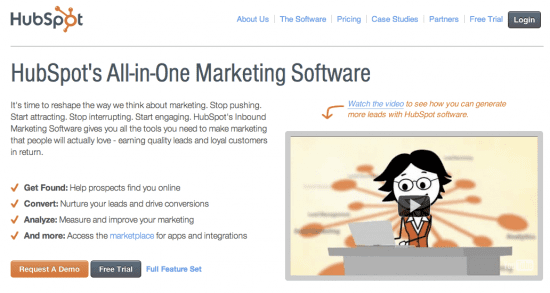
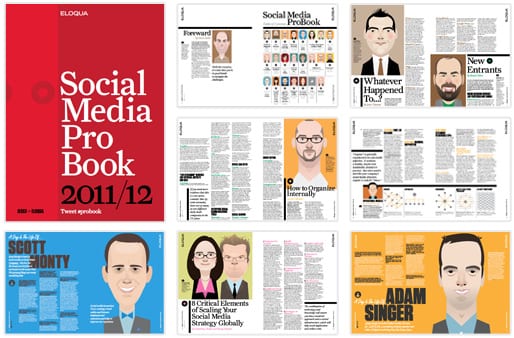
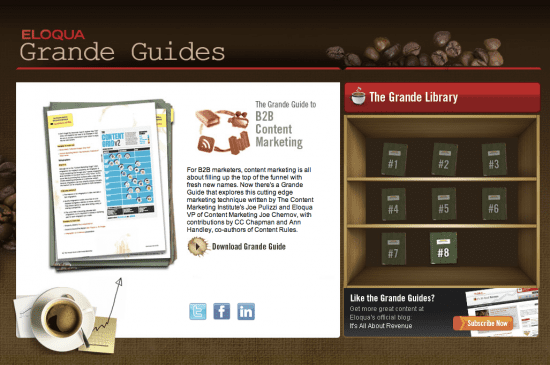
4. Offers need to be on-brand - I have mentioned before my love for how Eloqua do this, as a serious industry thought leader they seek to indirectly educate their prospects and influencers about the problems that their software helps to solve. Eloqua are in the most part showing thought leadership in the marketing space, the space in which they sell, they do it in a consistent, high quality way the tells us something about the quality of the organisation. I think Hubspot do a good job too in a very similar way, and in volume!
5. Targeting is the real key to success - we've talked about this many times before, what makes a marketing offer brilliant is that it speaks to 'me'. It takes into account a person's point in the sales process as well as that buyer's persona - their specific motivations. There is real choice now in the lead management software market, products like Genuis, Office Autopilot and Eloqua at the very high end. Each of these make it easy to collect information about your visitors and in turn leads (upon data capture) that will help you segment your leads through nurturing campaigns based on the buyer persona, their point in the sales process, and what you can determine their motivations are based on their activity on your website. This is a combination of inferred and explicit data capture. I wrote about this some time ago here.
In short, sending offers that appeal to those specific motivations, based upon how close they are to making a purchasing decision, is central to a marketing offer over a sales offer.
6. Create a lot of targeted offers - imagine a matrix of offers, all designed to target right offers to the right persona (at the right time). Building up a tool-box of offers is the hardest job in this whole process, yet logically it's the difference between good results and great results. In the past I have used a spreadsheet that lists offers by persona and buyer stage. Start by mapping existing marketing offers on there and then look for the priority gap, where can offers be easily re-purposed to help speed things up.
7. Place calls to action in appropriate places - for example, if analysis revealed that your blog is how new visitors find you (through social media, search engines etc), you can infer that many people who land on your blog are first-time visitors to your website - maybe the types least likely to be making an immediate purchase. You might therefore consider offers that are educational and immediately useful such as ebooks, or video guides, for example. Whereas a visitor on a product page probably indicates someone who is much closer to a purchasing decision, you'd consider a consolation of some description, a free product trial, or a demo if that were relevant.
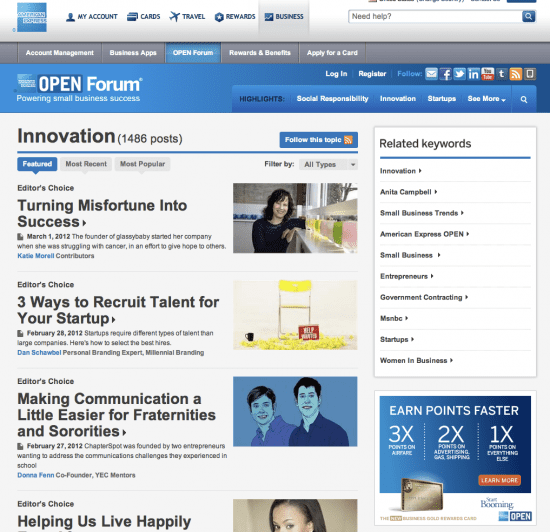
8. Tell the story about your offers - Create blog content around your offers. If you've created a 7 Steps guide (as Smart Insights do) you might write a blog article that highlights something related to the guide and couple that with an in-blog call to action, leading the prospect to the next logical step and explaining that readers can learn more by downloading the new guide? Excerpts from a guide also make for natural blog content! The promotion of your offers shouldn't just remain on your blog or website either. Share links to dedicated landing pages via social media, briefly explaining there benefits in your tweets or LinkedIn posts, for example. Similarly, for lead nurturing use offers in your email marketing. Promote a new offer in a dedicated email that highlights one offer and conveys its benefit and value. If it's a more targeted offer, segment your list, and send it only to the people to whom it will appeal.
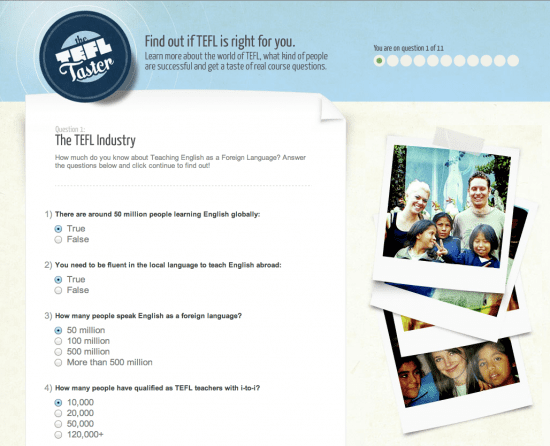
9. Make it easy for others to re-share the value - this is increasingly a really hot area, from my perspective. Data capture built into an interactive lead tool has always seemed such an obvious opportunity and we're seeing more of it now. It's done badly sometimes on loan calculators but really well where some brands are genuinely aiming to educate and inform. I think such tools are increasingly more relevant and powerful since they're instant and can be used to create a motivation to share something (a result from an interactive diagnostic or quiz, or some insight gained, for example) as well as capturing contact details, and if you're really on the ball, intelligence about the lead's purchase intent through asking the right questions in the tool itself. Interactive tools can also be embedded in other marketing outposts meaning lead generation without people coming to your website.
10. Measure and monitor - Measure the performance of your offers. what is driving volume vs what is driving conversion? Are there patterns? Doing this well will help you identify which types and topics of offers are successful in generating leads and in turn customers. Do your prospects prefer interactives or video how-to's over ebooks? Do they only care about certain topics that your offers are addressing? Use what you know to improve your marketing offers.
Is this useful, what do you think and what would you add?