How to use Segmentation, Targeting, and Positioning (STP) to develop marketing strategies
Today, the STP marketing model (Segmentation, Targeting, Positioning) is a familiar strategic approach in modern marketing. It is one of the most commonly applied marketing models in practice, with marketing leaders crediting it for efficient, streamlined communications practice.
STP marketing focuses on commercial effectiveness, selecting the most valuable segments for a business and then developing a marketing mix and product positioning strategy for each customer group.
As Martech continues to develop, so do opportunities for segmentation, targeting, and positioning. So whether you're brand new to STP or a seasoned veteran, it can be useful to take stock and double-check you're utilizing every chance you get to reach, interact with, convert, and engage customers.

But, how do you know which customer segments to focus on? We recommend using personas to identify your most valuable customers. Download our free Marketing buyer persona template and checklist for recommendations on how to build effective personas.
Download your free guide to access a 13-point checklist you can use as a template for structuring your personas, plus learn the key questions you need to ask to check the quality of your personas.
Download our Free Resource – Marketing buyer persona template and checklist
Discover why creating quality personas can help you prioritize marketing tactics and increase conversion with our free persona guide.
Access the Marketing buyer persona template and checklist
The STP marketing model
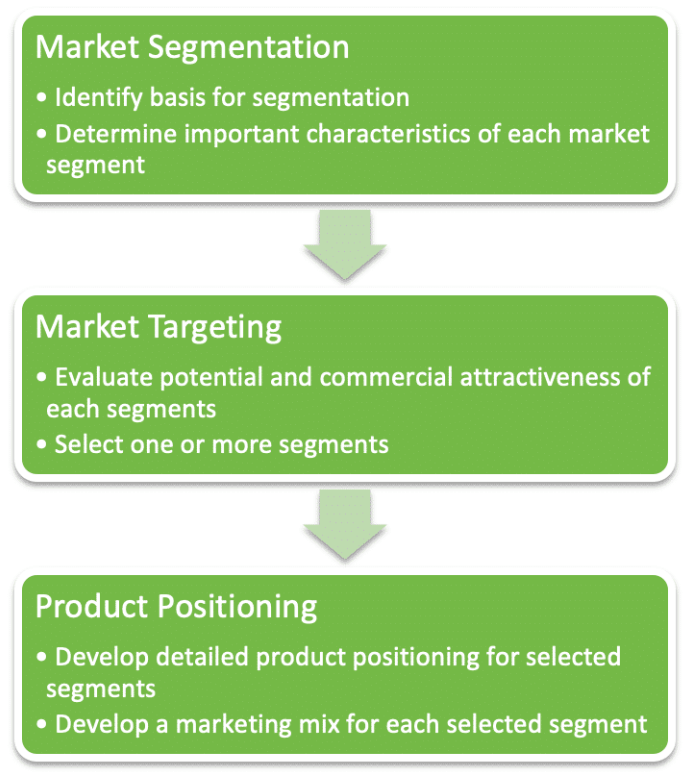
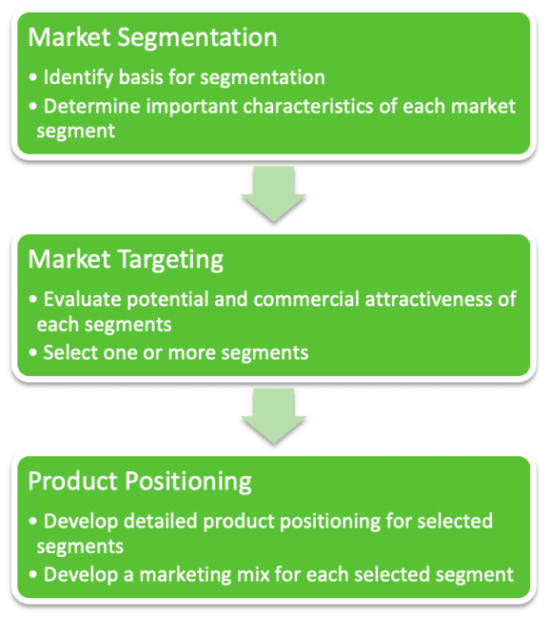
The STP model is useful when creating marketing communications plans since it helps marketers to prioritize propositions and then develop and deliver personalized and relevant messages to engage with different audiences. The three-step funnel consists of market segmentation, market targeting, and product positioning.
Within your research-based market segmentation phase, you are aiming to identify a basis for the segmentation of your target customers, and determine important characteristics to differentiate each market segment.
When creating your targeting and positioning strategy, you must evaluate the potential and commercial attractiveness of each segment, and then develop detailed product positioning for each selected segment, including a tailored marketing mix based on your knowledge of that segment.
STP marketing as a planning tool
Segmentation, targeting, and positioning is an audience-focused rather than product-focused approach to marketing communications, which helps deliver more relevant messages to commercially appealing audiences.
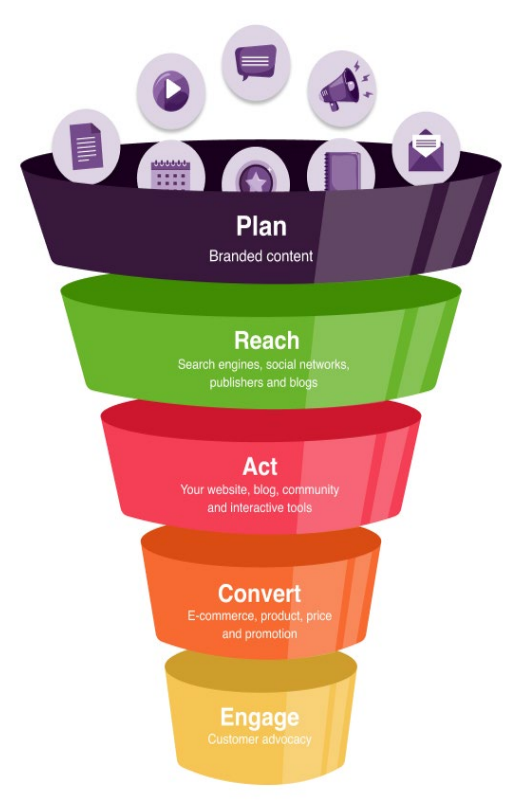
STP is a critical strategy and planning tool, featured in our RACE Planning Framework. RACE supports marketers, managers, and business owners to create a 90-day marketing plan across each stage of their marketing funnel.
So, while STP sits within the planning activities, the benefits of effective segmentation, targeting and positioning can be felt across the types of customers you reach, interact with, convert, and engage.
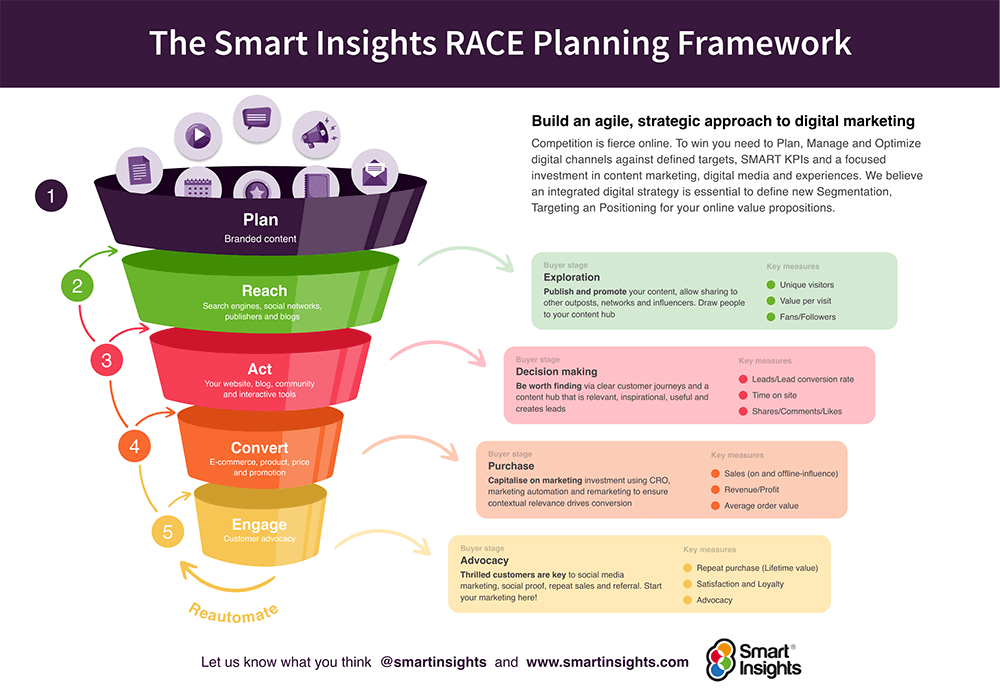
You can find out more about all the tools and techniques in our RACE Framework when you download your free RACE marketing plan template today
Download our Free Resource – RACE marketing plan template
Quickly summarize your marketing priorities to grow your business and create a competitive advantage with our free marketing plan template.
Access the Free marketing plan template
Applying Segmentation, Targeting and Positioning to digital communications
STP marketing is relevant to digital marketing too at a more tactical communications level. For example, applying marketing personas can help develop more relevant digital communications as shown by these alternative tactical email customer segmentation approaches.
This visual from Dave Chaffey of Smart Insights in his book Digital Marketing: Strategy. Implementation and practice shows how Segmentation, Targeting and Positioning apply to digital marketing strategy.
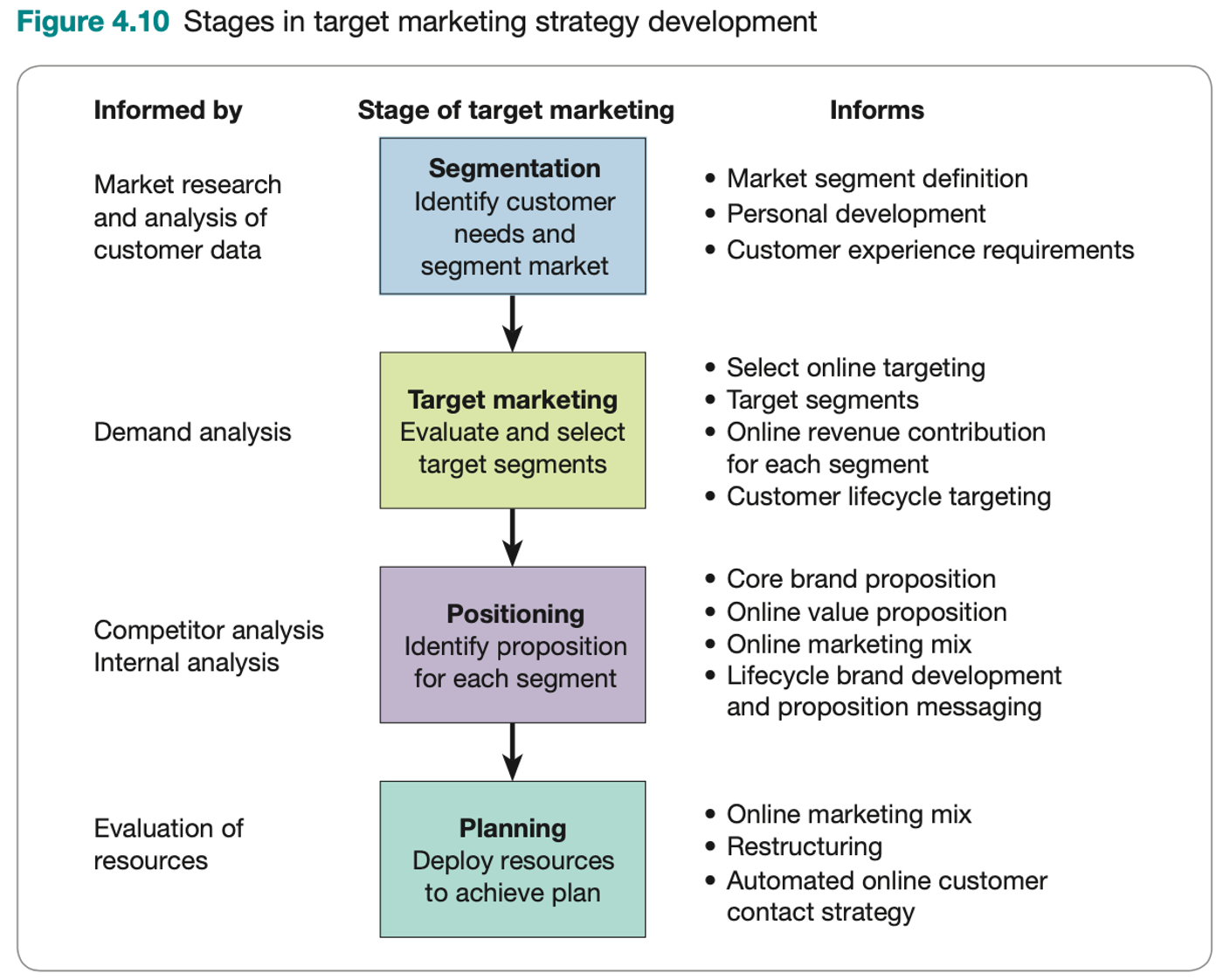
It reminds us how digital channels offer new options for targeting audiences that weren't available previously, but we need to reserve sufficient budget for. For example:
- Search intent as searchers type keywords when comparing products they are interested in buying
- Interest-based targeting in Facebook, e.g. Prospecting for those interested in Gardening, Gym membership, or Golf
- Targeting through email personalization and on-site personalization based on profile, behavior (e.g. content consumed)
There are also new opportunities to make a brand more compelling through offering new types of value to consumers based on a digital value proposition or what Jay Baer has called Youtility. This can be via content or interactive tools on websites or mobile apps.
How to use STP marketing?
Through segmentation, you can identify niches with specific needs, mature markets to find new customers, deliver more focused and effective marketing messages.
The needs of each segment are the same, so marketing messages should be designed for each segment to emphasise relevant benefits and features required rather than one size fits all for all customer types. This approach is more efficient, delivering the right mix to the same group of people, rather than a scattergun approach.
You can segment your existing markets based on nearly any variable, as long as it’s effective as the examples below show:
Well-known ways to segment your audience include:
1. Demographics
Breakdown by any combination: age, gender, income, education, ethnicity, marital status, education, household (or business), size, length of residence, type of residence, or even profession/occupation.
An example is Firefox who sells 'coolest things', aimed at a younger male audience. Though, Moshi Monsters, however, is targeted to parents with fun, safe and educational space for younger audiences.
2. Psychographics
This refers to 'personality and emotions' based on behavior, linked to purchase choices, including attitudes, lifestyle, hobbies, risk aversion, personality, and leadership traits. magazines read and TV. While demographics explain 'who' your buyer is, psychographics inform you 'why' your customer buys.
There are a few different ways you can gather data to help form psychographic profiles for your typical customers.
- Interviews: Talk to a few people that are broadly representative of your target audience. In-depth interviews let you gather useful qualitative data to really understand what makes your customers tick. The problem is they can be expensive and difficult to conduct, and the small sample size means they may not always be representative of the people you are trying to target.
- Surveys: Surveys let you reach more people than interviews, but it can be harder to get as insightful answers.
- Customer data: You may have data on what your customers tend to purchase from you, such as data coming from loyalty cards if an FMCG brand or from online purchase history if you are an e-commerce business. You can use this data to generate insights into what kind of products your customers are interested in and what is likely to make them purchase. For example, does discounting vastly increase their propensity to purchase? In which case they might be quite spontaneous.
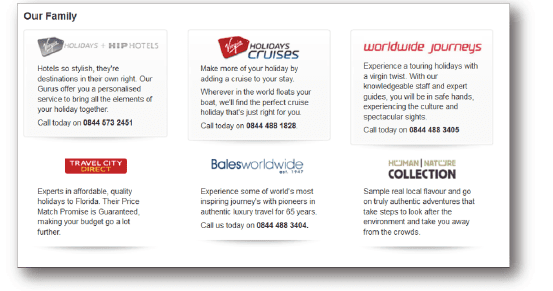
An example is Virgin Holidays who use segmentation, positioning and targeting to promote their holidays to 6 different audiences.
3. Lifestyle
This refers to Hobbies, recreational pursuits, entertainment, vacations, and other non-work time pursuits.
Companies such as on and off-line magazine will target those with specific hobbies i.e. FourFourTwo for football fans.
Some hobbies are large and well established, and thus relatively easy to target, such as the football fan example. However, some businesses have found great success targeting very small niches very effectively. A great example is the explosion in 'prepping' related businesses, which has gone from a little heard-of fringe activity to a billion-dollar industry in recent years. Apparently now 3.2 million Americans identify as doomsday preppers. A great way to start researching and targeting these kind of niches is Reddit, where people create subReddits to share information about a given interest or hobby.
4. Belief and values
Refers to Religious, political, nationalistic, and cultural beliefs and values.
The Islamic Bank of Britain offers Sharia-compliant banking which meets specific religious requirements.
A strange but interesting example of religious demographics influencing marketing that you might not have guessed is that Mormons are really into 'multi-level marketing'. They're far more likely to be engaged in the practice than any other US group.
Going the extra mile with demographic research can lead to discovering new marketing opportunities and thinking outside the box. For example, did you know the median age of Cadilla Blackwing customers is 10 years younger than that of “regular” Cadillac customers?
5. Life stages
Life stages are the Chronological benchmarking of people’s lives at different stages.
An example is Saga holidays which are only available for people aged 50+. They claim a large enough segment to focus on this life stage.
6. Geography
Drill down by Country, region, area, metropolitan or rural location, population density or even climate.
An example is Neiman Marcus, the upmarket department store chain in the USA now delivers to the UK.
7. Behaviour
Refers to the nature of the purchase, brand loyalty, usage level, benefits sought, distribution channels used, and reaction to marketing factors.
In a B2B environment, the benefits sought are often about ‘how soon can it be delivered?’ which includes the ‘last-minute’ segment - the planning in advance segment.
An example is Parcelmonkey.co.uk who offers same-day, next day and international parcel deliveries.
8. Benefit
Benefit is the use and satisfaction gained by the consumer.
Smythson Stationery offer similar products to other stationery companies, but their clients want the benefit of their signature packaging: tissue-lined Nile Blue boxes and tied with navy ribbon!
Market targeting
The list below refers to what’s needed to evaluate the potential and commercial attractiveness of each segment.
- Criteria size: The market must be large enough to justify segmenting. If the market is small, it may make it smaller.
- Difference: Measurable differences must exist between segments.
- Money: Anticipated profits must exceed the costs of additional marketing plans and other changes.
- Accessible: Each segment must be accessible to your team and the segment must be able to receive your marketing messages
- Focus on different benefits: Different segments must need different benefits.
Product positioning
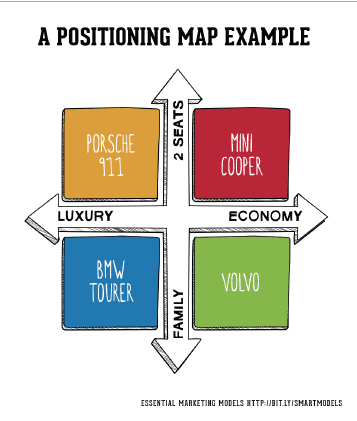
Positioning maps are the last element of the STP process. For this to work, you need two variables to illustrate the market overview.
In the example here, I’ve taken some cars available in the UK. This isn’t a detailed product position map, more of an illustration. If there were no cars in one segment it could indicate a market opportunity.
Expanding on the extremely basic example above, you can unpack the market by mapping your competitors onto a matrix based on key factors that determine purchase.
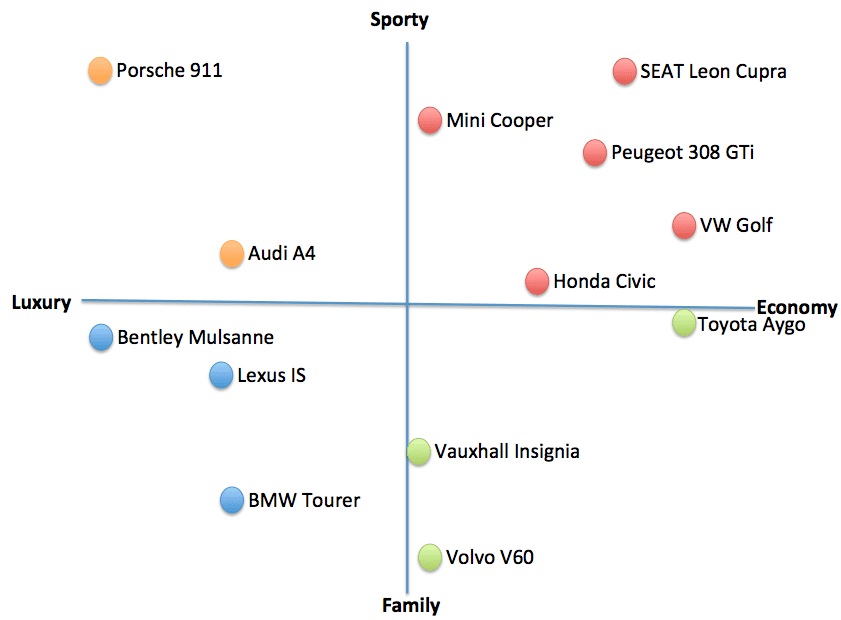
This chart is not meant to be any kind of accurate representation of the car market, but rather just illustrate how you could use a product positioning map to analyze your own business's current position in the market, and identify opportunities.
For example, as you can see in the gap below, we've identified a possible opportunity in the market for low-priced family cars.
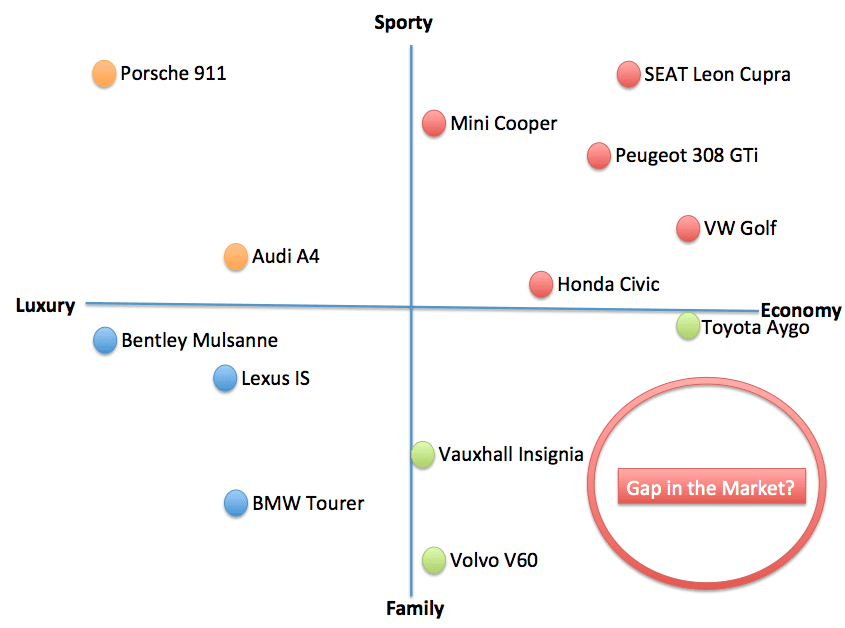
We're not saying this gap actually exists, I'm sure you could think of cars that fit this category, as the car market is an extremely developed and competitive market. However, it does show how you can use the tool to identify gaps in your own market.
An example of a company using STP marketing?
Any time you suspect there are significant, measurable differences in your market, you should consider STP. Especially if you have to create a range of different messages for different groups.
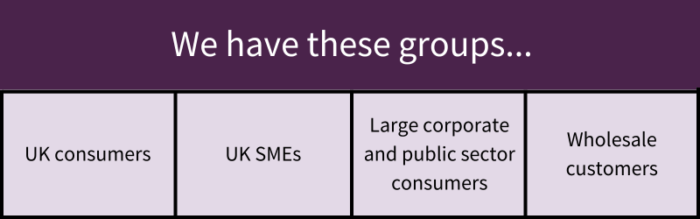
A good example of segmentation is BT Plc, the UK’s largest telecoms company. BT has adopted STP marketing for its varied customer groups; ranging from individual consumers to B2B services for its competitors.
Identifying and defining your target audience is key to efficiently growing your customer base. But to fully benefit from your strategy, you need to set objectives and optimize your marketing activities to achieve your goals.
What to watch for in segmentation, positioning, and targeting marketing strategy
- Make sure the market is large enough to matter and customers can be easily contacted.
- Apply market research to ensure your approach will add value to the existing customer experience, above and beyond competitors.
- As Martech continues to become more sophisticated, to support digital marketers' wants and needs, consider the developments in relation to your product/service.
Original reference sources
Lancaster G. and Massingham, L. (1988) Essentials of Marketing. Maidenhead, Berkshire, England. McGraw-Hill.
Smith, W. R. (1956). Product differentiation and market segmentation as alternative marketing strategies. Journal of Marketing. (Vol. 21, Issue 1, July). p3-8.
Download our Free Resource – Marketing buyer persona template and checklist
Discover why creating quality personas can help you prioritize marketing tactics and increase conversion with our free persona guide.
Access the Marketing buyer persona template and checklist