What are the differences in digital marketing for business-to-business compared to business-to-consumer audiences?
Since working in digital marketing I have found that much of the discussion and examples of digital marketing focus on B2C marketers and well-known big brands. Yet, when I have trained marketers, it's a different picture with at least half of the people on the course working in B2B digital marketing.
We also see the importance of B2B marketing to digital commerce if we look at the latest statistics on global E-commerce from UN trade and development group UNCTAD.
The value of global B2B e-commerce in 2019 was $21.8 trillion, representing 82% of all e-commerce, including both sales over online market platforms and electronic data interchange (EDI) transactions.
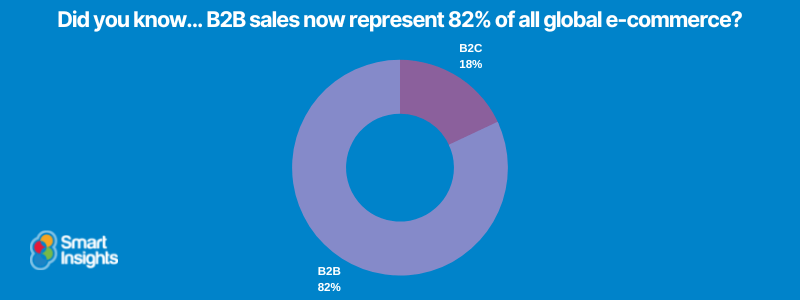
We also have to remember that many B2B transactions are conducted by more traditional invoiced arrangements and contracts, so not even included in this figure.
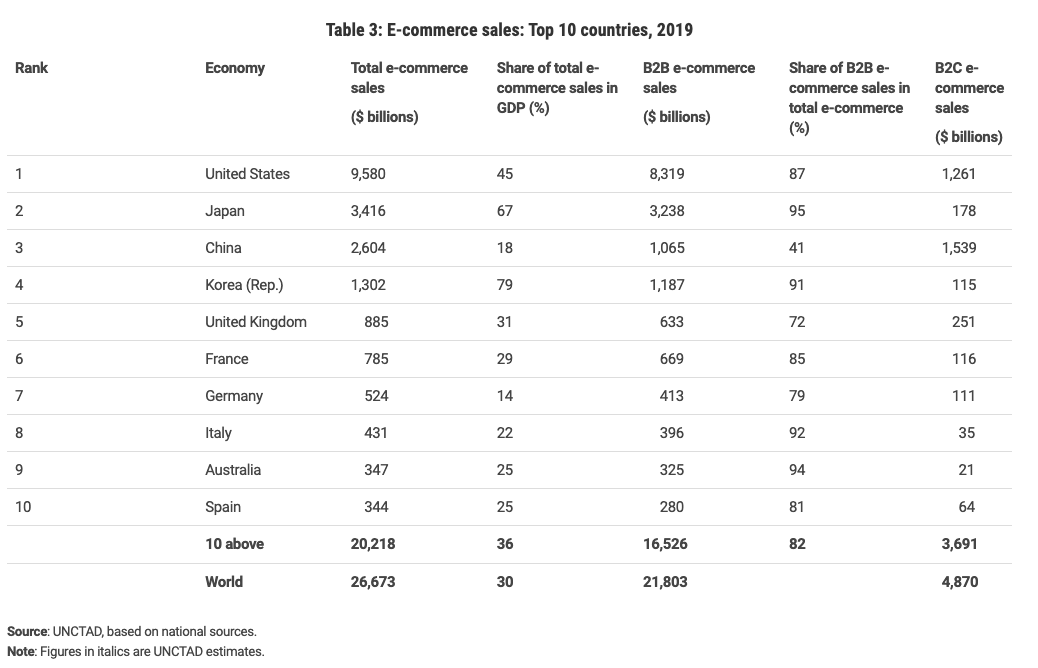
Top global B2B and B2C markets
The top global market for B2B e-commerce sales is the United States, while the top global market for B2C e-commerce sales is China. However, both of these countries generated e-commerce sales in the top 3 globally for both categories, alongside Japan in the top 3 for B2B and the UK in the top 3 for B2C.
Different types of digital marketing strategies for business to business
Within B2B markets, there is a wide variety of products from low-value consumable items such as the literal nuts and bolts used in construction and manufacture to the higher value products and services costing many thousands.
This means when reviewing the differences between B2B and B2C, we need to consider what types of B2B marketing strategies to compare.
We can break these differences down across three different digital marketing planning considerations:
- Product marketing focus
- Target audiences
- Buyer journeys
If you're looking to hone your B2B digital marketing strategy we recommend utilizing our B2B digital marketing plan workbook.
The workbook, including a case study and KPI dashboard, is catered to SAAS startups, but there are elements in this workbook that can help all B2B marketers, such as maximising your growth with the RACE growth system.
Download our Business Resource – B2B startup digital marketing plan workbook and case study
Our B2B workbook and example will guide you through each and every step involved in creating a digital marketing strategy to market SaaS products.
Access the B2B startup digital marketing plan workbook and case study
What are the typical differences between B2C and B2B digital marketing strategies?
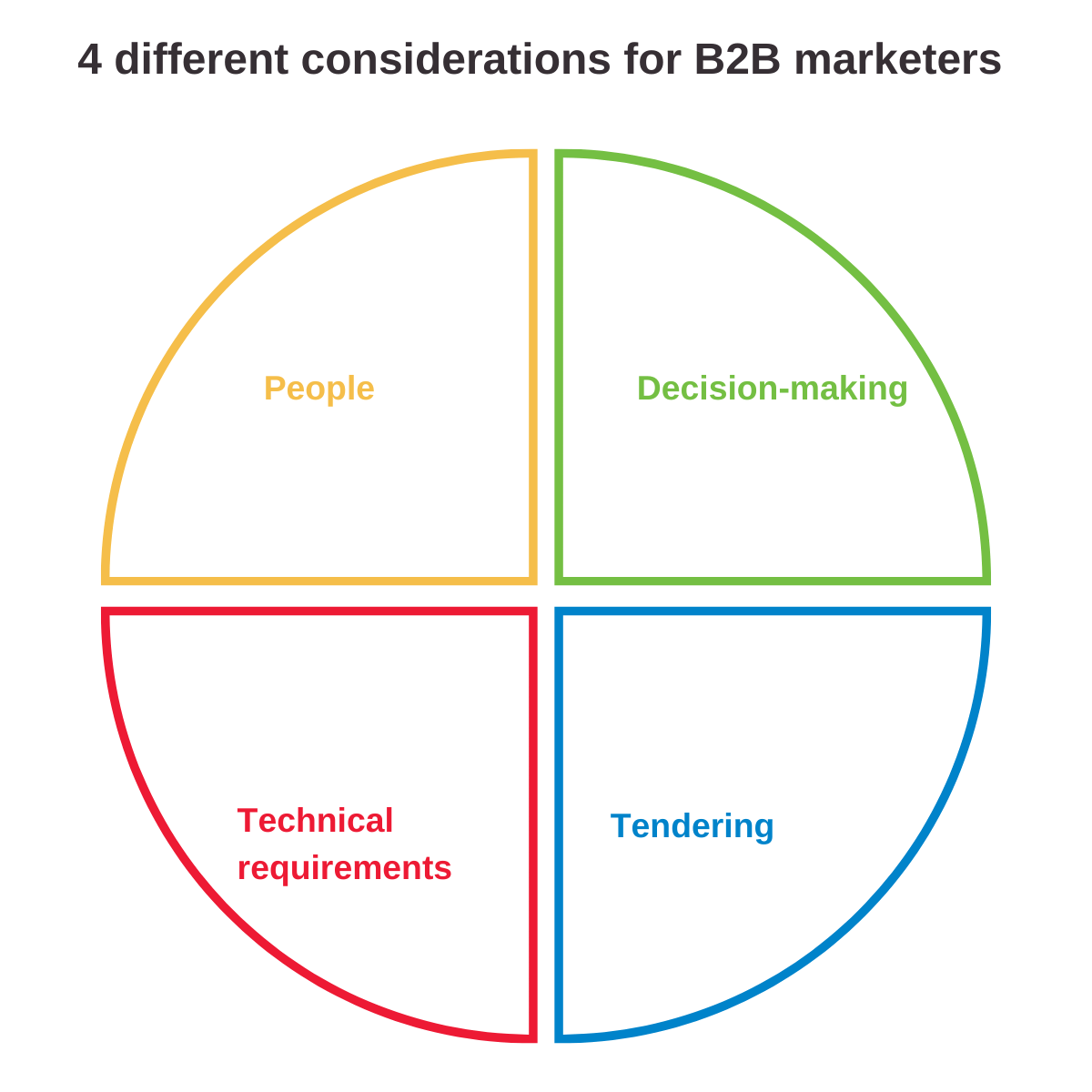
The typical differences we see in B2B markets compared to consumers, particularly for high-value B2B products and services, can be considered across four different elements:
- More people involved in the decision-making unit from specifiers and authorizers to users
- Longer decision-making process
- More complex, often structured decision on purchase often based on technical requirements evaluation and scoring criteria
- Formal tendering, big and review process
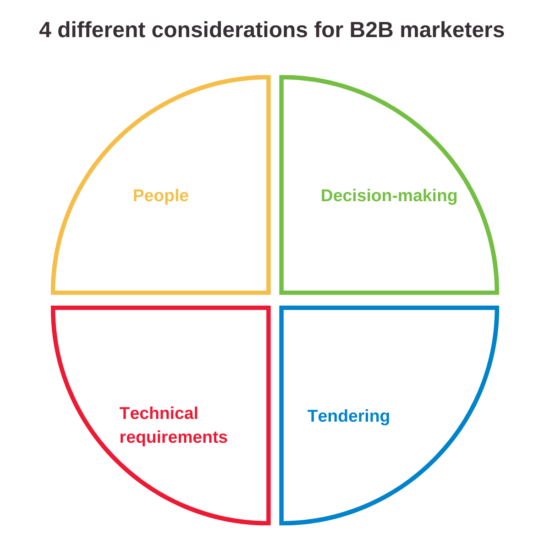
This means, for B2B digital marketers, a successful plan focuses on cutting through to the right people, supporting the decision-making and tendering processes, and understanding the technical requirements of the target audience.
Similarities between B2B and B2C digital marketing strategies
Turning to the similarities, there are many from a communications point of view, since the overall buying process is still that of a customer making a decision to purchase.
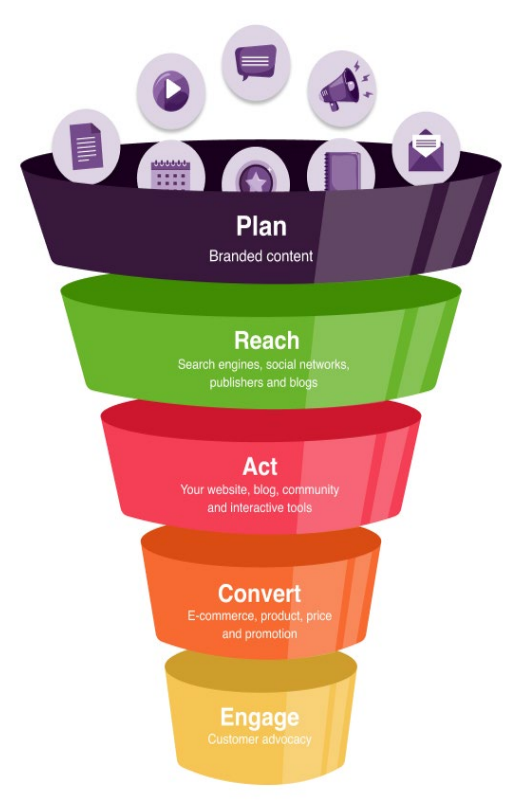
To grow a business (B2B or B2C) through acquiring new customers, marketers must plan a buying process that includes:
- Plan and brand
- Raise awareness of product/service
- Support customer interaction and decision-making process
- Persuade customer to buy from you as against competitors
- Retain fans and customers for future business
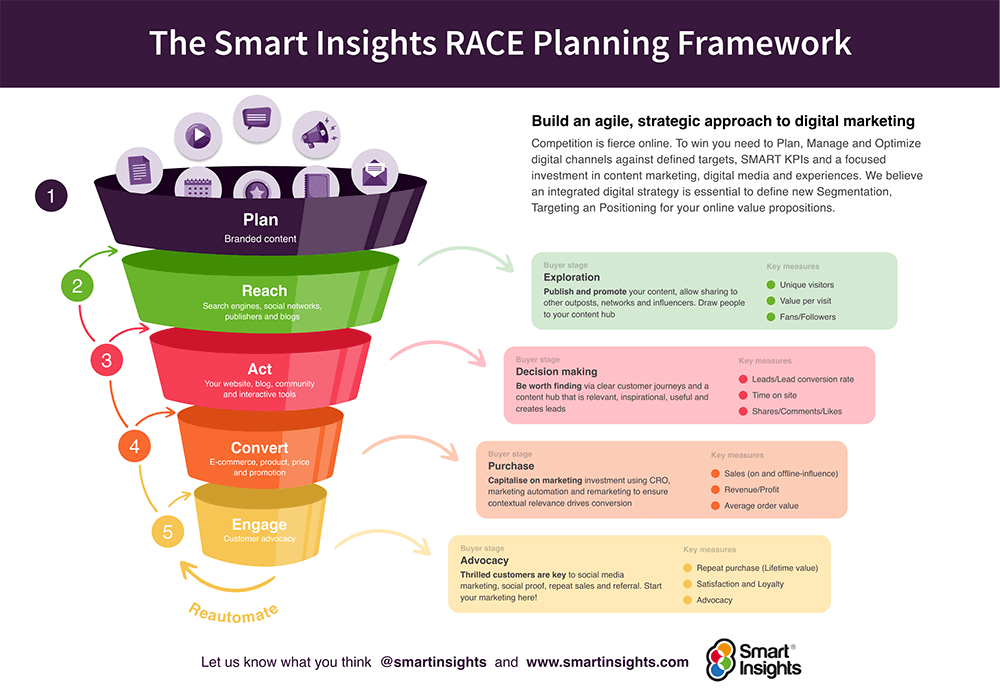
Our RACE growth system is designed to cover both B2C and B2B buying processes. You can read more about the 5 steps below or use our RACE Practical Digital Strategy Learning Path to find out more.
How to plan a B2B digital marketing funnel
Within B2B, more attention typically needs to be given to demand generation to raise awareness of a service or to give reasons to switch from existing suppliers.
Given the extended, complex buying process there is a greater need in business-to-business marketing to generate leads from prospects and nurture them from initial interest.
You can find out more about planning, managing, and optimizing your marketing funnel with our strategic marketing training module below.
Core Module
Structure a plan using Smart Insights’ RACE
Part of the Digital marketing strategy and planning Toolkit
Learn how to structure a comprehensive omnichannel marketing plan, using Smart Insights' RACE
Learn More
Differences between B2B and B2C digital marketing lifecycles
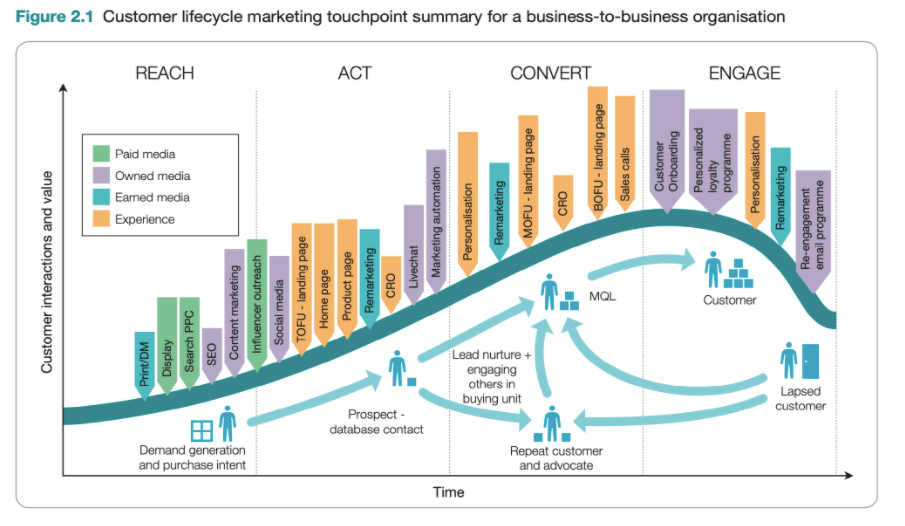
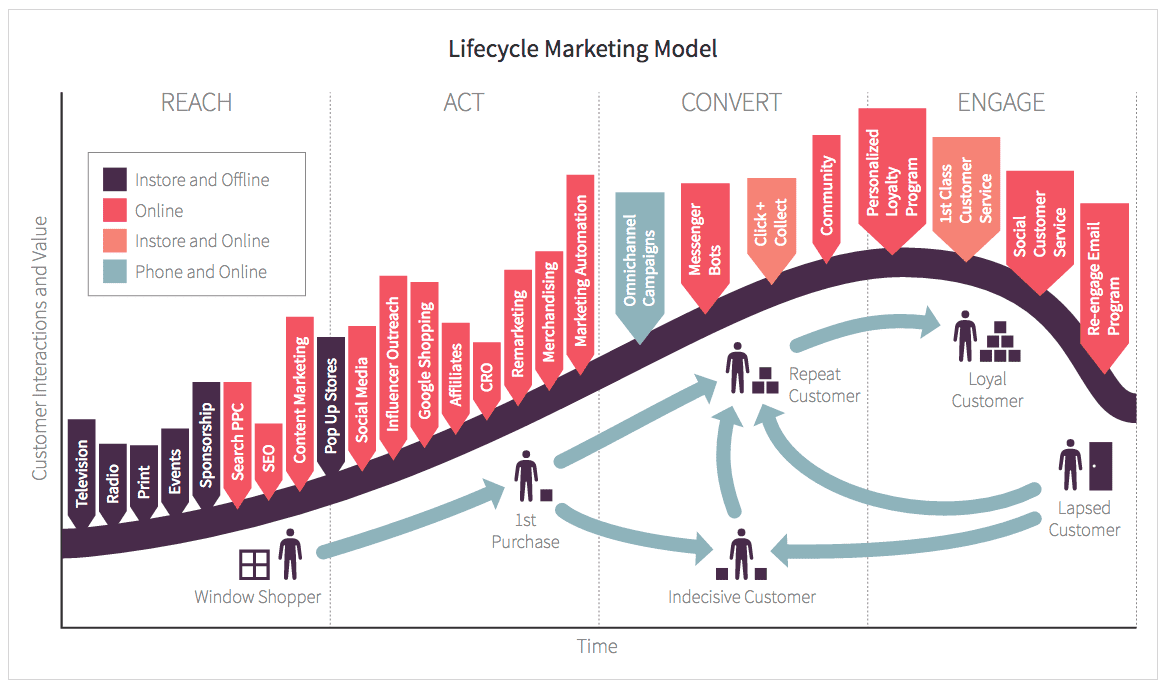
To help marketers review their use of digital marketing, Smart Insights have created different views of the customer lifecycle for B2C and B2B marketing. These are aimed at helping marketers review their activities to identify gaps.
B2B customer lifecycle example
B2C customer lifecycle example
Use our interactive practical strategy training tools, Learning Paths, to gain the skills you need to grow your business. Our popular module 'Assess audience customer journeys' includes 3 key Google Analytics techniques for understanding why and how customers are coming to your website.
Core Module
Assess audience customer journeys
Part of the Digital marketing strategy and planning Toolkit
Learn three techniques for creating customer journey maps
Learn More
Differences between B2B and B2C marketing communications channels
You can see from the lifecycle visuals that many of the online marketing tactics are similar for B2B and B2C marketing.
However, within each channel, there are differences in the detail that are important to understand for your business.
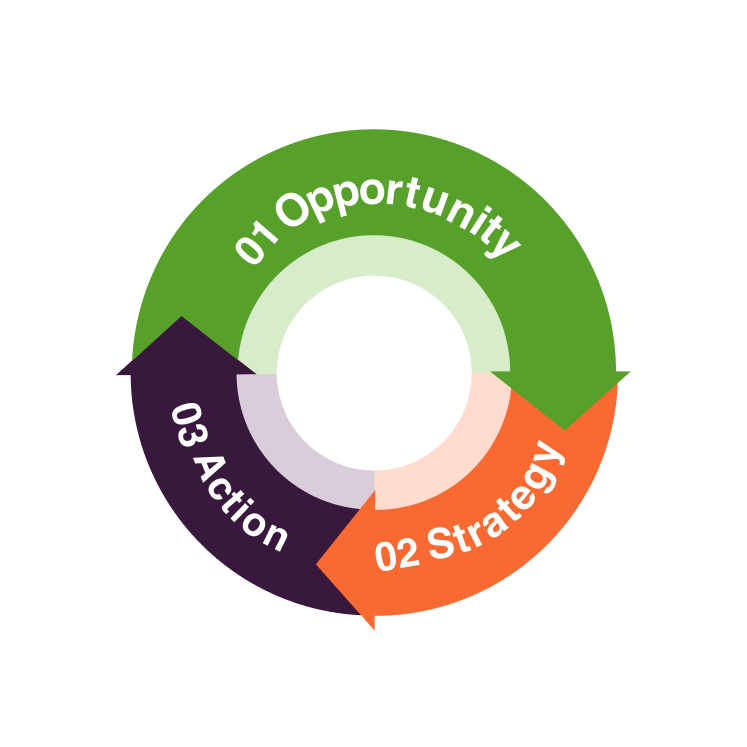
Whether your communications are managed by digital specialists, freelancers, agencies, or a one-person marketing team, it's vital that these remain joined up and headed towards your marketing goals. Tools like our opportunity-strategy-action wheel help with this approach.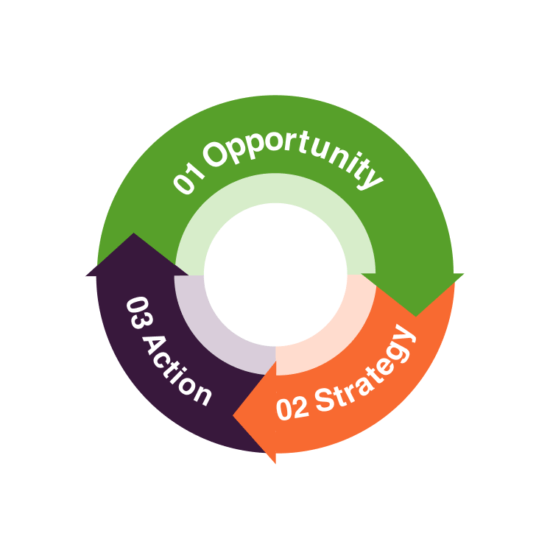 Tailoring your marketing communications to your audience's needs is, of course, a critical factor in nurturing prospective customers toward their purchase. This process can look different for businesses and consumers.
5 key B2B digital marketing channels
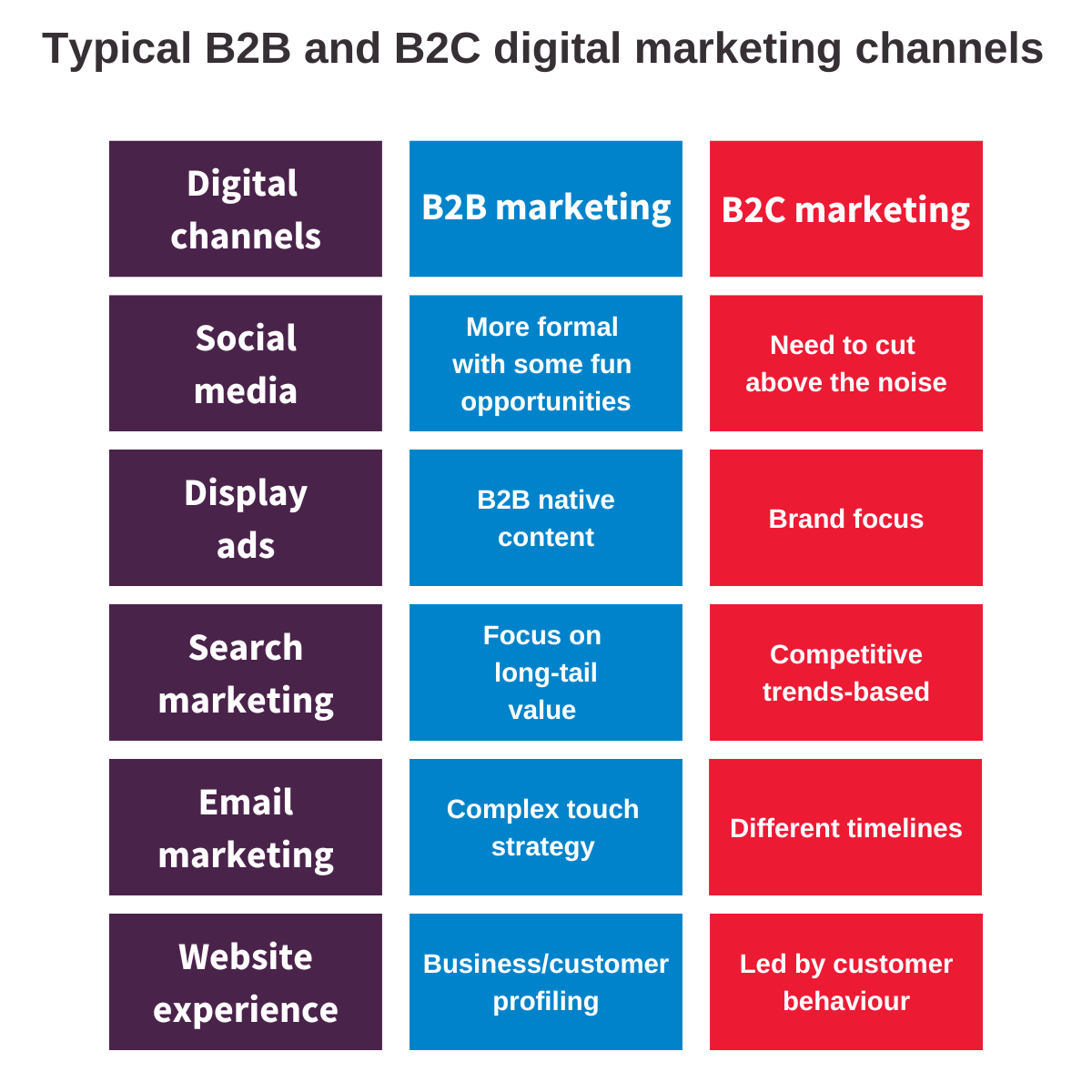
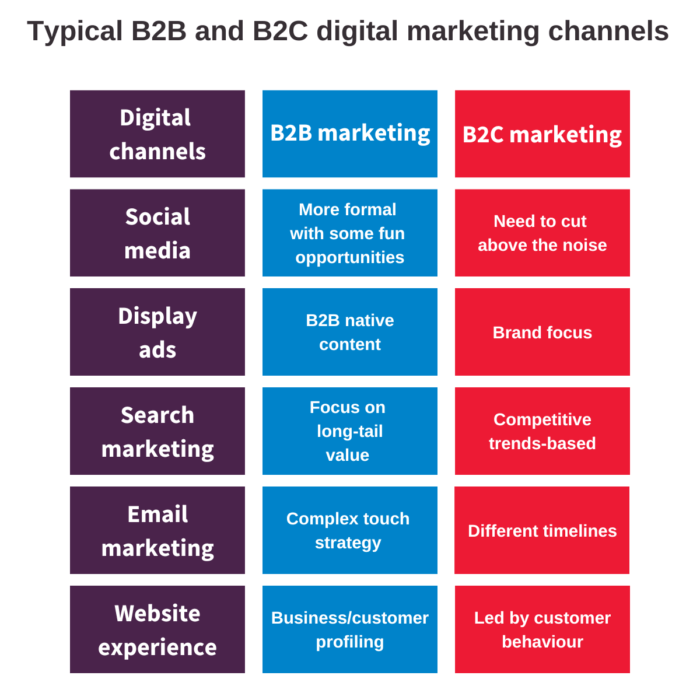
To generalize, for B2B marketing, these are key channel differences:
Social media marketing for B2B
Social media content tends to be more formal than B2C, so engagement may be challenging. Strategies to engage more B2B customers on social media include: sharing educational content to support career development or competing within a market. Or you can be contrarian and look to inject more brand personality than competitors!
Search marketing for B2B
In comparison to search marketing for consumers, B2B search volumes tend to be lower and more specific. Long-tail searches can be important to attracting visitors, but this tactic is most effective if the target search terms are also in-line with your business' value proposition.
Display advertising for B2B
Programmatic advertising techniques used by B2C brands are less likely to be relevant for most B2B sectors. However, there are opportunities to work with B2B publishers to provide native content or promote whitepapers or events through email marketing, which brings us to:
B2B email marketing
In both cases, it's useful to create an email contact strategy that delivers relevant messages and content to educate consumers about what a brand can offer them. Within B2B marketing, a more complex touch strategy is needed to support a diverse buying unit and account-based marketing.
B2B Website experience
More complex B2B audiences with different roles and people working in different sectors tend to lead to more complex customer journeys. More detailed profiling is also needed to support targeted email marketing.
Similarities between B2B and B2C marketing communications channels
Despite differences in content and style, the communications platforms that marketers use to reach and interact with audiences are often similar.
Google is a primary channel for search for both B2B and B2C. Within social media, some platforms are more relevant with LinkedIn and Twitter tending to be most important within B2B.
Social platforms like Facebook and Instagram are consumer platforms, but they can potentially support some B2B markets too.
Email marketers tailor emails to reach personal and professional inboxes, at different times and with different messages. But overall the use of email tactics to interact with/nurture conversions will feel similar to audiences.
B2B and B2C marketing personas
We have seen that although it might at first appear that B2C and B2B digital marketing are quite different, they share many similarities in terms of the marketing techniques available.
Where the biggest differences like are the techniques needed for segmenting and targeting people with relevant communications and content based on their demographics.
So, in both cases, it's important to create detailed marketing personas with content mapping for which we have both.
Download our Individual Member Resource – Customer persona guide and template
Customer personas are an essential online branding and conversion tool that helps businesses create more customer-centric, less product or company-centric web experiences.
Access the Customer persona guide and template