Your digital marketing should use the communication mode your prospects prefer: videos. By producing compelling brand origin, segment-specific and explainer videos, you’ll stand apart from the competition
Everywhere you look these days, people are staring at screens. What they’re viewing most is social media videos and streamed TV. In digital marketing videos are no longer just a nice to have; they’re a core medium through which to build awareness of your brand and to prime future conversions.
The ROI of video marketing is clear, as shown in recent articles by Smart Insights and Wordstream.
Download our Individual Member Resource – Video and YouTube marketing guide
Our guide shows you how to review the full opportunities from video marketing whether you are a company looking to integrate video marketing more into your campaigns or a marketing agency looking to improve your video marketing services.
Access the Video and YouTube marketing guide
Here are a few compelling video marketing statistics:
- Emails containing video have 96% higher click-through rates than non-video emails.
- Video marketers enjoy a 54% increase in brand awareness.
- Social video generates 12 times more shares than text and images combined.
- Video drives a 157% increase in organic traffic from search result pages.
To build awareness of both your brand and your products, you’ll need to produce and post three types of videos: brand origin, segment-specific and explainer. Each is needed at different points in the buyer journey to inform and guide your prospects along their conversion path.
Best of all, with the help of the freelance video scripters and producers, you won’t need to spend thousands of dollars for a Hollywood-caliber writer.
Create brand origin videos
As Simon Sinek put in in his popular 'Start With Why' TED talk, your prospective buyers don’t just buy what you’re selling and how you deliver it, but why you’re in business in the first place. Keep this in mind as you strive to create awareness for your unknown brand (and 99% of brands are unknown, on a global level).
Think about it. All other things like price, quality and taste being equal, would you rather buy your salad dressing from Brand A or Newman’s Own, the company that donates 100% of its profits to charity? Even if you don’t give anything to charity, most people would like other people to know that they do. So you’d buy Newman’s dressing both because it both looks good on your kitchen table and because it makes you feel good.
Steve Olenski gives us four tips for creating a compelling brand story. They’re a great starting point as you brainstorm ideas for your own brand video.
So, in your brand origin (sometimes called 'our story') video, speak transparently about who you are and what you stand for. Do that as clearly and compellingly as you can, then stop. Your brand video is not the place to sell your wares; you can do that in later communications and web pages. Your goal here is to build trust and a deeper personal connection.

E-commerce example: Warby Parker glasses
Warby Parker, the maverick online seller of prescription eyeglasses, tells its brand story directly from the mouths of their co-founder, David Gilboa and other leaders in video format.
Gilboa starts by sharing how frustrating it was for him to pay $700 for a pair of replacement glasses after he lost his glasses at an airport. So he started a company to address the problem. The kicker: for every pair of glasses Warby sells, they distribute a free pair to someone in need. Now that’s a compelling story that anyone can relate to.
In addition, the Warby video highlights the 'virtual try-on' feature on the website, which addresses a concern many prospective glasses buyers have: not knowing how the glasses will look on their face. While brand origin videos should generally not discuss features, it was appropriate for Warby to do in this case because they found the 'I can’t try them on' objection to be a non-starter for a significant percentage of their prospects.
Also keep in mind that this video:
- Did not require fancy graphics or production. By showing interviews with founding leaders in their office space, the video comes across as personal and authentic.
- At under three minutes long, the video is short. You don’t need ten minutes or more to tell your story (if you think you do, get some feedback from people outside your company. Chances are, your draft script is too long-winded).
Starting with creative brainstorming with your marketing team, you can do the same for your brand.
Create segment-specific videos
Once you’ve made your target customers aware of your brand, it’s time to go deeper, to build an increasingly personal connection with your prospects. To do this you’ll need to:
- Segment your prospect lists by any dimensions you have available.
- Personalize your communications to each prospect’s intent and preferences.
On the segmentation side, HubSpot shares 30 ways you can segment your email list, which includes basic demographic criteria like geography, gender, age, and education level, and other factors like the stage they are at in buying cycle and buyer persona.
But to fully personalize the messaging in your emails and the videos you’ll embed in them, you’ll need to use behavioral data. This means tracking what your prospects actually click on your websites, emails or other marketing channels.
Here’s the process to make your communications increasingly personal:
- Base your initial email on the lead source (chat, web form, outbound sales) and high-level prospect segment.
- Base the next email on what your prospect clicked in the first email (e.g. segment/persona, topic of interest).
- Base the next email on what your prospect clicked in the second email
- Rinse and repeat.
The best way to do this is with an email automation platform. By integrating an email automation app with your customer relationship management (CRM) system, you’ll not only send your prospects the most relevant content. You’ll also gather individual-level data that you can use to learn more about your prospects’ mindsets and motivations.
Most importantly, you should embed increasingly-personalized videos in your emails so your prospects can choose the topics of interest. You can also include links to the article versions, for those viewers who still like to read.
When creating these segment-specific videos be sure to:
- Keep them short (less than 90 seconds is ideal).
- Optimize your video load and streaming speeds.
- Focus your videos on the right prospect segment and buying stage.
The bottom line is each email and video you send should be increasingly personalized and relevant. If, in each email and video you send, you can get your prospect to say, 'Yeah, that’s me, and that’s what I want', you’ve succeeded.
Keep in mind your goal here - it’s not to sell (at least not yet). After you’ve built trust and rapport with your brand story videos, you need to build engagement. So, unless you’re selling a 'quick consideration' product or service (lower priced, less risk), your prospect will need to feel very comfortable with your brand before parting with her hard-earned money.
Create explainer videos
Now, assuming you’ve made your prospect aware of your brand (the 'why'), and increased their engagement with it (the 'what'), it’s time to make a compelling case for your product or service (the 'how'). Some would call this selling, but I prefer the term 'building value' because if you do this well, your product or service should sell itself.
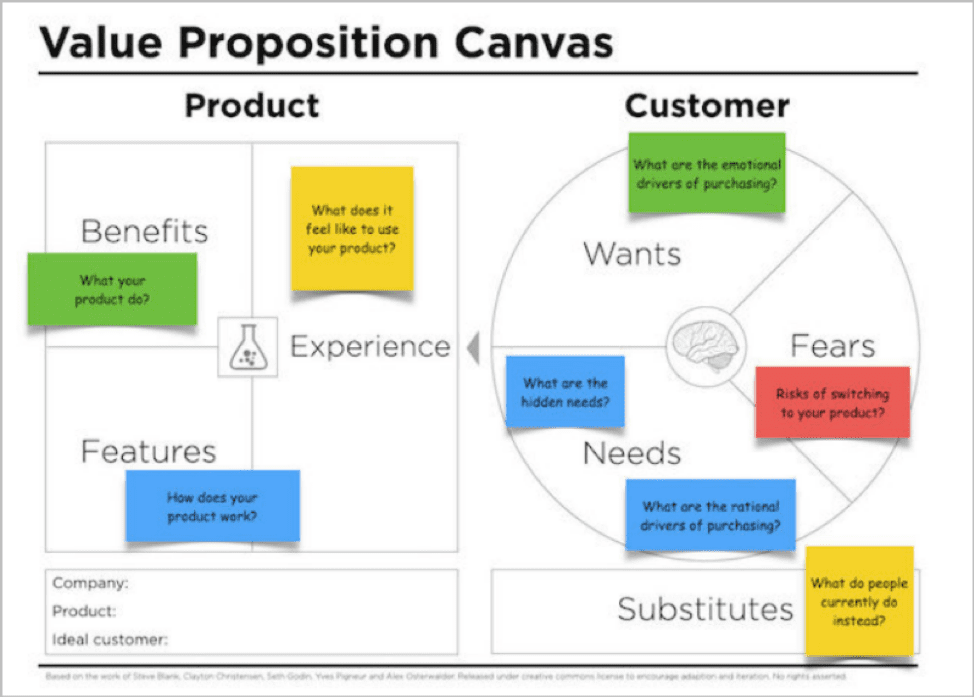
Explainer videos are the realm of value proposition and benefits. Your value proposition is your offering’s top value add and how it does this better than any other brand.
Here’s an example from Tortuga Backpacks, a seller of expandable packs:
'Bring everything you need without checking a bag'.
This value proposition is short, to the point, and addresses an emotional desire (to avoid the extra time and cost of processing checked luggage).
Marketing blogger Mary Fernandez provides some great ‘how to write a value proposition’ guidance, including a visual canvas template.
Unpacking a bit, the next level of creating an explainer video is determining the unique benefits your product or service offers. Not features or specifications, but how your offering delivers more value, on both functional and emotional levels.
Not sure how to come up with benefits? Use the FAB model, which breaks down as:
- Feature - ‘It has…’
- Advantage - ‘Which means…’
- Benefit - ‘So that…’
For example, let’s say SynchSneakers.com sells an innovative sneaker with laces that automatically synch up after you put on the shoe. The FAB in this case:
- It has... automatically-synching laces that tighten the perfect amount.
- Which means... you don’t have to manually tie your shoes every time you put them on.
- So that… You save a minute every time you put them on. That and your friends are impressed when they see it!
A great script is essential
If you’ve watched many sitcoms on TV, you know the importance of a good scriptwriting team. Great script, funny show. Average script and the show’s off the air within six months.
So, unless you want your prospects to quickly close your videos, hire a writer with proven copywriting skills, someone whose copy has proven to get eyeballs to turn into clicks. Copywriting is definitely not the place to cheap out, because the success of all three video types I’ve described here hinges on the quality of your scripts.
Agencies like Writer Access and Video Brewery offer access to experienced freelance video scriptwriters and producers. So you might give them a try if you’d rather not commit to longer-term engagement with a video marketing agency.
Roll your videos out widely
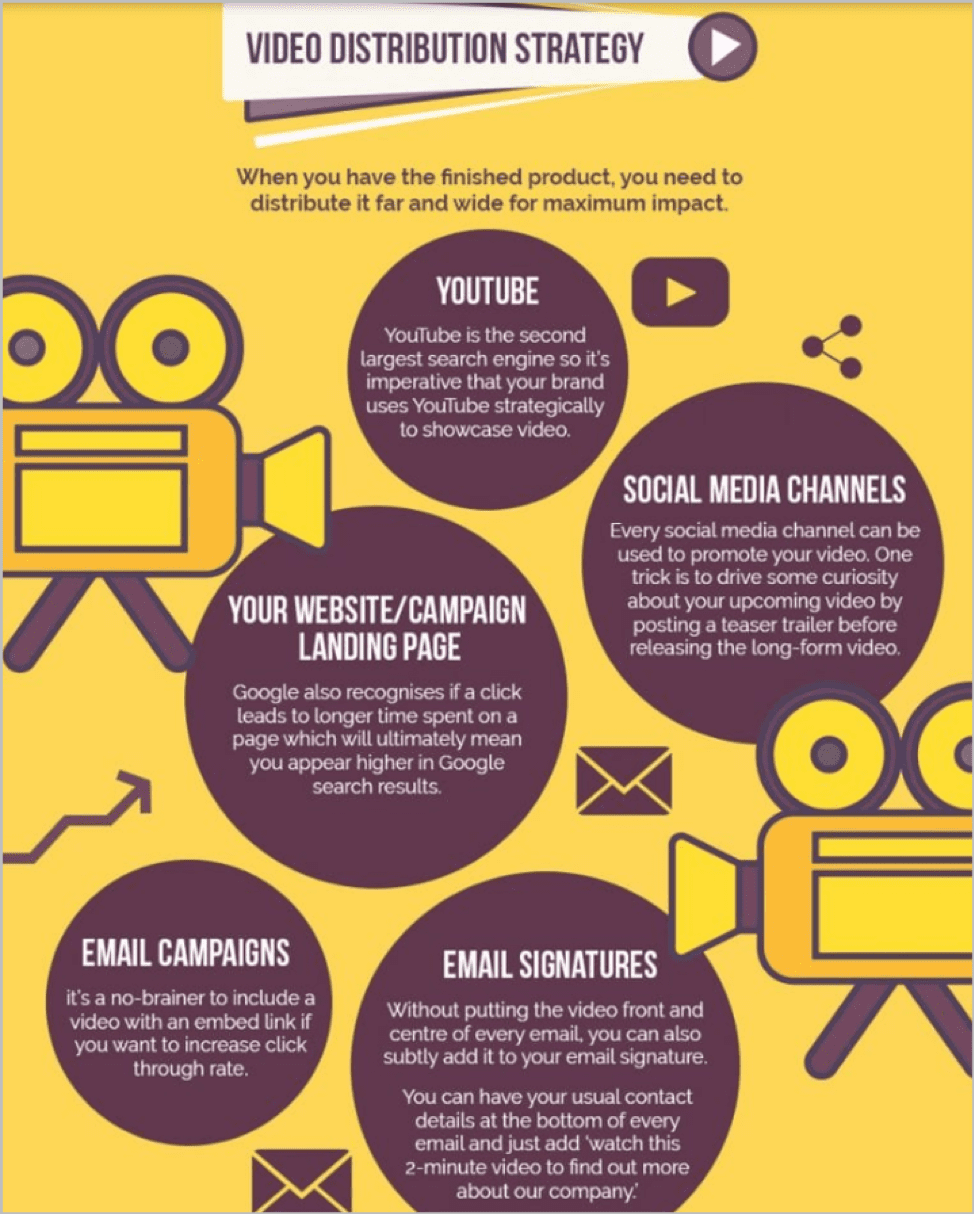
OK, let’s assume you’ve produced a couple of videos and rolled them out to your email campaigns and web properties. That’s a great first step. But don’t stop there. If these videos achieved decent click-through rates for your key engagement metrics (if they didn’t, it’s time to repeat the video creation process), deploy them widely on all of your social media channels.
Just make sure the lead-on headlines to these videos reference things like prospect segment, buying stage or interests so your prospects will find them relevant. Even the best-scripted videos, if seen at the wrong time, or by the wrong prospects, will fall flat.
Get your video marketing train in motion
Our attention spans seem to get shorter every year as we’re bombarded with more marketing messages. All the more reason for your core marketing creative to be in our preferred communication mode: online video.
By scripting, producing and posting brand origin and segment-specific videos, you’ll convince more of your best prospects to engage with and, ultimately, trust your brand and the people behind it. Then, after building more personal connections, your explainer videos can help push your prospects 'over the tipping point' to a conversion.
Best of all, since you’ll be differentiating your brand more and competing less, you’ll surely see your overall marketing costs go down and your video marketing ROI go up.