A great proposal can make a world of difference in closing a wobbly deal, while a poorly written proposal will lose even a rock solid client
In the world marketing, proposals are one of those sales elements that most people dislike but still recognize its importance. A great proposal can make a world of difference in closing a wobbly deal, while a poorly written proposal will lose even a rock solid client - and there are a lot of businesses that acknowledge this phenomenon, too.
Writing marketing business proposals is no rocket science and getting it right takes just a little bit of knowledge and a lot of practice. Here are some of the key elements of great business proposals and how you too can use them in your proposals to win new business with ease.

1. A template is a must
Back in the day, sitting down and typing each marketing proposal for hours was an acceptable choice. Nowadays, with so many apps like Better Proposals, writing marketing business proposals manually simply makes no sense. Instead, create a marketing proposal template to make the job more efficient.
The next time you need to send a proposal for marketing services (whether it’s something as complex as rebranding or something as easy as a simple PPC project), take a good day to create it. Think all the elements through, from the copy to the headline and the overall design. Once you’re happy with the results and you have an amazing proposal, you’ve just created your template.
The next step is knowing which parts of this template need editing. In other words, you have your ideal marketing proposal that you can re-use later on for different clients. Simply edit and swap the most important details, such as the project scope, pricing, timelines, and other elements and you’ve effectively saved hours on each new proposal.
2. An attention-grabbing introduction
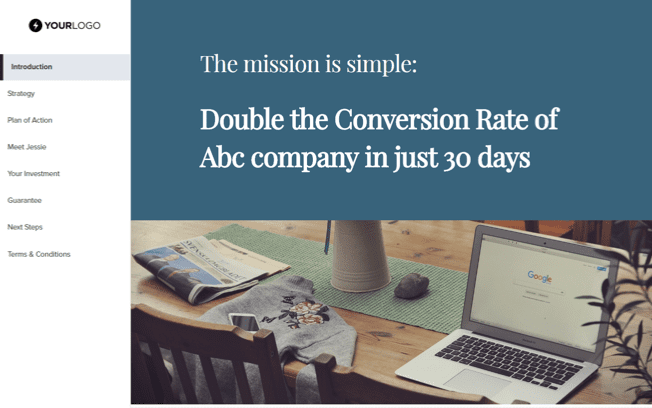
Looking through our data, the introduction is the most read part of every proposal (34.6% of the time speny looking at the proposal is spent on this section), next to the pricing page (which accounts for 27.1% of view time). You need to show the client that you understand their situation, what their goals are and show them that you can get the job done.
Here’s the thing – most marketing proposal introductions suck. The really good ones are based on discovery calls and meetings that happen before the writing takes place. In these meetings, you can "read" the client, feel their heartbeat and understand what pain points they really have. You can then use this knowledge and sweep them off their feet in the introduction.
Download our Individual Member Resource – SEO proposal template
We have developed the SEO proposal template in response to member requests for an SEO proposal template by consultants and agencies whose main focus isn’t search marketing, instead they are looking to offer SEO services perhaps through recruiting or re-training existing staff.
Access the SEO proposal template
3. A detailed specification
You got them hooked with the introduction, now it’s time to get to the details. This is where having a kick-off/discovery call pays off again. This section is all about providing detailed insight into what you will do for the client.
For instance, if you’re creating a marketing plan for the upcoming quarter, explain in detail what you will do for them. If it’s launching a new social media campaign, list in detail what you will do and what kind of outcomes you hope to achieve.
What goes into the specification depends on what kind of industry you’re in. Say you're offering website design services. You may want to include the following:
- The number of pages included in the design.
- The platform for the website (WordPress, Drupal, etc.).
- List of features built into the website (e-commerce store, a page for scheduling appointments etc.).
- The wireframe of the website.
- Colour scheme suggestions.
- The number of revisions.
A couple of rules for this proposal section are: make it really granular and transparent. If things go south later on, you can use it as a reference in the worst-case scenario. The second thing is KISS or 'keep it stupid simple'. No industry jargon, no CRO, SEO, KPI, CPA or whatever the acronym you need for the situation. Keep the language simple and emulate the expressions that the client used when talking to you about their needs and pain points.
4. The timeline
You’d be surprised how many proposals we’ve seen that completely omit this element. Whether it’s something as broad a range as a couple of weeks or as precise as the time on a certain day, make sure it’s in plain sight.
When putting together a timeline, it’s useful to learn about any events the client has coming up. For example, if they have a product launch in four weeks, you can suggest a timeline where you have their work done one week before the launch. You can even use the good old scarcity principle and incentivize clients to sign before a specific date to get a special discount or an extra included in their deal.
The timeline is a great safety net for both you and the client. When deadlines are clearly stated in this part of the proposal, it’s written evidence you can use later on if things go south.
5. The proof
For a lot of clients, marketing is not an area they know a lot about. Instead of throwing around fancy jargon, show the client exactly what you’ve done before and what kind of results you were able to achieve.
For example:
- What kind of reach a social media campaign was able to get?
- The cost per lead for a lead generation funnel.
- The traffic netted from an SEM campaign.
You may want to go the lazy route and point them to a portfolio or testimonials page on your website. Instead, put in the extra work and show proof of work related to the proposal. Preparing an ad campaign for a shoe company? Show them examples of other ad campaigns, preferably in the same industry. It won’t take nearly as much time as you think and it will add massive value to your proposal.
6. The pricing
After the introduction, this is the part of the proposal that gets the most attention from your clients, for a good reason. There are a couple of ways to reduce sticker shock and make your pricing section more reader-friendly.
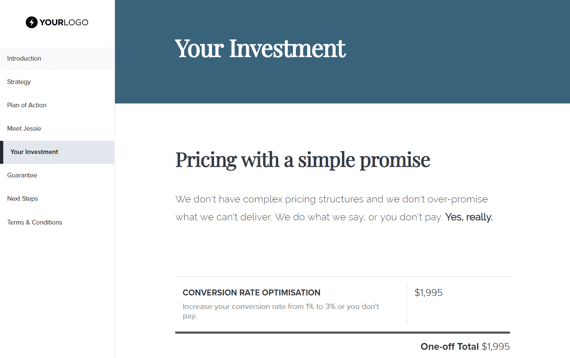
First, make sure to give it a proper name. While "pricing" is nice and to the point, you can opt for "investment" or "return on investment". Words do matter and our research shows that these two terms get better results, as clients see your services as an investment, rather than expense.
Second (and going in line with everything previously mentioned), make the pricing extremely simple. The client should immediately know what they’re paying for. Moreover, for the best results, don’t include any upsells or different offers. Even though upsells are generally proven to work - steer clear from them in proposals. The more choices you give to the clients, the lower the chances of the proposal getting signed.
7. The next steps
Somewhere right before the end of your proposal, you need a section with the next steps the client needs to take in order to sign the proposal. It may sound like common sense, but many proposals simply leave the client wondering what to do next.
For example, give them a simple breakdown as follows:
- - Sign the proposal
- - Receive the invoice for the first part of the project
- - Pay the invoice
- - Schedule an initial call
8. (Optional) guarantee
This is a rather controversial element, but you can give it a try to see if it works for you. We’ve seen some businesses offer guarantees, such as "If we don’t improve your on-page SEO in 20 days, you get your money back."
You can get more creative and offer something other than returning the client’s money, such as an additional month of social media content - there are tons of guarantee ideas out there. Whichever route you choose, including a guarantee section could be the element that nudges the client into signing.
Conclusion
As you can see, writing great marketing proposals is nothing to be scared about. Just make sure you have a proper system in place, with a great marketing proposal template. That way, you will write better quality proposals that perform well, in considerably less time than you’d spend writing them before.
Adam Hempenstall is the CEO and Founder of
Better Proposals, simple proposal software for creating beautiful, high-impact proposals in minutes. Having helped his customers at Better Proposals win $120,000,000+ in one year only, he has launched the first Proposal writing University where he shares business proposal best practices.