2024 Search Engine Marketing (SEM) and Search Engine Optimization (SEO) statistics: Discover the latest search usage and adoption data to inform your search strategies
Statistics help us turn data into information, allowing us to make informed and rational decisions and that's exactly the purpose of this article.
We're huge fans of search engine marketing, both search engine optimization and paid search marketing. But with behavior changing so quickly, it's vital to keep on top of search engine marketing statistics to inform your strategy.
We have a wide range of tools and templates for marketers looking to make data-driven marketing decisions. Whether you're looking for channel excellence or marketing strategy advice, we've got resources to support your digital marketing optimization journey.

Search marketing data for 2024 - February update
This summary of search engine marketing statistics is aimed at helping you make better-informed decisions about the running of your search marketing.
I'll start by reviewing how many people search, then look at the top search engines and finish with the growing popularity of voice search. I'll continue to update this blog as new research is published, so it can be a go-to 'bookmark' resource for search marketers to check stats.
If you're looking to make the business case for investment in search, we recommend you start by modeling search engine marketing return via a search gap analysis to put a quantitative estimate to the returns.
How many searches are made online each day and why?
Google processes over 8.5 billion searches every day. That equates to 6.3m per minute. It has steadily increased YOY since 1998. In fact, Google makes up 78% of all online search behaviour today. But who is benefiting from our increased search behavior?
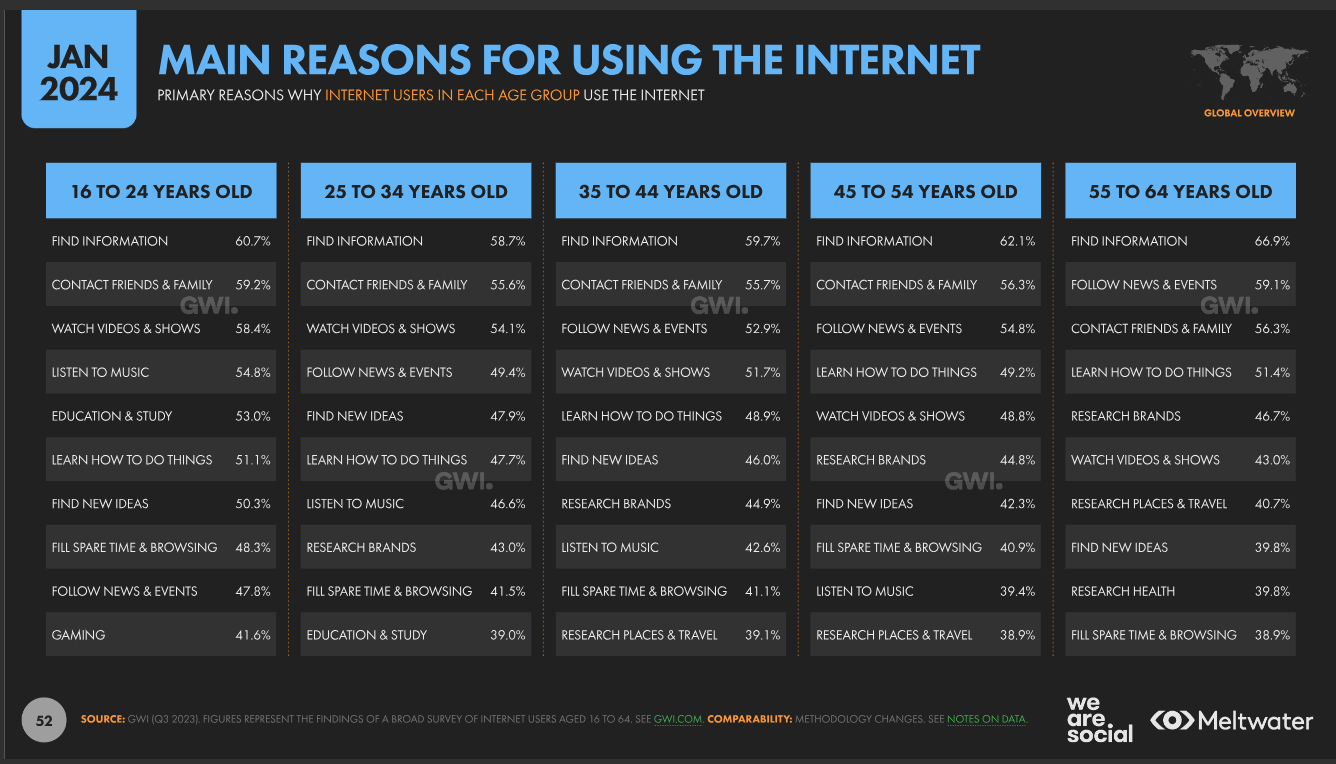
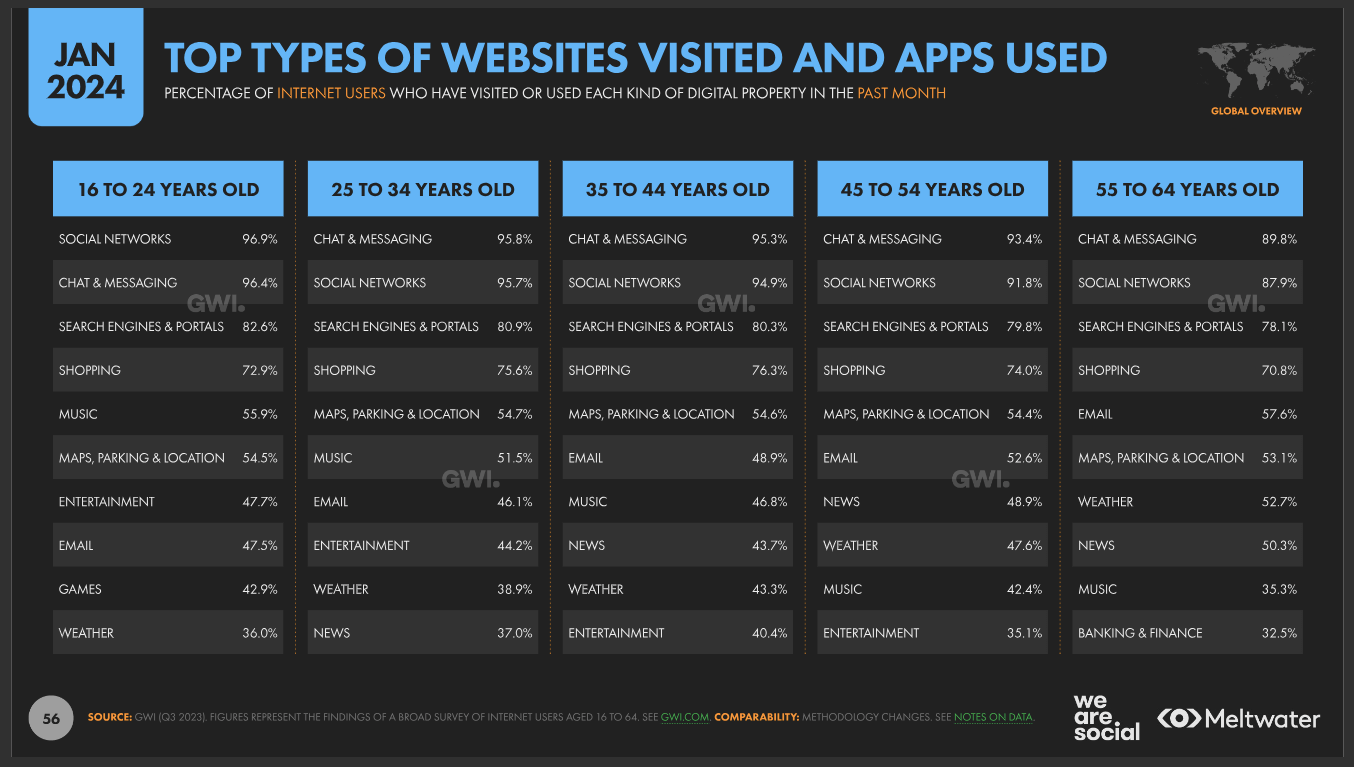
Global research by Datareportal shows that 'find information' is the most common aim for using the internet, across all generations. Search engines are used by 81% of internet searchers, compared to 74% who use online shopping/auctions.
So, in the case of unknown products and brands trying to increase awareness/recognition, priming your search strategy to increase impressions on non-branded high-intent keywords is more important than ever.
Who has the biggest search engine market share worldwide?
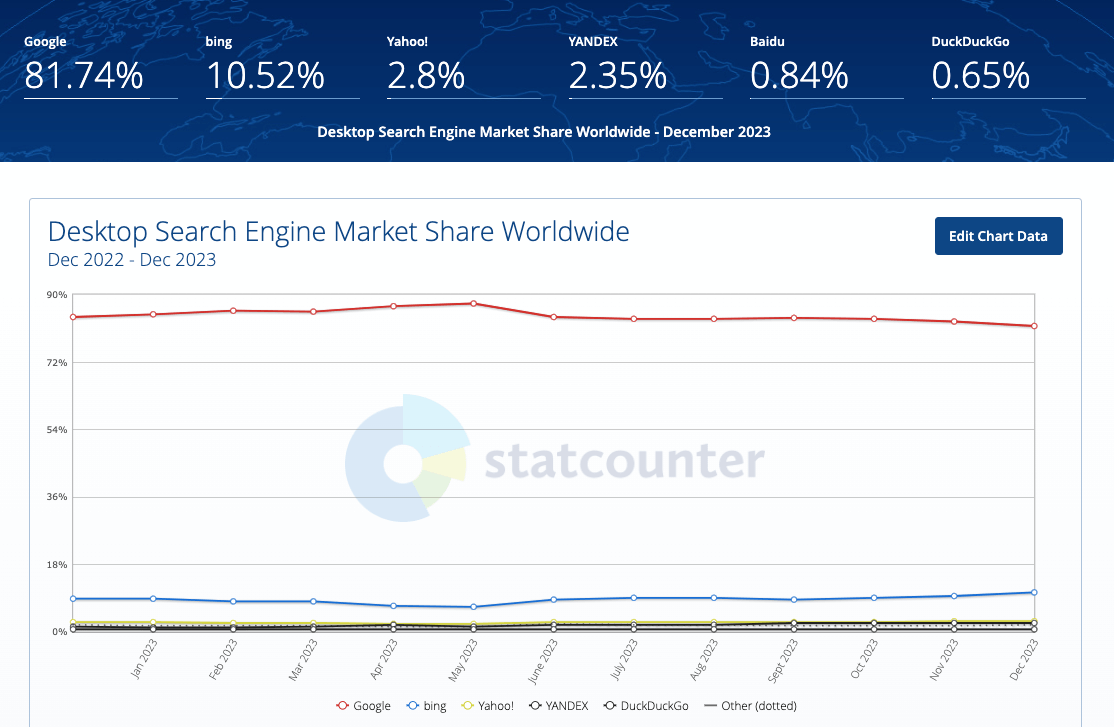
In terms of search engine platform breakdown, Google continues to dominate search engine use, with an 82% percent market share of desktop searches in December 2023.
Clearly, Google is still the market leader, which needs to be taken into account for your digital strategy. This isn’t to say that you should discount other search engines though, especially as Bing which took 11% of searches last year. With both providers now offering AI-assisted search experiences, no doube this is an area to watch for 2024.
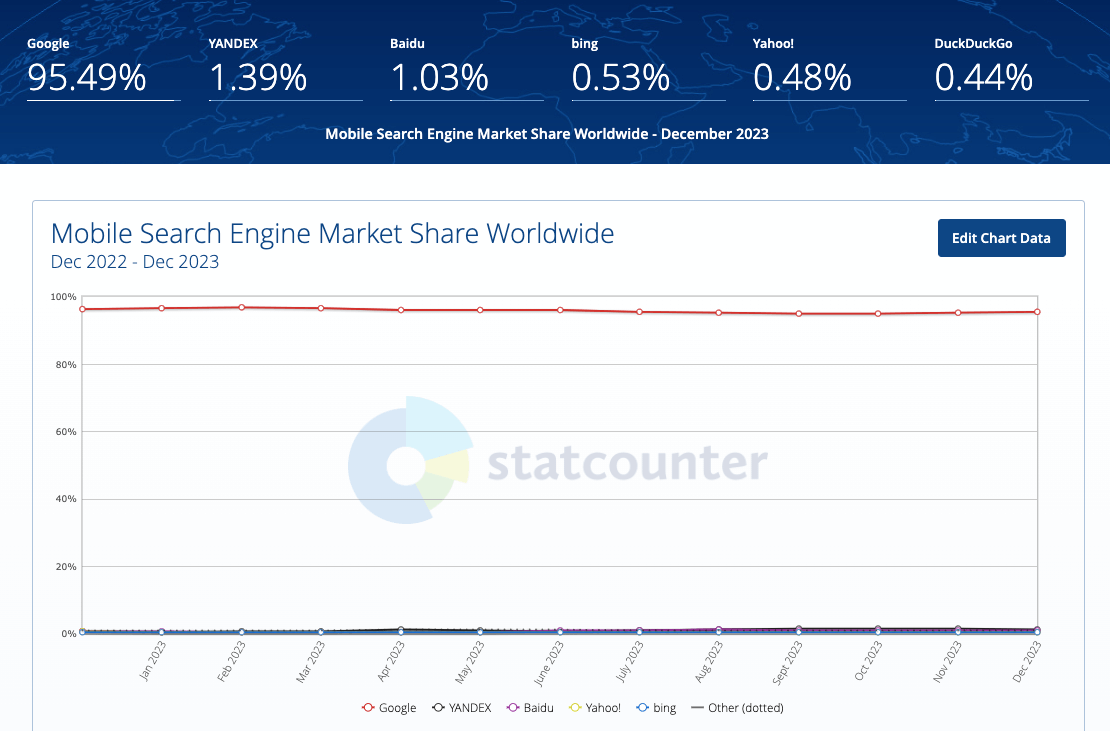
It’s a slightly different story on mobile, however, as Google currently holds 96% of the mobile search market share. This is likely due to Google’s continued focus on the importance of mobile UX factors for SEO.
Desktop vs mobile vs tablet searches
Up until mid-2019, mobile and desktop searches were mostly neck and neck, with mobile just edging into the lead every few months. However, the most recent stats put mobile ahead with 58% of searches, while desktop falls to 40%.
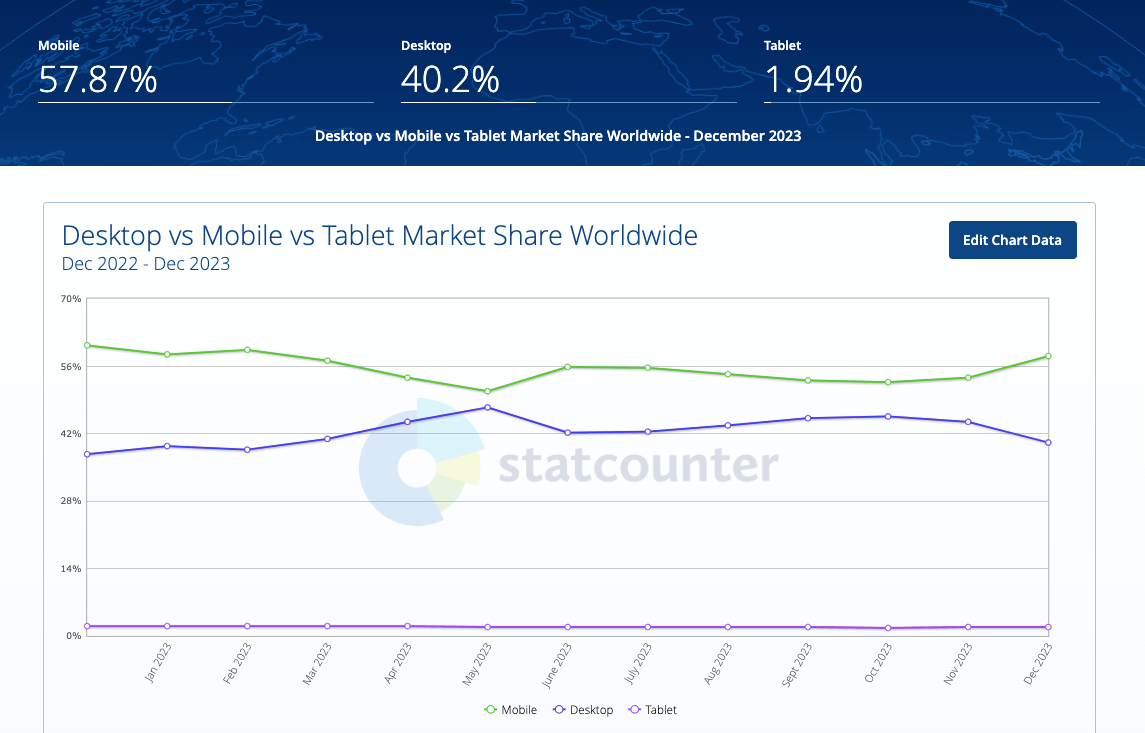
This shows that as more people remain connected 24/7 due to the high mobile phone penetration across the globe, desktop searches are likely to continue to decline.
If you're looking for a marketing plan to refocus your online marketing activities and improve your performance, take a look at our free digital marketing plan template for Smart Insights Free Members to start your digital marketing optimization journey.
Free digital marketing plan template
Our popular marketing planning template is structured across the Smart Insights RACE Framework. Join Smart Insights as a Free Member to download our digital marketing plan template today
Access the Digital marketing plan template
The impact of mobile search on SEO
What does this change in search habits mean for SERPs? At the moment, only 13% of websites are able to retain the same position for a particular search across all devices.
So, you may be ranking well on desktop but not even appear on the first page of results on mobile. In fact, 30% of pages that show on the first page of desktop search results do not appear in the top 10 results on mobile.
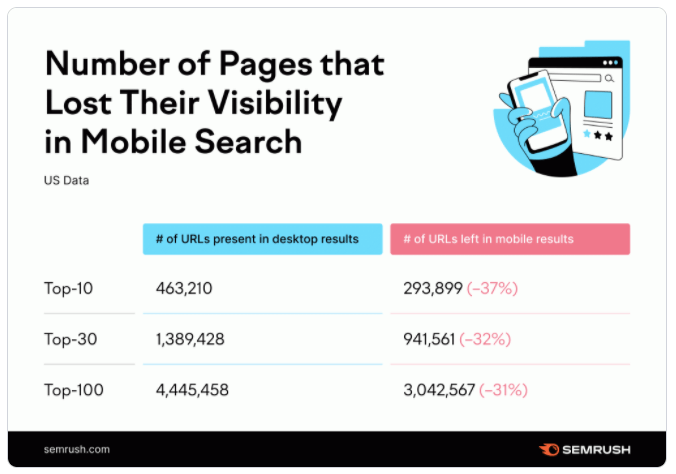
According to SEMRush, only 11% of URLs kept the same position on mobile as desktop.
Marketers in 2023 need to build omnichannel and mobile marketing strategies into their marketing business as usual. Defend your mobile rankings by regularly checking that your site is optimized for mobile, and keep an eye on mobile rankings rather than simply keeping tracking of desktop rankings.
How much trackable web traffic comes from organic vs paid search?
In 2023, the combination of organic and paid search makes up 80% of all trackable website visits. The current split given my HigherVisibility is 53% organic and 27% paid.
Organic search’s dominance is fairly impressive considering the changes that have been made to the layout of search engine results pages (SERPs), which have pushed organic results further down the page, giving more dominant positions to paid results. However, users seem to put more trust in the results that rank highly organically.
How many clicks do organic search results generate?
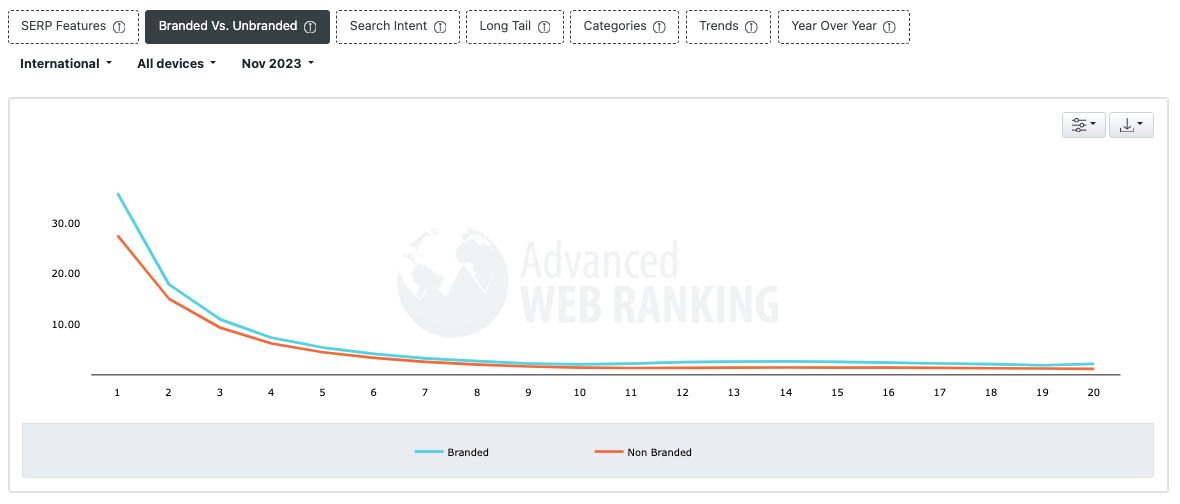
While we already know that the place to be in the search results is on the first page, it looks as though where you really want to be is within results one to three. As shown below, the first three organic positions for non-branded search earn more than 50% of the total click-throughs. For branded search, the numbers are even higher.
This is not surprising, as branded search demonstrates that the user is lower down the funnel. Plus, generally, non-branded terms will have more competition with paid ads, which show up first on the SERP, explaining the lower organic CTR for non-branded.
This chart from Advanced Web Ranking November 2023 demonstrates the steep decline in click-throughs for keywords in 1st position down to 20th. It clearly shows the power of the top 5 positions.
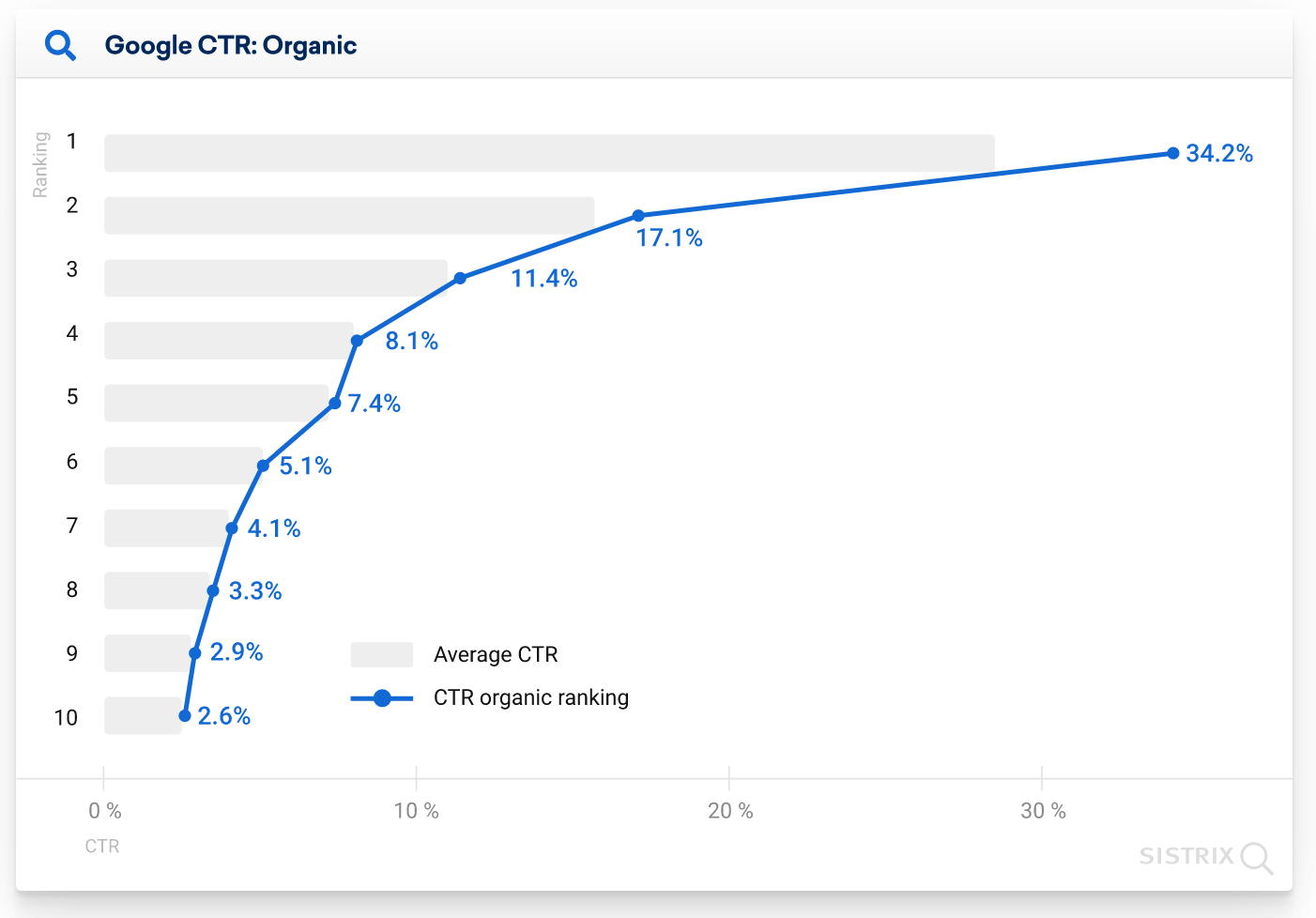
Sistrix also have an analysis of organic clickthrough rates by position. Their data focuses on mobile SERPS. This chart shows CTR for 'pure organic' results with no features.
Their study also includes an analysis of the impact of SERPs features on CTR. Features tend to increase CTR for the top position and decrease CTR of subsequent links.
How many Google searches result in a click?
Ranking highly on the first page or organic results doesn’t necessarily guarantee a click, though. Zero-click searches on Google have seen a steady increase over the last few years.
Research from SEMrush shows that 25.6% of desktop searches and 17.3% of mobile searches end without a click to another Google property. Moreover, with the many different functions of Google SERPs today, less than half of both types of searches ended an organic click.
The results indicated are:
- Organic clicks - these dominate on mobile and desktop
- Paid clicks - clicks on Google Ads - these look to us to be misrepresented in this analysis compared to previous research around product searches which suggest this figure can be in double digits. Here many searches wouldn't have had a paid search option
- Google clicks - a follow-up click to another Google property
- Google keyword - this is a follow-up search
- Zero clicks - There are no follow-up clicks on SERPs
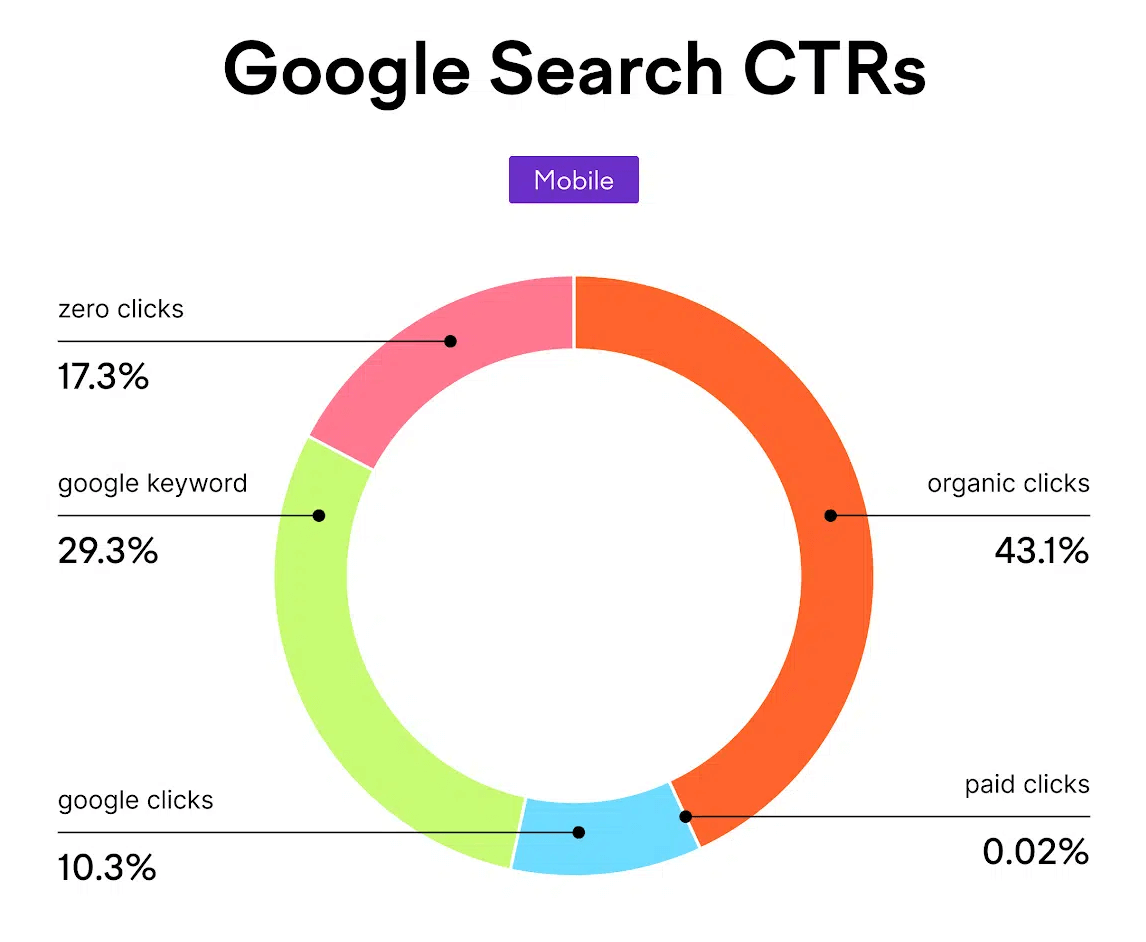
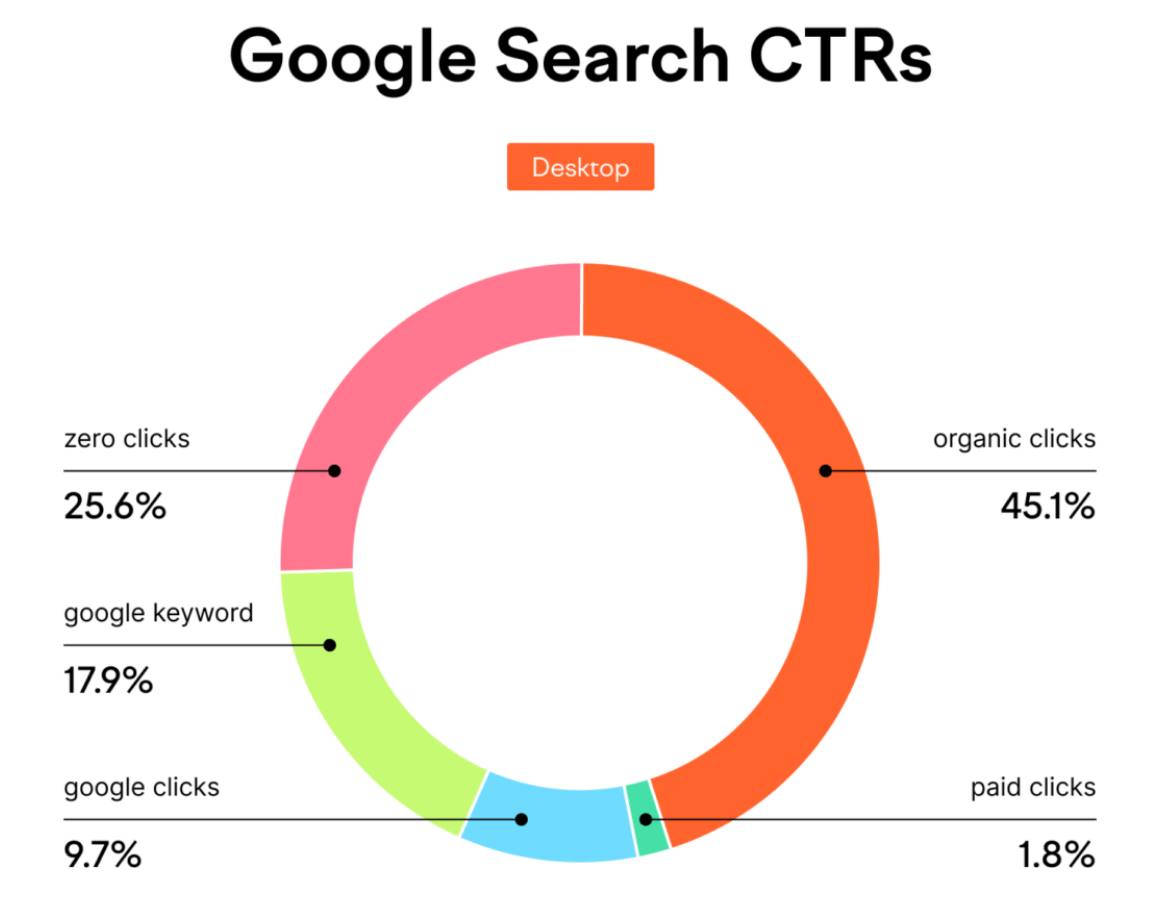
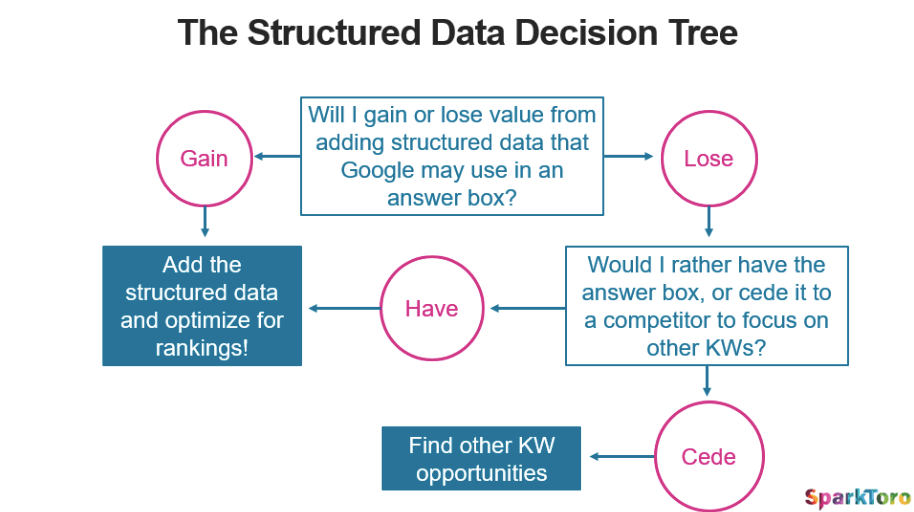
As SERP features increase, this trend is set to continue. SEO marketers must evaluate their keywords to decide when to optimize for rankings (ie structured data for the answer box) and when to focus on driving clicks. This decision tree by SparkToro is a good place to start.
Google Ads clickthrough rates
We have compilations of PPC CTRs by sector from Wordstream and Skai on a separate post on Paid ad clickthrough rates which cover Google Ads and Paid social.
Search engine marketing statistics for voice search popularity
In 2022 35% of the US owned a smart speaker, dropping to 30% in Canada and 28% in Australia. But how are people using these devices to search and how can you tailor your SEO strategy to this new behaviour?
WebFX breaks down smart searches into 4 categories:
- Looking to know: People ask their smart devices questions to obtain information. These are extremely common, with people asking questions as simple as “What’s the weather for today?”
- Looking to go: Many people ask their devices things such as “Where can I get the best Chinese food?” or “Where can I buy rain boots?” These searchers intend to find and visit the business that best meets their needs.
- Looking to buy: Smart devices are often used to purchase products. People can order products through these devices and get suggestions of where to purchase those products.
- Looking to do: When users are looking for something to do, they can ask the Google Home or Alexa for help. People can search with questions such as “What festivals are near me?” or “Where is the closest mall?”.
Depending on your product/service, think about the types of searches that you want to appear on and ensure you are ranking for high-intent conversational search queries that you know help drive your conversions.
Your omnichannel marketing strategy in 2023
Structure your marketing plan around a funnel proven to boost performance. Join Smart Insights as a Free Member for instant access to our free digital marketing plan template to hone your skills and drive the results you need.
Free digital marketing plan template
Our popular marketing planning template is structured across the Smart Insights RACE Framework. Join Smart Insights as a Free Member to download our digital marketing plan template today
Access the Digital marketing plan template