What can we expect from the wearables market in 2018? These are the top wearable statistics to inform your 2018 technology and media innovations strategy
The wearable technology market is a hot topic of discussion among many marketers. But it still feels unclear for some brands how they can adapt their marketing strategy to this new trend. According to a report from Juniper Research, wearable advertising spend is estimated to reach $68.7 million by 2019. opening up new opportunities for marketers.
Download Business Resource – Marketing Technology and Media Innovations guide
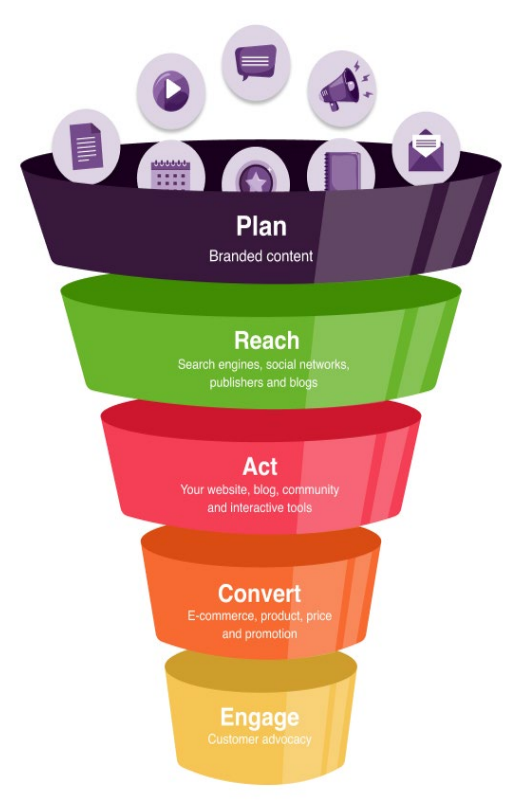
The guide outlines 6 of the most important new technologies marketers should consider when planning for future investment in customer-facing marketing experiences and communications to encourage brand engagement and purchase. At the start of the guide, we also explain different planning techniques that will help you take the right strategic decisions when evaluating new technology investments.
Access the Marketing technology and media innovation guide
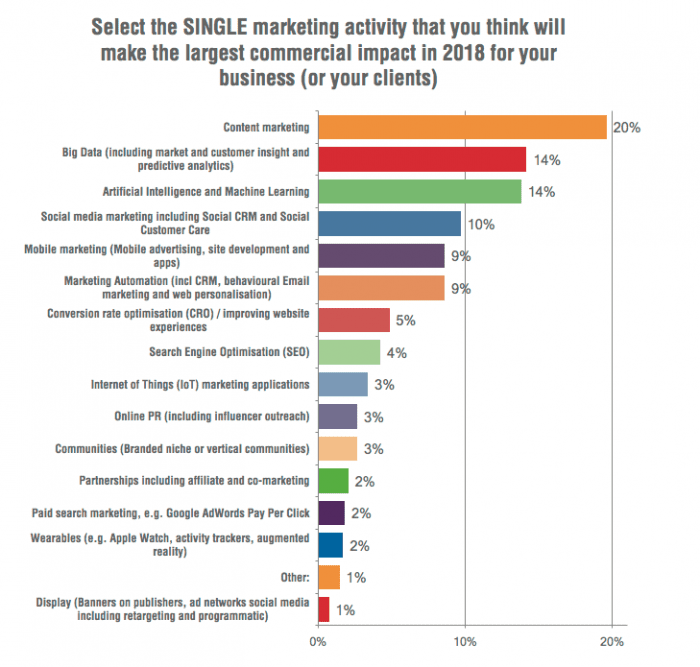
Which marketing trend will be most important to you and your business in 2018?
We have asked this question over the past few years and it's been really interesting to see what 'rocks your digital world' since there are some common themes amongst the top 3 and some activities surprisingly low. The question we asked was around the most important commercial trends. We had around 850 votes from marketers in different types of business from around the world. Only 2% of respondents answered that wearables will have the largest commercial impact on their business in 2018. Respondents preferred to focus on content marketing and big data - overlooking the potential that wearable technology can achieve.
Top 10 stats from 2017 to inform your marketing strategy for 2018
- The worldwide wearables market reached a new all-time high as shipments reached 33.9 million units in the fourth quarter of 2016 (4Q16), growing 16.9% year over year (Buisness Wire, 2017)
- Tractica also forecasts an increase of the wearables devices until 2021, with total shipments for all wearable devices to 560 million in 2021, which means an estimated device revenue of $95.3 billion in 2021 (wearable technologies, 2017)
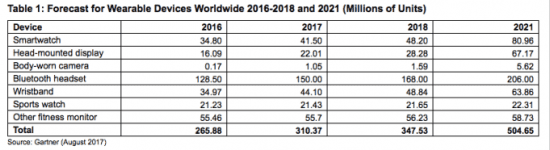
- Its forecast projects sales of 310.4M wearable devices worldwide this year, generating a total of $30.5BN in revenue — of which it expects $9.3BN to come from the smartwatch category specifically (Techcrunch, 2017)
- By 2021, Gartner estimates that sales of smartwatches will total nearly 81M units — representing 16% of total wearable device sales, according to its forecast (Techcrunch, 2017)
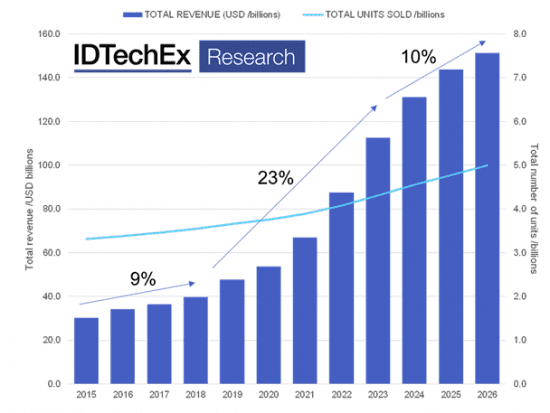
- The market for wearable technology will reach accelerated growth with a yearly growth of 23 percent through to over $100bn by 2023 and, reach over $150bn by 2026 (IDTechEx, 2016)
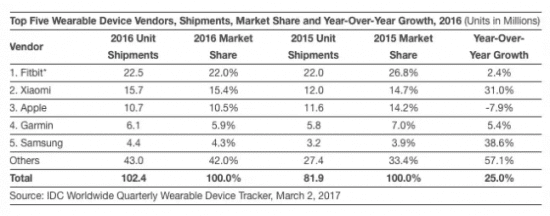
- 102.4 million wearable devices were sold in 2016, a 25% increase over the year before, growth that was driven primarily by higher sales for Xiaomi and other budget wearables makers (Relate, 2017)
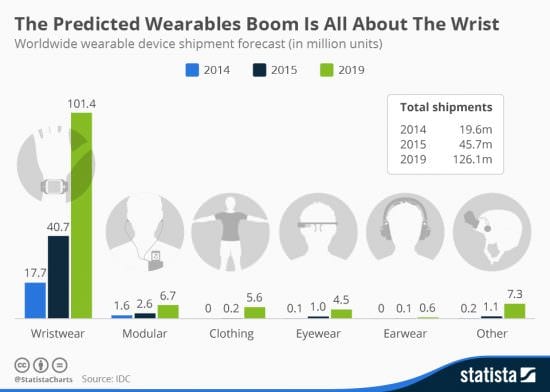
- Just under 50 million wearable devices were shipped in in 2015 and over 125 million units are expected to ship in 2019 (Forbes, 2016)
- By 2020, smart eyewear will account for 40% of total revenue of the wearables market (i-scoop, 2016)
- This vibrant market is expected to grow in value from just over $10 billion in 2017 to almost $17 billion by 2021 (wearable technologies, 2017)
- Gartner says it expects a total of 41.5M smartwatches to be sold this year, adding that the device type is “on pace” to account for the highest unit sales of all wearable form factors from 2019 to 2021, with the exception of Bluetooth headsets (Techcrunch, 2017)
Key trends to watch out for in 2018?
More wearable devices
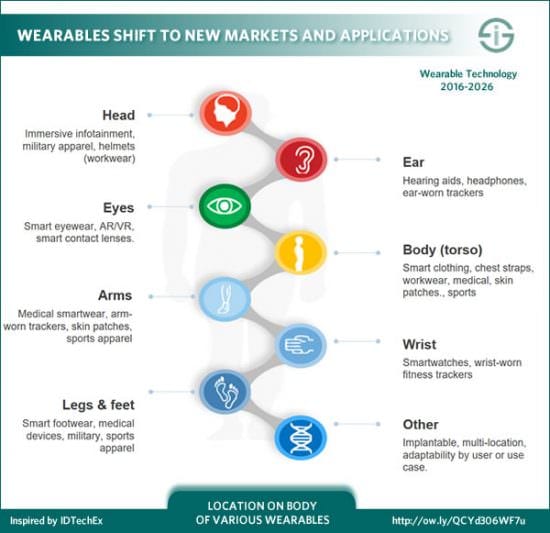
As more money is spent on wearable devices and consumers start to adapt there will be an increase in the range of devices available to consumers. The range available will increase to different ranges, body parts and needs. According to i-scoop wearable technologies will shift to new markets and areas of the human body by 2026 (i-scoop, 2016). This year we have seen Fitbit, Alexa, Google home and Apple Watch 2 take off, people are increasingly using them more as part of their everyday lives.
Reshaping healthcare
Wearable technology is evolving to help solve some of the healthcare’s biggest problems. Healthcare providers can collect data from patients, as well as use wearable technology to keep doctors connected to co-workers and data without the hassle of a pager or phone system. There have been a number of advancements in the healthcare sector such as introducing hearables, or wireless computing earpieces, and brainwave-reading technology.
New data for retailers
As we adapt to new technologies retailers will be able to collect ‘super data’ such as a user’s in-store shopping frequency, their basket size, value per item, length of stay etc – meaning that online advertising placements and scheduling can become more acutely defined. it will also allow retailers to access personality traits about the customer, such as what you listen to, what you “like”, and what you like to browse.
Once the industry has made advancements in the data wearables collect about their customers, retailers will be able to build a fully personalized experience of the entire browsing and buying journey.
Fitness tech will continue to grow
The boom in wearable technology has been mainly fueled by fitness, such as wearable gadgets’ that monitor your heart rate or track your exercise. These gadgets have been successful because they are helpful to the user and easy to integrate into everyday life. According to IDC, the market’s growth will be fuelled almost exclusively by smartwatches and wrist-worn fitness trackers. Having tech on your wrist, the smartwatch allows for precise data to be collected about the user. This is likely to radically impact the retail experience as hyper-personalized offerings become commonplace.
What does this mean for marketers?
Although wearables might not have fully taken off this doesn't mean that wearables are dead. Some business maybe seeing significant success - especially those in the health and fitness sector.
But if you have been unsure of the transition to wearables brand should be doing something with wearables maybe start thinking about whether or not you have the tools, tactics, and support in places to be successful in this industry.
You also need to ensure you use cross-platform marketing. As technology evolves, it would be foolish to focus all your marketing efforts one single technology. embrace the new and look to adapt and change in the future. TechCrunch reported 'Current low adoption by mainstream consumers shows that the market is still in its infancy, not that it lacks longer-term potential'.
If you are unsure how to prioritize marketing investments in innovative marketing technology use our marketing technology and media innovations guide to help you make informed decisions for 2018. It works through planning frameworks to will help your business think strategically and make the right decisions about how to invest. The guide also outlines the key technologies marketers need to consider when planning for the future.
Download Business Resource – Marketing Technology and Media Innovations guide
The guide outlines 6 of the most important new technologies marketers should consider when planning for future investment in customer-facing marketing experiences and communications to encourage brand engagement and purchase. At the start of the guide, we also explain different planning techniques that will help you take the right strategic decisions when evaluating new technology investments.
Access the Marketing technology and media innovation guide