Why a focus on the fundamentals of customer retention is essential to business growth
Many marketers are grappling with the challenges posed by fundamental changes in consumer behaviours, increasingly competitive markets and a host of digital technology developments, mobile innovations and social media proliferation.
The good news is that marketers are far better placed to operate in this brave new world than they may think! The fundamentals of customers, brands and marketing have not changed.
However, customers are still the most important asset of any business, so in my view, the number one priority for marketing to acquire and retain customers by creating a compelling value proposition and brand story that resonates with customers.
There is a danger if there is too great a focus on customer acquisition, then businesses spend too insufficient time on managing customer retention. Instead the balance is wrong and they focus too much on acquisition using paid, owned and earned media and insufficient time on understanding and encouraging customer loyalty and advocacy.
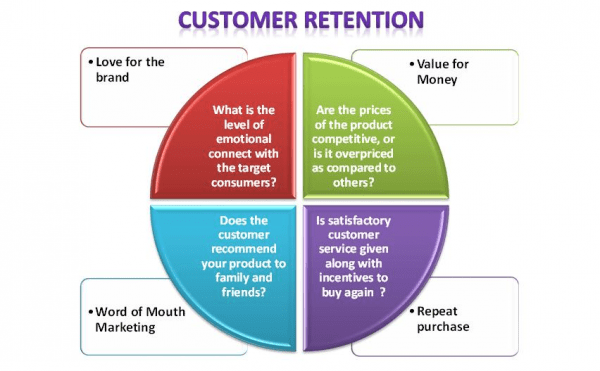
Creating a retention plan enables businesses to focus on these 4 key questions to improve customer loyalty identified by Kanti Banerjee in what he calls the Full Circle approach to Customer Retention.
Why is a focus on planning and managing retention essential?
The changes referred to earlier will yield opportunities for marketers to reinvent their value propositions, brand positioning and customer experience to take advantage of the new customer engagement opportunities. This isn’t easy (but it’s exciting and rewarding if you get it right) but best practice is starting to emerge with brands applying an obsessive focus to creating value for customers realising high payback:
- Starbucks – using mobile to enhance the in-store experience
- Sephora – using social media to making shopping a fun and collaborative experience
- Hertz – using micro-targeted, mobile messages (in the airport) to save their customers time and stress
- ASOS – personalising every aspect of the customer experience from web store recommendations to customer communications to parcel tracking
These brands have all started with the Customer. They have worked out how the new content, technology, media and channel opportunities can add value for customers, and then designed a technology and delivery solution to make it happen. They apply these 5 key modern retention marketing principles:
1. Deliver a seamless customer experience across all customer touch points.
2. Adopt a more reactive, real-time approach to customer communications – the customer is in control now and brands must respond quicker and more appropriately to them.
3. Unlock the power of content as a value creating resource.
4. Harness the power of social media to connect and empower customers.
5. Leverage the moment in time and place personalisation opportunities afforded by mobile interactions.
So in recalling the famous war-time poster, it is very much a case of marketers remaining calm and building on their existing customer retention programmes. This does require a certain data and technical literacy; creative and innovative nature; appreciation of the opportunities and constraints of new social and mobile channels. However these are extensions to current marketing strategy and must build on existing programmes rather than being pursued as new standalone initiatives.
They have kept sight of the fundamentals of marketing :
- 1. It is always easier to sell to existing customers than cold prospects – start in your own back yard with and high performance customer retention programmes.
- 2. Understand customer behaviours and attitudes and develop deep insights into needs and motivations. Identify and exploit the new customer insights resulting from customer engagement across digital, social and mobile channels.
- 3.Focus on key customer segments.
- 4. Be innovative and creative in developing and testing new value-creating initiatives.
- 5. Design customer journeys that co-ordinate interactions throughout the customer lifecycle and make it easy for customers to meet their needs at each stage.
- 6. Use personalisation as a competitive differentiator – other brands can copy your product, service model and pricing but they don’t know what you know about your customers.
None of these disciplines will be new to marketers. They are the core principles of the marketers’ craft which will underpin strong value propositions. The achievement of the brands cited above is that they have future-proofed these by adopting a new set of principles
The financial arguments for a retention focus are compelling too. Ross Beard compiled this summary of customer retention research which remind us why we should focus more on planning and managing retention:
-
It is 5-7 times more expensive to acquire a new customer than to keep an old one
-
It costs a company $234 every time they lose a customer
-
Loyal customers are worth up to 10 times as much as their first purchase
-
86% of consumers quit doing business with a company because of a bad customer experience
-
78% of online customers recommend a brand to friends and other contacts after a great customer experience
The rallying cry therefore is for confident, assertive marketers to lead the way in embracing changes and fully exploiting the new technology and media opportunities to reinvent retention programmes that deliver an :
- enhanced experience for your customers
- increased ROI for brands
The new Smart Insights guide to creating a customer retention plan
To give more detailed advice on how to improve customer retention through a planned approach, I have written the recently published Smart Insights Retention Strategy Plan guide to help marketers review and improve their customer loyalty. It covers these 7 Steps:
- Step 1. Establish a clear framework for understanding customer retention effectiveness.
- Step 2: Benchmark your current retention programmes.
- Step 3. Create a customer retention and growth strategy.
- Step 4. Implement practical tools to support the retention programme.
- Step 5. Define typical retention KPIs and performance measures.
- Step 6. Use content marketing, social media and email marketing for growth
- Step 7. Align organisation and technology

Thanks to Andrew Campbell for sharing his advice and opinions in this post. Andrew is an experienced digital marketer with a wide breadth and depth of experience. He has worked on high pay back email programmes for leading brands such as Aviva; Netflights; Thomas Cook and East Coast. As a freelance consultant Andrew has extensive front line experience in designing multi-channel CRM programmes that fully leverage the email channel. He is also actively involved in sharing and promoting best practice as a trainer, speaker and lecturer. You can follow Andrew on
Twitter or connect on
LinkedIn.