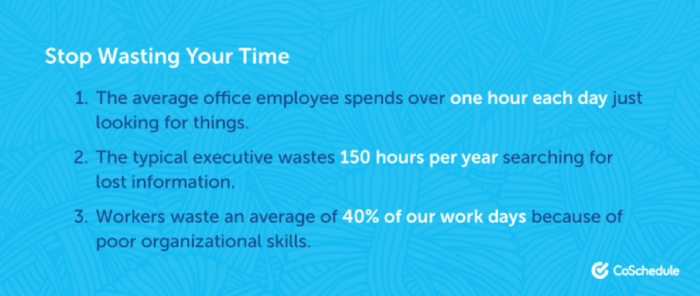
Getting your marketing team to be more organized can mean that they become 397% more effective, but exactly how do you streamline your processes?
Research shows that organized marketing teams are 397% more likely to say they’re successful.
That’s an impressive figure, right?
You can draw some obvious conclusions from this single statistic, too. For starters, it pays to take the time to get your processes in order. Provide your team with the right structure, and performance improvements seem sure to follow.
Except it isn’t quite that simple.
Download our Business Resource – How to keep your team up to date with digital marketing
The guide is also useful for agencies since teams need to be ahead of what's happening, so their clients can always get the latest thinking and trends.
Access the How to keep your team up to date with digital marketing
Marketing departments are notoriously chaotic. They’re fast-paced places filled with busy creatives, strategists and analysts doing their best to steer their brand in the same direction.
That’s easier said than done though. As a result, marketers sometimes feel like they do their best work under pressure or in disorganized conditions, without realizing that’s because they’ve never known anything else.
The solution: investing time and resources into getting organized the right way.
Why should marketers care about getting organized?
Sure, being 397% more successful sounds awesome. But, how does getting organized actually benefit marketing teams?
Consider the following:
- Getting organized is shown to reduce stress and, in turn, a team that’s less stressed is one that’s better equipped to produce quality work.
- It also frees up mental energy that you can use to better focus on that work.
- When something unexpected does happen, you’ll be better prepared to deal with it effectively, rather than being thrown into a state of panic.
The common thread between these points is the importance of understanding that organization in and of itself isn’t the goal. Rather, getting organized is the action that makes multiple other benefits possible.
How to get started
There are a handful of simple things you can do to start organizing your team.
Unify your toolset
Marketing teams typically need to use multiple tools and apps for their work. This can lead to some messy tool stacks though and, in some cases, even duplicate functionality between different pieces of software.
Giving your team one place to perform specific tasks helps alleviate this problem, as does consolidating as much functionality as possible. This cuts down on time spent switching tabs or wondering exactly where team members can find or do what they need.
Some tools to consider:
- An interconnected marketing suite or platform. This type of software is typically built with the features marketers need to organize their work (rather than relying on generalist productivity or work management software).
- Communication apps. Slack can be beneficial for eliminating long email threads. Some marketing suites and platforms also feature built-in communication functionality for further organization of correspondence attached to specific projects.
- Zapier. This powerful tool can connect disparate apps to help your software services talk to each other.
Organize your workflows
Do you have documented workflows for common types of projects your team executes?
If not, it’s worth considering creating them.
This helps eliminate ambiguity around how tasks should be completed, ensures work gets done consistently and avoids wasted time wondering how things should be completed.
In addition, when workflows are clearly planned, team members know exactly when projects will be handed off. That way, things don’t get lost due to lack of clarity or communication.
Standardize file naming conventions
Ever receive a draft from a coworker with a filename that looks like, “QUARTERLY_REPORT_V5_FINAL_EDITS_2.0”?
Is this version five? Is it final? Is it a “final” draft with some edits that need to be made?
Coming up with one standard file naming convention eliminates this kind of confusion.
Plan the way you’ll plan
How do projects get planned within your team right now?
If you don’t have an answer to that question, it’s time to make a change.
After all, if there’s no clear method behind how campaigns are developed, work gets delegated, or deadlines get set, then the ensuing free-for-all of informal makeshift processes is bound to create chaos.
Instead, think about establishing the following process:
- Start every major project with a creative brief.
- Hold a team meeting with everyone involved to discuss the project.
- Add all your tasks and deadlines onto your marketing calendar or work management software.
- Meet again at the end of the project to discuss what went well and how you might improve next time.
This simple process can put a stop to impromptu projects derailing people’s days by providing structure behind how work gets planned.
Establish publishing cadences
Knowing how often you’ll execute routine projects can help avoid spikes and troughs in your publishing schedule, particularly when it comes to content marketing.
Things like email newsletters, blog posts, social media posts, and other types of content that are well-suited to having a set cadence. You don’t necessarily need to hit an exact number of pieces each week, month, or quarter, but establishing basic guidelines is useful.
What skills do marketing managers need to organize their teams?
Organization doesn’t happen by accident. It’s the result of thoughtful strategy and an intentional approach toward aligning your team’s work. There are also a number of skills that are valuable to learn and develop, which are helpful for putting plans into action and making organization a habit.
Change management
Getting a team to make any kind of change can be a challenge. The inertia of the status quo makes change difficult, especially when team members don’t see the value of what they’re being asked to do, or when they’re attached to old ways of doing things.
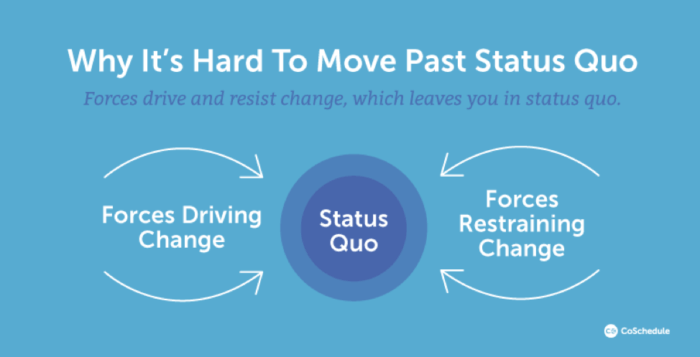
That means strong change management skills are essential for getting things done. Here are a few pointers to start with:
- Understand the emotional reasoning behind resistance to change. Seth Godin’s Linchpin is an excellent read that explores this topic in deep detail.
- Start small. Iterative changes over time stick more effectively than massive swings all at once.
- Be open to input from the team. If people feel like they’re heard, they’re more likely to trust that changes are being made in the best interest of the team.
Basic leadership abilities
In conjunction with change management skills, having general leadership ability is key for rallying people to make positive adjustments.
Don’t feel like a natural-born leader? No worries. It’s a skill you can build and sharpen over time.
Here are a handful of things you can do right now:
- Don’t wait to take the initiative. Find something small you can influence and lead the charge. Once you start having success, find the next thing, and repeat. Your successes will compound and your confidence will grow accordingly.
- Lift up those around you. Keep your efforts focused on the good of the team, rather than what benefits yourself most.
- Delegate (but don’t micromanage). If you’ve put the right people on your team, you should be able to trust them to do their jobs.
Strategic planning
Getting organized requires an ability to see what’s coming next, so you’re not taken (unpleasantly) by surprise with work coming out of left field.
Some ways you can do this include:
- Using a marketing calendar that’s shared with your entire team.
- Unless its an emergency, enforce a rule of following the proper process for adding work to that calendar. If it’s not on the calendar, it’s not real.
- Give every project a deadline.
This can help get the entire team on the same page, and avoid having anyone feeling like they’re being pulled in multiple different directions from other team member’s with competing priorities.
Ability to prioritize
When you have lots of areas you could fix, how do you choose which ones are most important?
Start with the things that will maximally improve working conditions for your team.
Then, work backward from there.
Start by building a list of things you could improve. Then, score them with a 1 being most important, in descending order from there.
You now know which things are most worth your time.
Interpersonal communication
Lastly, all of these things are made easier when you’re able to communicate clearly with those around you.
Some things to consider working on include:
- Developing strong listening skills. If you can’t listen, you can’t communicate.
- Maintain a positive attitude. Approach differences in opinion with a spirit of building consensus and resolving conflict, rather than trying to “win” the conversation.
- Opt for face-to-face communication when possible.
Are you ready to be 397% more successful?
This is a lot of information, and it might even feel a little overwhelming. If that’s the case, remember to take things slow and make several small steps in succession toward a more organized future with your marketing team. Not only will this make change easier, but those changes will also be more likely to last.
And driving lasting change that turns work from chaos into coordination is what this post is all about. Now that you’re equipped with the framework to do great things, it’s time to go out and make it happen.
Ben Sailer is the Content Marketing Lead at CoSchedule. His areas of expertise include content strategy, copywriting, SEO, and more. Find him on Twitter at @Ben_CoSchedule.