Storytelling helps form connections and captivate your audience, making them an effective part of your social media strategy
Who doesn’t love a good story? Whether it’s as toddlers, captivated by Maurice Sendak’s Wild Things book, or as adults watching our favorite movie, we love to get to know the characters, see how the story plays out and maybe experience an unexpected 'plot twist.'
If you love stories so much in your personal life, why not craft and share some in your digital marketing work? Doing so will not only turn more of your passive visitors into engaged followers - and eventually paying customers - but your team will have some fun in the process.
This post shares how best to do this via your social media channels. But first I’ll explain what a story is, which types of stories to tell at each stage in your buyer’s journey and how to measure the performance of your stories.
Story basics: structure and goals
What makes stories captivating is their tried-and-true structure; the format that’s proven to work over hundreds of years. These structures, if followed, best evoke an emotional connection from the reader. As a marketer, it’s these subconscious emotions you most want to create, because they trigger the 'like' and 'buy' buttons in your prospects’ brains.
There are two basic story structures: Freytag’s pyramid and the 'ABDCE' structure.
In Freytag’s pyramid, all dramas are comprised of five stages, as shown below:
- Exposition
- Rising action
- Climax
- Falling action
- Denouement

The ABDCE structure, by contrast, consists of:
- Action
- Background
- Development
- Climax
- Ending
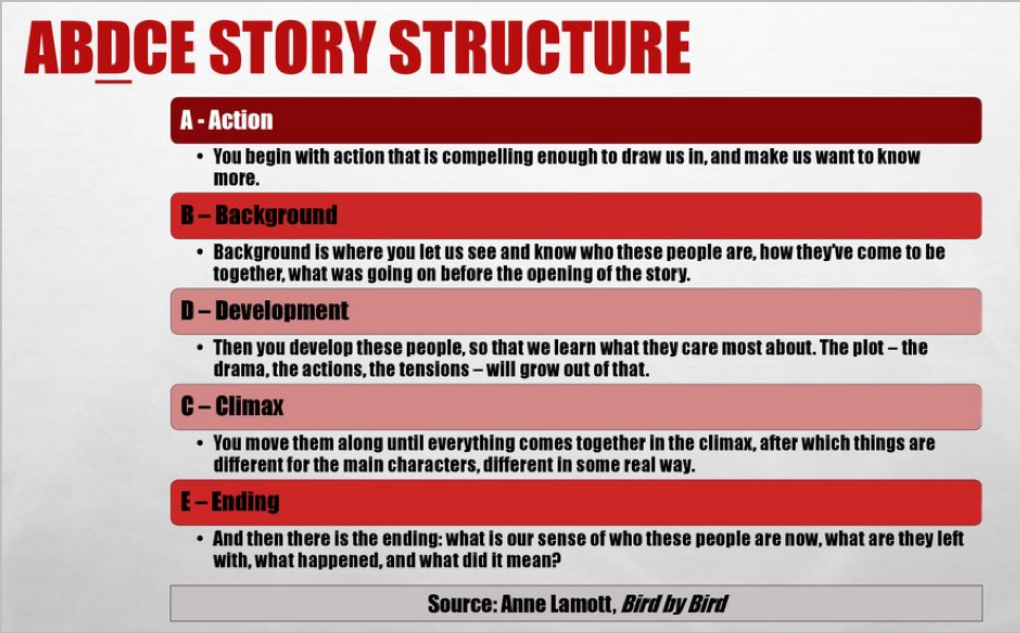
This model, due to its straightforward simplicity, is most widely used by both journalists and marketers. It doesn’t dally around; it grabs the reader’s attention with action. Then it shares the background information necessary to give context to the story. It then builds to the climax, which is the defining event in the story. The ending is the winding-down point of the story, where your viewer considers the moral or theme of the story.
Choose which stories to tell
So, which stories should you tell as a digital marketer? Well, it depends on how well-known your brand is. If you’re introducing a new brand to your market, it’s best to tell an 'origin' or 'outcome' story. If your brand is well-known (and by well-known, I mean on a global level), 'explainer' stories work well.
“Access
This Quick Win will provide a list of actionable points to help you think about style and content, gaining attention, and engaging with your followers better.
Access the Copywriting hacks for social media marketing
Origin stories
An origin story, as the name suggests, explains how your brand come into being. A good origin story clearly states why your brand exists and who you serve.
The 'why' part is your brand’s purpose or main reason for being. Some brands - for example, Newman’s Own and Tom’s Shoes - have a high social conscience. They want to make a difference in the world, and partner with their customers to make that happen. Others - like Intuit’s TurboTax - simply seek to reduce the hassle of tax time.
While the 'who you serve' part of your story need not be front and centre, you should mention it at some point so that target prospects will quickly understand and say to themselves, 'Ah, this is for me' (and others will not).
Outcome stories
For prospects who know your brand, build connection and trust with an 'outcome' story. An outcome story shows the end result of using your product or service, which is ultimately what your prospect desires (their main motivation).
As an example, I just bought tyres for my van a few days ago. What I desired was a smooth ride, good traction in bad weather and a long tread life (so I wouldn’t have to buy tyres again for a long time). To tell this outcome story, my tyre seller could have shared a few short videos showing testimonials from several satisfied customers on their website, and also on YouTube. Viewing these videos, I would see myself 'in their shoes' and trust their brand enough to call or email them about placing a tyre order.
Explainer stories
If your prospect trusts your brand enough to engage on one or more of your web channels, it’s a good time to share an 'explainer' story. These stories explain the features and benefits of your offering in a colloquial, non-technical, way. They may even contrast your offering against lower-value offerings from your top competitors.
If your brand offers 'concierge selling' features - such as a 'product finder' tool, a chat application or some other customer service option - you should mention this in your explainer story.
An added bonus: you can insert these stories and feature highlights into your category pages (on e-commerce websites) and landing pages (on SAAS websites).
Share your stories on social channels
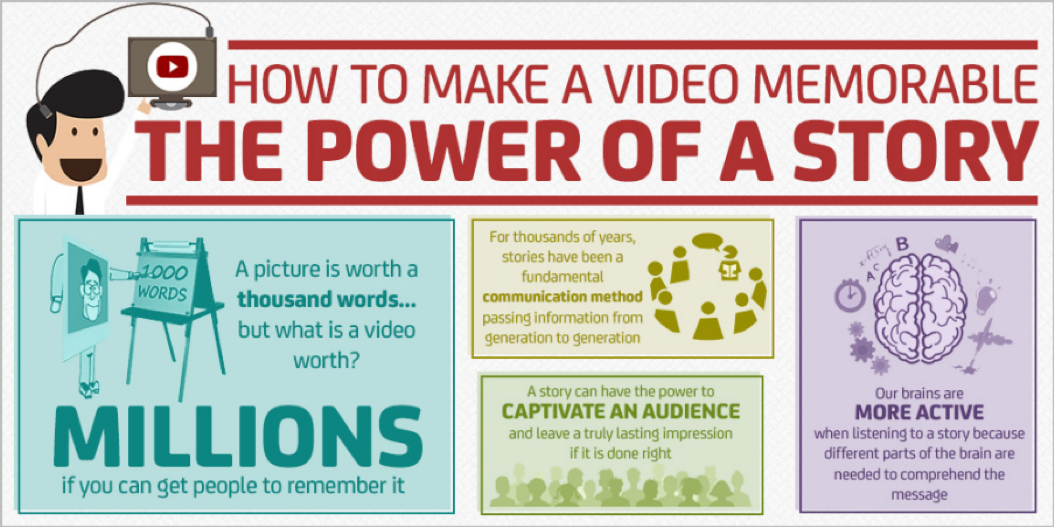
Since it’s so popular and engages the visual parts of our brains, YouTube is a great social channel to start with. Intimidated about scripting, producing and posting your first stories here? Don’t be.
You don’t need to go 'all in' on day one in terms of creative and production effort. After learning about your prospects top intents and questions, boldly script your first video (or set of videos). You can either record and produce them internally, with a modest budget, or outsource the production to a freelancer portal like Upwork.
Then post your videos out to the world. You’ll soon learn which story themes create the most engagement and which don’t. At this early stage, this learning process is just as important as moving your marketing metrics.
Importantly, keep your videos short (less than four minutes for sure and ideally less than two minutes). We’re in the short-attention-span era, so don’t test your prospects’ patience.
Move beyond YouTube
After you’ve created a couple videos and they’ve been live for a month or two, repurpose the best-performing themes and creative into quick-consumption content like images, infographics and animated GIFs. Share these stories on other channels (including your content marketing pages) that are most viewed by your target prospects and 'tribe.'
For example, if you sell women’s cosmetics, share your images and copy on Instagram and Pinterest. If you sell a personal productivity app, share your stories on LinkedIn and your high-trafficked website pages. In this way, you’ll tailor your message to the best viewing context.
Don’t forget the metrics
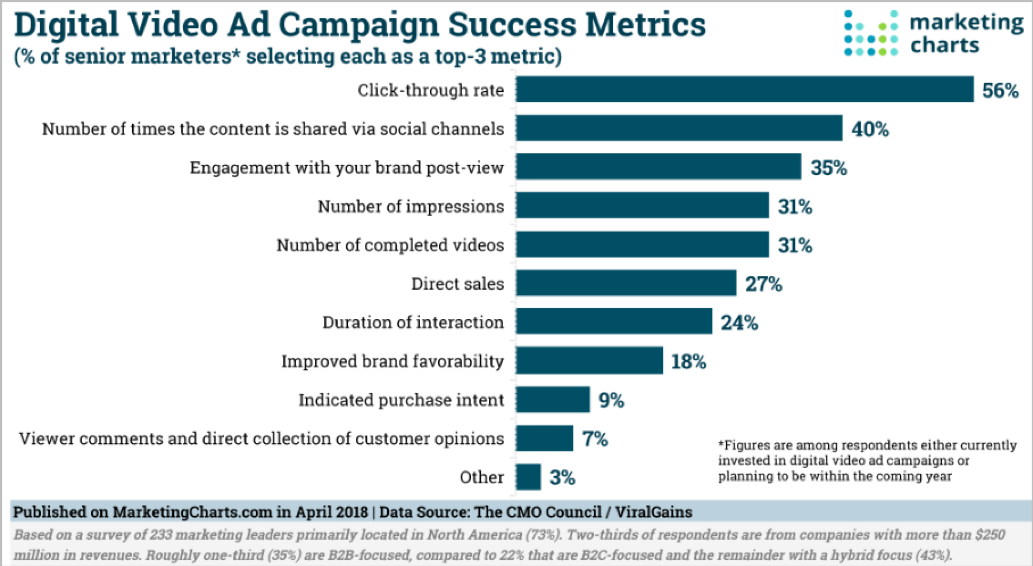
Scripting, publishing and posting the most compelling videos and content won’t matter if they don’t eventually a) generate more leads and b) increase the quality of those leads (or how qualified they are). The implication: you need a good hosting and analytics platform to serve up and track the performance of your stories.
For your copy-based stories, Google Analytics, or the analytics built into your website’s personalization platform, should allow you to track all the key metrics you need to. For your video-based stories, though, you’ll need a video hosting platform that also tracks your core analytics and metrics. There are many capable platforms out there, including offerings from Vidyard, Wistia and SproutVideo.
Just make sure the platform you choose includes:
- Good video analytics - measures which videos engage and correlate with conversions.
- Some drill-down capability so you can probe into the 'why’s' underlying the top-level metrics you’re seeing.
- Interactive pop-ups and calls-to-action (CTAs) that you can overlay into your videos.
- Integrations with your CRM, marketing automation, chat apps and social media feeds.
- Strong search engine optimization (SEO) support.
- Last but not least, a highly-efficient (clear and lag-free) video player.
Each of these platforms, of course, will have their pros and cons. Prioritize which features are most important for your business and review these tools through this lens.
Two bonus storytelling tips
Two ways to increase the impact of your stories are 'serializing' them and including some humor.

‘Serialize’ your stories
A few decades ago, comic books were all the rage (they still are for some diehard fans). Why? Because the readers had to wait until the next book came out to see what happened next.
The secret ingredient of this storytelling mode: building anticipation. Brain and user experience design expert Susan Weinschenk, in a recent article in Psychology Today talks about how dopamine, the 'anticipation' hormone in our brains, gets triggered when we anticipate a reward. In the case of comic books, the reward is buying the next book in the series at the store. In digital marketing, your prospect’s reward is watching that next video in your brand’s story.
Interestingly, dopamine gets released when we anticipate receiving a reward, not when we actually receive it. Keep this in mind for your marketing. Build anticipation by pushing out (in a serial fashion) 'chapters' of your story every week.
Include some (appropriate) humor
Neuroscientists have known for some time that the memories that 'stick' in our brains are the ones most charged with emotion. What’s the best emotion of all? Laughter. So don’t forget to, whenever appropriate, inject some humor into your story scripts.
A B2C example of a ‘seriously funny’ and share-worthy story is Old Spice’s series of men’s body wash spots on YouTube. Go ahead and try to avoid watching that next video when you get to the end. I think you get my point.

In the software-as-a-service (SAAS) realm, Vidyard video marketing does a great job of educating their prospects with their explainer-type videos. Here’s a sample 'chalk talk' video featuring Tyler Lessard, a Marketing Leader at Vidyard. At over six minutes long, it violates my four-minute rule. Presumably, Vidyard has found that these longer videos have high engagement since they’re so informative.
Start capturing leads through stories
If you haven’t yet jumped on the storytelling bandwagon, now’s a good time to do so. Start scripting stories tailored to the various parts of your prospects’ buying journey, and see which garner the highest social engagement. Publish more stories related to your 'hits,' and cut stories related to your 'misses.'
But don’t just get creative without a purpose. Start with your business goals and the lead-generation metrics you most want to move. Keep your stories on-brand, informative, humorous and short. Be sure to repurpose your videos into copy and visuals that you can share on your other social channels.
Best of all, by pushing your stories out to the social-sphere, you’re bound to connect more deeply with your prospects and to have some team-building fun along the way.