Agencies and clients disagree on organisational structure, but do think the relationship is improving
The agency-client relationship has always existed in a state of strain and 2016 is no different. The brand uses an agency because it doesn't feel it can deliver campaigns as effective in-house, and that can't help but generate a little bit of healthy resentment or envy. The agency has every incentive to convince the brand to engage in ever more costly marketing activities, and very little reason to tell them pull the plug on costly campaigns that won't deliver ROI. Both partners need each other, but have different goals. It's a recipe for dissatisfaction.
So it hardly comes as a surprise that latest SoDA & Forrester report on the state of the agency-client relationship, based on surveys conducted in Q1 2016, finds the client agency dynamic to be hitting a 'roadblock'. But when you get beyond the negative headlines and consider that the agency-client relationship will always be strained by definition, things aren't really too bad.
Download Free Member download – Agency Digital Marketing Service Providers – The top 10 mistakes to avoid
This guide by agency expert Mark Kelly highlights common mistakes he has seen and details ways to avoid making these mistakes.
Access the
Half see an improvement in the client-agency relationship
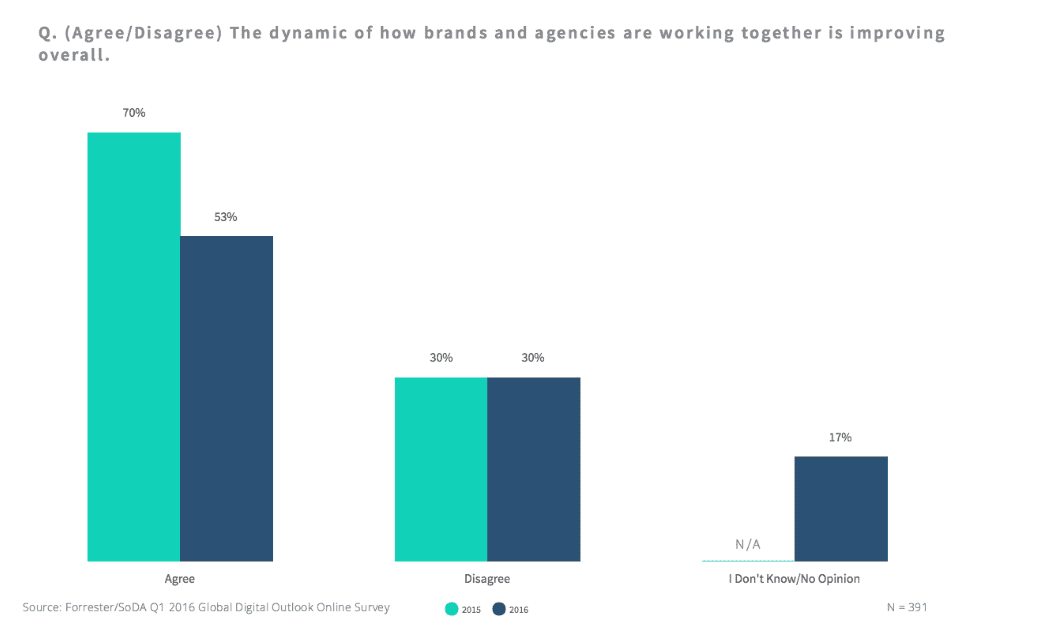
When asked about whether they saw the client-agency relationship improving or not over half of respondents to SoDA's survey considered it to have improved, vs just 30% of people thinking it stood still or got worse. Sounds like fairly good news, although is rather a large drop on last year, when 70% felt it was improving.
Are clients set up for innovation?
Agencies and clients rate expertise in emerging trends as the 4th and 5th (respectively) most important thing they value in agency-client relationships. An agencies ability to deliver innovative new marketing campaigns depends not just on the quality of their processes and the abilities of their staff, but also on the capabilities of the client. SoDA asked C-suite execs and directors at both clients and agencies about whether they see their organisational structure and conducive to innovation, and the results make for some interesting reading.
Client's think their structure is working just fine...
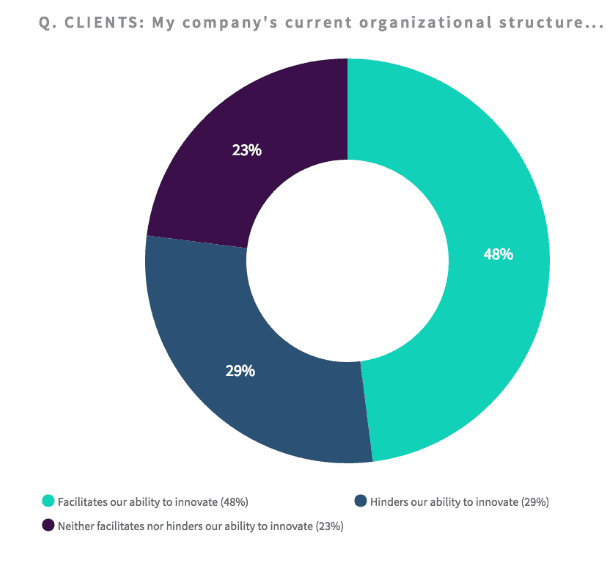
Almost half of execs/directors of brands surveyed thought their organisational structure facilitates their ability to innovate, whilst less than a third felt it hinders it.
...But agencies disagree
A measly 12 % of marketing agencies thought that their client's organisational structure was helping them to innovate. Over half thought it hindered it. A fairly damning inditement of brand's organisational structures.
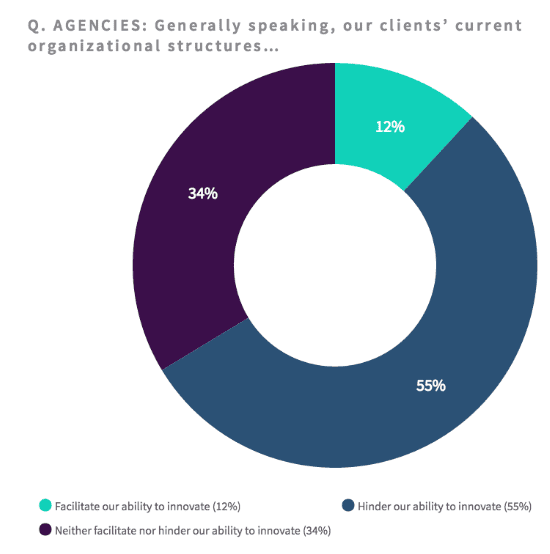
Clearly those working client side should have a think about exactly how their organisational structure helps with innovation, and possibly think about ways it could be improved. For more insights into the relationship between clients and agencies, you can take a look at the full report from SoDA.