Examples of creating powerful online value propositions
Today’s customers are experiencing an information avalanche with social requests, blog posts, real-time updates, news outbreaks etc fuelled by companies eager for our attention. Using digital channels to interact with their audience but not adapting their strategy of pushing messages out and expecting an instantaneous return on investment by measuring their digital channels as they measured their offline channel.
Brands are clambering on the digital band wagon but using the same techniques they used in a bygone era of broadcasting their message through buying up media space (Radio, TV, ad impressions) but it is no longer working: appealing to the masses means appealing to no one – rather, brands need to spend more time to get to know their audience and know what motivates their audience.
There requires a change in approach and change in tactic, brands need to be asking the question: Am I being useful? – 'If you sell something, you make a customer today. If you help someone, you may create a customer for life'
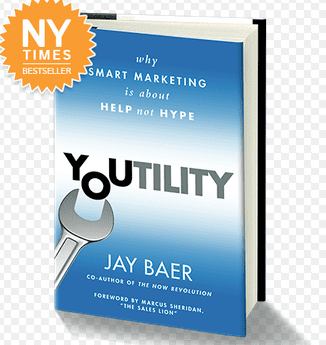
In his book, Youtility, Author Jay Baer puts forward two alternative ways for companies to adapt their proposition and help re-define what their brands stand for – 'there is an opportunity to be amazing or they can be useful…Amazing is difficult to do and how to measure 'being amazing' is hard to quantify and it’s an assumption held by most brands that they assume their proposition is indeed amazing. What may be regarded as amazing by one may not be by another'.
So as an alternative, Baer argues that more businesses should focus on being useful, defined as:
'Youtility is marketing upside down. Instead of marketing that’s needed by companies, Youtility is marketing that’s wanted by customers – Youtility is massively useful information, provided for free, that creates long-term trust between your company and your customers'.
Marketing through the years
Historically there have been 3 categories of marketing: and all 3 have migrated from the industrial landscape to the digital economy.
1. Top of mind awareness: A sustained level of marketing so when the customer is ready to buy they think of your brand. A perfect recipe for TV advertising for example how Coca-cola built their brand on national advertising campaigns when there were only 3 TV channels therefore being able to capture a national audience. Such a strategy has migrated to digital such as how brands treat their social media channels, flooding users timelines with branded messaging via an array of promoted ads and branded content to each and every user.
2. Frame of mind awareness: a strategy of reaching potential customers when they are in an active shopping or buying mode. For example the rise of inbound marketing can be described as frame of mind awareness where the concept is making your brand to be found for example through search engines.
3. Friend of mine awareness: due to the digital landscape maturing and with it user adoption of technology now a part of everyday people’s lives a 3rd method of marketing has been created which is based on the fact that 'companies are competing against real people for the attention of other real people'.
A number of reasons for this: Technology has begun to marry both our personal and professional lives e.g. Social Media for example @hiltonsuggests who operate a program on Twitter providing helpful advice to their followers on relevant information about their portfolio of hotels across cities, towns and regions.
@HiltonSuggests saw a unique opportunity to interact with anyone who is looking for information based on location. Their social media strategy is offering advice, comments and assistance to anyone posting a tweet and is looking for general advice. saw a unique opportunity to interact with anyone who is looking for information based on location.
Their social media strategy is offering advice, comments and assistance to anyone posting a tweet and is looking for general advice. Their logic is that some day that individual may be seeking a hotel room and will remember how @HiltonSuggests were so helpful.
Campaign Example: Geek Squad
Geek Squad is a subsidiary of US retailer 'Best Buy' and was set up with the sole purpose to provide anyone with technology related questions whether corporate clients or residential customers. Anyone can access Geek Squad support with their (whether a customer or not) through the libraries of content the company has created through video explainers and social media support or 24/7 customer help line.
Geek Squad knows that at some point everyone gets out of their depth and needs help over a product you’ve purchased so why not create a destination site where your questions can be answered for free?
What both Hilton Suggests and Geek Squad realised is rather than charging for such a service, they have created a destination that has built reputable brands in creating helpful information and in turn built trust, and authority, essentially “its marketing that is so useful people would pay for it”
The industrial revolution mindset would be asking at this point.. 'this is crazy, how are they delivering an ROI?!' This is precisely the wrong approach and is exactly why in today’s connected, digital first culture, so many brands are struggling to get their voice heard and struggling to differentiation their proposition.
Brands need to be asking the question, are we providing something truly useful, something helpful to our audience? Ask your customers – what do they want, need, want more of, expect from you?
6 Blueprints to Youtility for a successful strategy
Identify customer needs: In a fragmented digital market it has become necessary for brands to align their proposition to what their customers actually need or want. Analysing trends and insights into your audience should be your building blocks to truly provide direct needs to your users such as insights from analytics package, Google trends for seasonal content opportunities aligned to your proposition as well as the google keyword tool to potential search volumes.
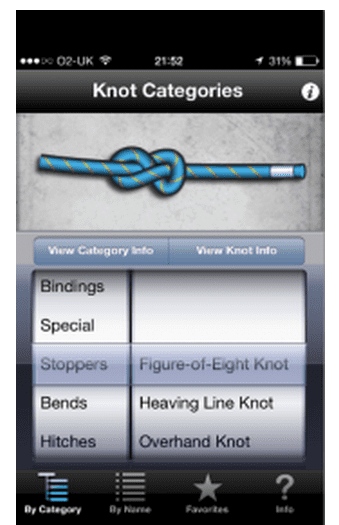
Map customer needs to useful marketing: Columbia Sportswear is a good example of how they underwent qualitative research to understand what their user needs were and developed an App called 'What knot to do in the great outdoors' – realising their audience were outbound, away form the office, liked to walk and take on outdoor activities. Columbia developed an app providing instructions on how to tie knots. Something their audience found useful.
Market your marketing: When you launch an app or begin answering questions via social media in order to create a form of Youtility, you are committing yourself and your brand to create truly helpful information what will add value to the lives of your customers. But many brands assume this is the end goal, it isn’t – you need to ensure you market your marketing.
Insource Youtility: Empower your employees to amplify your messaging and assist to drive helpful content and information to existing customers and new prospects. The role of social media provides companies with a channel to interact with new audiences targeting different demographics based on the social channel of choice. Your employees provide an untapped opportunity for companies to create, maintain and drive helpful information due to the useful knowledge locked in their heads. Youtility provides a reason to unlock this knowledge bank and drive useful content.
Youtility – a process not a project: Creating an environment to champion Youtility is indeed a process with no timeline. It’s not an instruction manual to follow, it requires creative and collaborative ways in working across your organisation to ensure you are providing helpful information. It’s a never-ending process of unearthing opportunities that engage with new audiences where your digital channels should be used to help amplify your Youtility messaging.
Keeping Score: It’s essential organisations that embed a Youtility approach are measuring its effectiveness correctly. Unlike the more traditional digital channels where an ROI can be tracked back and sudden decisions can be taken to either switch off/alter the channel (e.g. PPC, SEO, affiliates), Youtility is a change in cultural mindset by the organisation to embrace more fully with their audience and prospects. As quoted by Baer 'the objective is not just to create Youtility for the sake of it, but to improve your business in the process'.
Strengthen your strategy with RACE-powered templates, frameworks and planning tools designed to help you review performance, identify improvements and build a more effective marketing approach.



 In his book,