If you can get customers to become loyal to your brand, their lifetime value to your company will skyrocket.
Turning customers into loyalists was once the holy grail of branding: If you can get customers to become loyal to your brand, their lifetime value to your company will skyrocket. Today, fanatics are the new loyalists. They don’t just buy your brand all the time, yours is the only brand they buy, so it becomes an important part of their identity.
A loyal customer loves your brand, but they might also buy your competitors’ products half the time. Brand fanatics — like sports fanatics — are fiercely loyal to the point of exclusion. They’ll even turn other items into billboards for your brand by placing your stickers and logos all over their computers, cars, and backpacks.
Download our Individual Member Resource – Customer onboarding guide
This guide will show you how to use online channels for welcoming new customers to showcase brand and product value and provide a good experience to adopting a new product or services
Access the
In essence, fanatics become natural brand ambassadors and the more the fanaticism spreads, the greater their impact on the public conversation. Your brand creates a social identity where fans are connected by their love of your products, services, or company — and that guides many of their buying habits.
How fanaticism equals brand advocacy
Consider the social identity of sports teams’ fans (especially when their team wins a game or championship): They feel genuine pride and joy, and they tell anyone who will listen about the team’s greatness. They may even disparage fans of other teams to boost the validity of their own.
Now, consider the same level of fanaticism applied to your brand. For example, Michelob Ultra is a lifestyle brand for active people (thanks to its low carbs and calories), and those who enjoy it promote that image by sharing photos and videos of themselves drinking it.
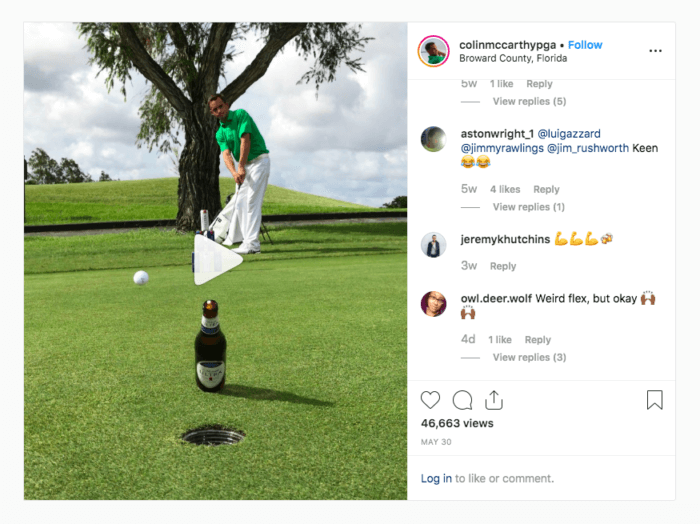
Any brand that yields eventual fans will become a prominent feature in their discussion, especially online and on social media. They freely offer tons of priceless word-of-mouth advertising. However, no championships or epic rival games exist to help stoke the emotion that drives it; thus, creating brand fans is a far more nuanced challenge.
That level of fanaticism is driven by consumers’ emotional connection to your brand. It’s a subconscious connection that, according to Harvard Business School professor Gerald Zaltman, drives approximately 95% of their purchasing decisions. In any market, that connection is driven more by experience than by a specific brand feature or message.
Apple fans are particularly strong examples of experience-driven fanaticism. It began with what is now legendary customer service — with every product, ad, app, and retail display coalescing into a single brand experience. Today, the competitiveness that Apple fans feel toward other brands has even crept into the company’s advertising.
Turning consumers into fans of your brand
Experiencing and connecting with a brand is the first step in a loyal customer’s journey toward ultimate fan status. It starts with awareness of the product or service and moves into the eventual purchase and use of it. Yet for those points of opportunity to bear fruit, every touchpoint along that journey must be spot-on.
Turning interested, loyal customers into fans of your brand is nuanced, but it’s well worth the effort. To get started, follow these tips for connecting with consumers on a more emotional level:
1. Make experiences the focus of customer service
In any form of marketing, great customer service is a key focus. In the digital format, that focus is now more intense than ever. You can do more than just answer phones; you can ask customers for feedback, solicit reviews, and solve problems immediately.
A great example is Disneyland, which is renowned for the beautifully engineered, immersive experiences it provides to park visitors. The Ritz-Carlton, where customers have come to expect the gold standard of customer service, offers another great example. When customers are the focus of an experience, that experience alone can be enough to drive a growing fanaticism for your brand.
2. Do not just communicate; engage with customers
You can’t build a great experience for customers if you don’t engage with them. With so many options to do so digitally, customers expect their brands to engage with them regularly. Asking fans for feedback on new products is one way to keep a conversation going.
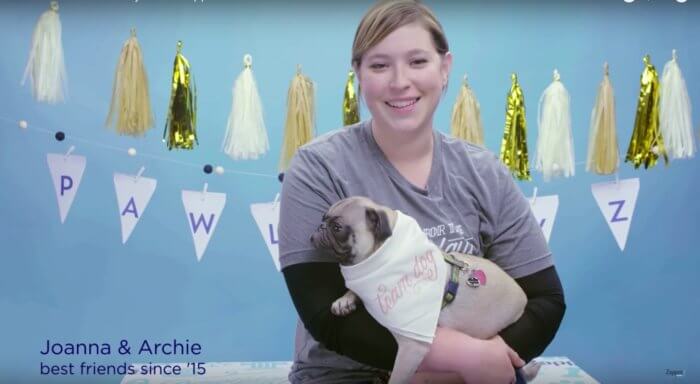
Engagement is another key to innovative service. Many a Zappos fanatic is born from engaging customers with the wide-ranging charity activities it sponsors. Its “Home For The Pawlidayz” campaign — in which Zappos covers adoption fees for dogs and cats in no-kill shelters just before the holidays — is just one of these charity initiatives. Mars invites customers around the globe to interact with it through initiatives like M&M’s international “Flavor Vote” campaign.
3. Go the extra mile every chance you get
If you constantly deliver what your customers expect, loyalty will grow naturally. But if you want them to become fans of your brand, overdeliver every chance you get. Give them more than they expect, both in marketing and in your product or service offering.
Opportunities to go the extra mile are a dime a dozen, but companies that take it are rare. Try out a number of options, like developing a VIP club and providing exclusive specials for fans who share their experiences. Be sure to keep feedback channels open and encourage fans to provide input on what works and what doesn’t.
4. Be so authentic that you repel some people
If you want consumers to become true brand fans, accept (and even embrace) the fact that your authenticity will repel others. Having fanatics means having a narrow focus on who you cater to. Being everything to everyone is counterintuitive.
The similarities with sports fanaticism are a great way to highlight this: Fans’ identities are built as much by loyalty to one team as they are by rivalries with others. (Consider Android fans competing with Apple fans.) If you’re authentic enough to make fans passionate about your brand, repelling other customer bases will be a sign of that success.
The difference between loyal customers and true fans is the difference between loving your brand and being in love with your brand. Getting customers to fall in love is the new holy grail of marketing, and these tips can get you there successfully.
Steve Randazzo is the founder and president of Pro Motion, Inc., a trusted, award-winning experiential marketing agency that helps brands and agency partners cut through clutter and drive ROI and ROE. Steve has led relationships with big-name clients, including The Walt Disney Company, Dr Pepper Snapple Group, Hewlett-Packard, Duck Tape, Anheuser-Busch, Fiskars, Citgo, the NBA, Tractor Supply Company, and others. He’s been recognized as one of 100 St. Louisans to Know to Succeed in Business and one of Fortune Small Business’ Best Bosses. His book "Brand Experiences: Building Connections in a Digitally Cluttered World" is out now. Follow him on LinkedIn and Twitter