Catch up on whats been happening at Social Media Week London 2017 and learn social media trends for 2018
Social Media Week London is a three-day conference that focuses on the latest trends in communication, engagement, VR, Mobile, influencer marketing, and of course social media. SMW London holds over 50 sessions and workshops, with brands such as Buzzfeed, Facebook, and ITV.
Over the next three days, I will be keeping you all updated on what’s happen and the key take aways from each talk. Check back each day for an overview of the day's talks and trends.
Day 1
The Speed of Feed, Facebook
The day kicked off with Kat Hahn, from Facebook who focused on 'The Speed of Feed'. She first pointed out that we scroll through 300 feet of content per day. How can brands start building ideas that work for the speed of feed? She suggested there are three modes of consumption on social media and what captivates them:
- 'On the go' - 70% - Like immediate content. Short and snappy content that consumers would view but not be too invested in
- 'Lean forward' 20% - Like interactive content where consumers are looking for something to watch and something captures their attention.
- 'Lean back' 10% - Like immersive content, longer and goes into detail. Consumers are willing to watch something for a long period of time
They estimate that 70% of people are on-the-go and looking for immediate content compared to 10% in lean- back mode.
Key take away: Not doing short video is not an option
Masters of Storytelling: How NatGeo Engages 350 Million Fans on Social, National Geographic
When you think of National Geographic, best social media performance doesn't typically come to mind. But National Geographic is one of the most engaged with brands on Instagram with 107.2M followers and receives thousands of engagements per day. Nadine Heggie, VP of Brand Partnership talked through their social strategy and key to success.
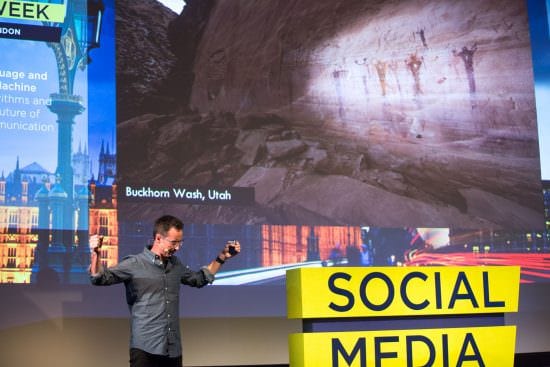
How do you get people to stop? 'By staying true to your brand, being timely with content, using the power of wow and wonder, and embracing new technologies to tell stories.' She believes that collaboration is one part of their success story, by finding the right story tellers to represent their brand.
Key take away: The future of social is through visual storytelling and that social is always 'on'.
Don’t Be Socially Awkward, Havas
Social Strategist, Anna Russett focused her talk on why it's so hard for advertisers to communicate through social media. Her reason was that it's so over done. Social is social for a reason, therefore, it can be hard to integrate advertising. In order to take part in social conversation, we have to do it in a meaningful way and not just disrupt your followers feed. She quoted 'You can't just make ads that speak at people anymore because people can now talk back'.
She also pointed out that she would rather have negative interaction than none at all, at least what you have produced has made them feel something. She strongly advised brands to stop using general and meaningless hashtags, if the majority of your likes are coming from a bunch of bots then they are meaningless. Find the meaningful hashtags and just use a couple that matter.
Key take away: If you're going to shout about your brand on social media, shout about it in a meaningful way
How Data Driven Creativity Will Be The Key To BuzzFeed’s Future Success, BuzzFeed
In less than a decade BuzzFeed has become a global network for news and entertainment, that generates nine billion content views per month. Richard Alan Reid, Executive Creative Director at Buzzfeed gave his insight on how they do this. He first spoke about how they test and mold their content until they found the best option, and this was a lengthy process of trial and error. Once they found the best option for their new content they would focus on tone. He quoted 'We obsess with the local tone of the market so we can adapt our content based on the data from that area'.
Once they understand their tone and how to market their content, they leave the rest to their followers and fans. They have built a solid community who like, comment and share their content. These followers have become their ambassadors, they do the sharing for them. What ever you capture their attention for you have to follow through with that.
Key take away: You don't want to interrupt the content people love. You want to be the content people love
Creating Social Gold: The Art of Platform Specificity, That Lot
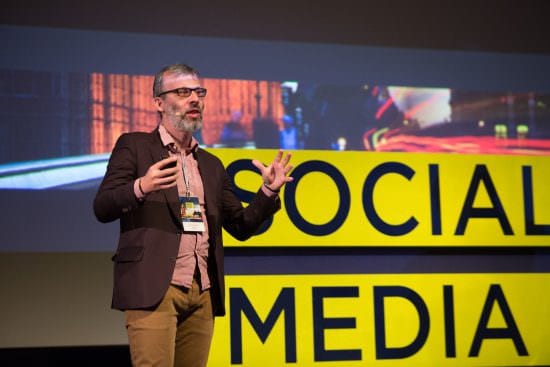
'The average person spends 1 hour 16 minutes on social platforms and in this time you have to try and stop that thumb'. In order to stop the thumb, David Schneider and David Levin Creative Directors of That Lot offered a few key tactics. They focused on four platforms and suggested the following:
Facebook
- Make sure your content is relatable - they post short videos and gain thousands of organic views.
- Use short and humorous video to gain organic views
- Your content should work in isolation not just the fans of the brand
Instagram
- 'Design for sound off, delight with sound on' - more people are starting to watch with the sound on, it's still valuable.
- Use more video on Instagram, the number of videos produced on Instagram is growing by 4x YoY
- There are 250 million stories everyday, make yours count. Create a strategy around your story and invest time and thought.
- The more personality your content has, the better it is
Twitter
- Shorter tweets under 100 character often perform better
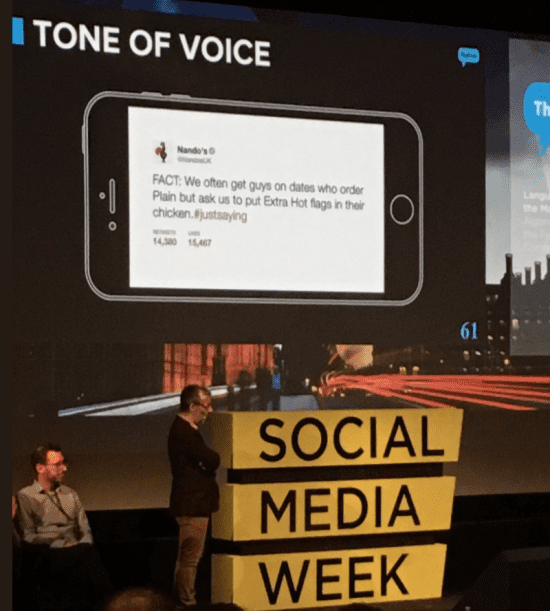
- Users love human truths and authenticity. Don't be afraid of humor, he gave a great example from Nandos
Snapchat
- Snapchat doesn't require your content to be as polished as other platforms
- Experiment with geo filters and stories - If you're wanting to reach a millennial audience this is the place you need to be
- Try using a film series, offer something your followers can tune into and create stories users can get invested in
Key take away: Don't be afraid to be more human on social media
“Alexa, What Does the Future of Marketing Look Like?”: How Brands Can Leverage Audio to Reach Consumers, VaynerMedia
Throughout the day, I noticed one topic that was popping up- voice search. I decided to attend Patrick Givens, Head of Smart Innovations talk on the audience on the other side of voice search. He believes your brand could be having a conversation with millions of consumers right from their own homes via a smart device. As more homes introduce Amazon Echos, Google Homes, and Apple HomePods, brands need to start to look at what this means for them.
Givens provides two examples of how these devices could be used by brands in the home. The first was a Johnnie Walker Digital Mentor and the second GE’s Labracadabra science experiment assistant.
Key take away: He left us with a question - 'Will you be ready to respond?'
Day 2
LADbible's Approach to Meaningful Campaigns, LADbible
LADbible Group’s Co-Founder, Arian Kalantari spoke about the importance of listening to the youth audience and how they create relatable campaigns on subjects like mental health and politics to have a positive impact and drive social change.
They realized that people listened to them and that they could have a positive impact by reaching an audience who many find hard to reach. Their audiences are becoming more open to the harder topics such as mental health and politics. LADbible is looking at how they can facilitate those conversations among their community.
Key take away: Users are now looking for authenticity and meaning from brands
Telling Impactful Stories with Social Video, Adaptly
The key focus of this talk is that we live in a mobile first culture and video is our main consumption. The way we consume video is changing. Sean O’Neal the president of Adaptly covered the following points:
- Mobile video is the number one fastest growing ad format in the world and has been doubling YoY
- 38% of brand recall is driven by video impressions shorter than 2 seconds. The challenge is making that content stick
- Vertical formats are on the rise - 70% of people won’t turn their phone to view a horizontal video ad
- It’s all about video by 2020, it will make up 80% of all online consumer internet traffic
- 60% of marketers use video in their campaigns
- social media is stealing Ad dollars
- Video is about storytelling, it is the closest you will get to a face to face conversation with your audience
- 4x as many consumers prefer watching videos about products than actually reading about them
He interviewed two guest speakers. The first was Angela Bertram, Social Media and Content Manager at Carphone Warehouse. She said that 90% of the content they share is video. Their biggest challenge is capturing their audience's attention in the first 3 seconds and fitting in all the points they need to make. She also recommended changing your content for each platform. For example, what you do for Facebook will not work for Instagram. Make something different for each platform and you need to be very impactful with your visuals.
Secondly, he interviewed David Wilding, Head of Planning at Twitter. His key point was that ‘Video isn’t a strategy it’s a tactic’. It’s important before you dive into video you need a strategy behind what you're doing. Make clear objectives, don’t just use video for the sake of it. He also believes Twitter isn't about 'look at me’ but more’ look at that’.
They summarised by making predictions for 2020 in social media.:
- Brands will need to be better planned
- We need to learn and develop our video making skills as this will soon be an essential skill in digital
- As video content increases so will quality, invest time and money into making professional high-quality video content
Key take away: The way we consume video is changing, soon almost all the content we consume will be video
Understanding the World of Influence, Ogilvy
It is more important than ever to define a new, strategic approach to finding influencers. Oglivy’s Victoria Partridge and Chris Walt’s look at the influencer landscape and how brands can create clear strategic plans to pinpoint the right influencers. For me, this was the most informative session of the day.
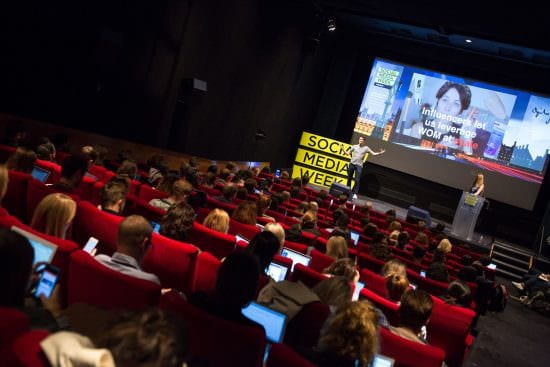
Due to the vast majority of marketers wanting to tap into the influencer market, there are far more challenges faced by agencies and brands. They pointed out the following challenges:
- Half of the UK are bombarded with irrelevant marketing, with so many influencers promoting brands it's hard to know who to trust
- Our ads are not being watched due to ad blocking - 1 in 5 block ads on mobile
- 93% of consumers wouldn’t care if a brand didn’t exist anyone. This number was 73% in 2014
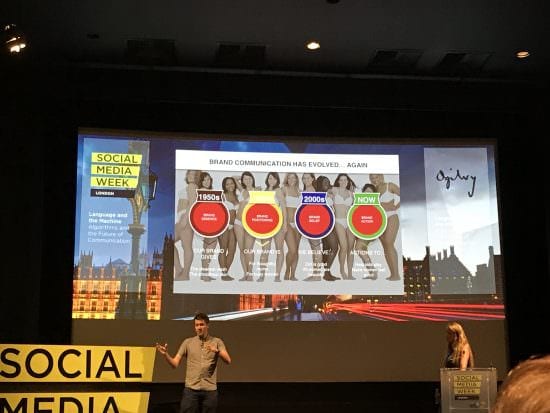
They also looked at how the role of the influencer has changed:
- It’s not a new thing anymore
- Tiers of influencer continue to evolve and grow
- More brands are increasing investment spending more than ever on influencer marketing
They suggested brands need to start evolving their thinking. Influencer partnerships should be based on two sets of criteria:
- Clear business objectives that seek to deliver the best ROI
- Don’t just work with an influencer for the sake of it
They believe the future of influencer marketing will be brands turning to real experts. This is due to too many brands wanting to work with influencers and their opinions no longer being trusted. People are starting to look for authentic over perfection and fake reviews.
Key take away: Brands must focus on fostering cultural relevance if they want to survive.
Love Island: How to Handle a Hit, ITV
As a big Love Island fan, I was pretty excited to hear how they made the show such a hit. Disappointingly, it was not as informative as I hoped. The panel featured:
- Paul Kanareck, Group Director of Online, ITV plc
- Montana Brown, Reality Star, Love Island
- Tom Gould, Executive Producer, ITV plc
- Claire Heys Director of Commercial Brand Partnerships, ITV
- Janine Smith, Head of Digital Entertainment, ITV plc
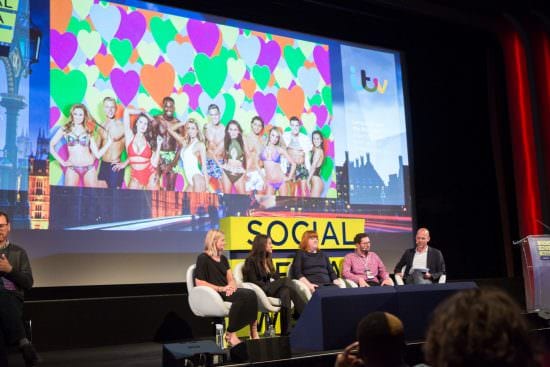
Love Island used a 4-prong approach when promoting love island. They wanted to Push viewings, work with advertisers, push digital hub and engage with their target audience 16-34-year-olds. By controlling the conversation around the show and dealing with the demand of the show they drove the following results:
- They used integration and partnerships with Ministry of Sound and Superdrug
- If you’re a Love Island fan you will have seen (and probably ordered) a water bottle. These water bottles were held by the islanders on the show. In the first week, they sold 110,000 bottles in the first five days of sale. After this, they were selling around 7,500 per night via their app
- They collaborated with Primark and designed T-shirts with slogans from the show on. In total, they sold 197,000
- The most tweets they received in one minute was 9,000 tweets
Why VR Will Be the Most Social of All Media, UNIT9
Henry Cowling, Executive Creative Director of UNIT9, spoke about how social media will become more social because of VR. He believes VR will no longer be an unknown platform but a shared social experience. You’ll be able to connect with friends and re-live memories. Cowling quotes ‘So we’ll have to shape entire worlds for users, making them physical and shareable’.
The most import step is in the user journey is convincing users to put the head set on. He believes as VR grows ‘Virtual FOMO’ will be a reality. People will start to feel like they are missing out on this new world and want to become part of it. Social help VR go mainstream according to Cowling.
His advice to brands and predictions for the future:
- Do jump on the band wagon – be digital forward don’t wait for everyone else to catch up
- Make and embrace animojis
- Your face will become your billboard as you build your network, this is already happening with the launch of the iPhone x and 8. With the rise of face scanning in smart devices.
Key take away: The first step is finding how VR fits in your marketing strategy, the second is convincing your audience to put a headset on
Day 3
Give the people what they didn't know they wanted, Pinterest
Pinterest’s Creative Director and Strategist, Karen Bloom took us through different ways to reach your target audience through advertising and create organic tactics. Getting noticed on Pinterest can be hard so many people just upload a image and hope for the best. She suggested a few tactics to help expand your reach:
- Post content 2-3 months in advance of events on Pinterest.
- Think outside the box and mould your content to fit trends of the moment
- "Arrive early!" Xmas shoppers are looking as early as July!
- Content on Pinterest has a +115% CTR and a +170% Check out Rate if the product is shown in a real-life setting
- Copy matters more than pictures. If you tell people what to do with an item and help them make decisions on what the content is
Key take away: Give people what they want, before they want it
Capitalising on the micro moment economy, Iris
Head of Platforms & Distribution at Iris, Digby Lewis, spoke through micro-moment mobile strategies that are transforming the way brands communicate with consumers. He made the following points:
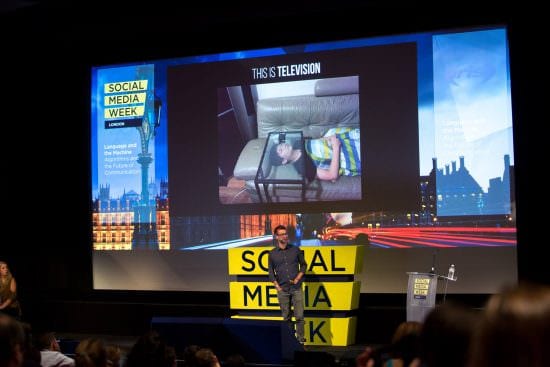
- 79% of smartphone owners check their device within 15 mins of waking
- The rate of change today is faster than we can even comprehend
- Micro-moment drivers, there is an opportunity to drive conversion mobile is 13% faster compared to desktop
- Lewis believes messengers are the way forward they now account for 3 of the top used apps.
- Platforms are battling for our time and looking for new ways for us to spend time with them. They are trying to build habit forming products for us to become addicted to them
He gave four key principles for Facebook Ads:
- Plan for sound off
- Optimise your screen
- Fight the feed
- Rethink story telling
Key take away: 'If you want to take full advantage of micro-moments aim to turn 15 seconds into a 15-minute experience'
Powering the human connection, HootSuite
HootSuite Industry Principal, Adrian Cockle spoke about how we can transform social marketing strategy simply by putting Humans first. He believes the key to digital transformation is to be more human.
Why do so many brands struggle with digital Transformation? Cockle gave three reasons:
- Rewiring legacy ways of doing things
- Too many strategic choices
- They focus on short term results rather than long term vision
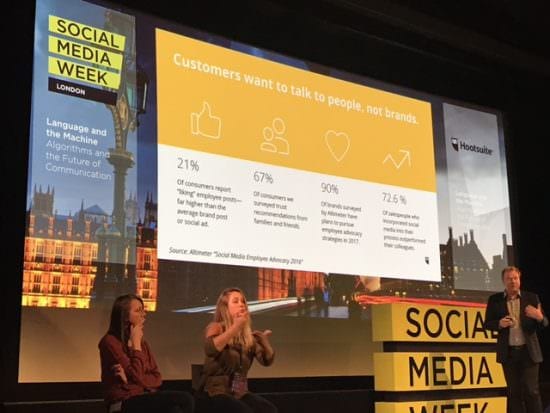
He gave four simple rules to follow to simplify your social strategy:
- Put Humans first always
- Humanity isn’t a trend
- Embrace social evolution
- Fall in love with customer problems
He quoted ‘Human nature stays constant. But the way we communicate does change. It’s our job as marketers to adapt these shifting behaviors’. Customers want to speak to people, not brands.
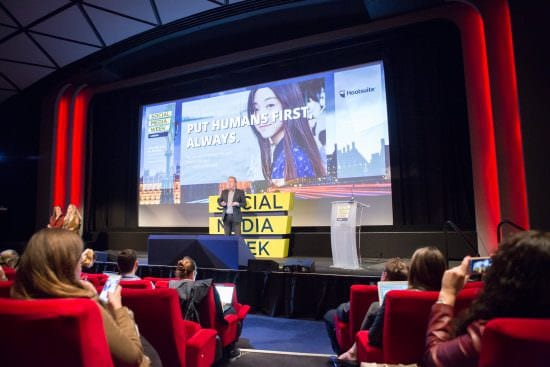
Key take away: Technology is not the core of digital transformation, humans are.
Stop The Media Death Watch: How The Publisher-as-Platform Model Will Save Us All, Dailymotion
In this session, Claudia Page, VP of Partner and Product Development at Dailymotion covered the platform-as-publisher model. We all know newspapers and print and declining and online publishers are struggling too. This is because users will go to social media to catch up with news and media. Consumers attention is now spread across various platforms and channels it is becoming more challenging to grab their attention.
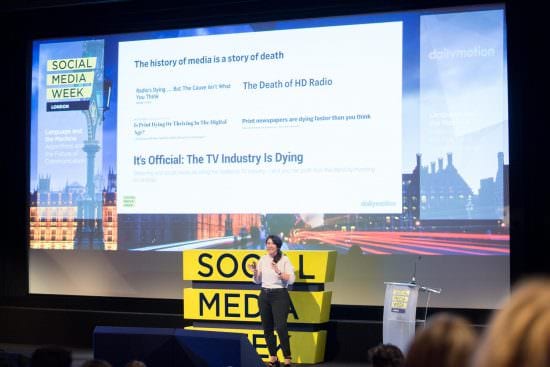
There is also a significant increase in competition making it hard for publishers to build and grow their audience. She believes in order for publishers to survive the platform as publisher model is the way forward and will be the only way to command your audiences attention.
How do we fix this problem?
- Orginal content is a key trend at the moment, look at how you can write more of your own content to drive traffic
- Publishers need to act more like platforms, it means you can focus more on mass verticles and niche audiences
- Look at how you can introduce video into this model
- Focus on one subject and own that subject - this will give you an edge
- Premium content brands are still king
- Trusted content is the best way to ensure brand safety
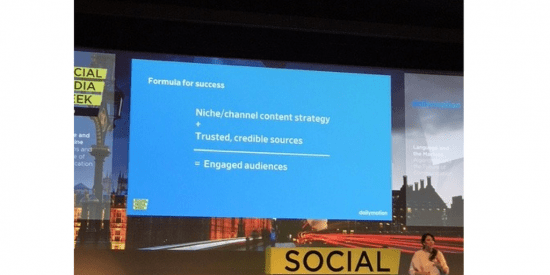
She left us with a formula for success in the publishing world. In order to succeed you need niche content and credible sources.
Key take away: All media starts broad and becomes channelized over time
ChatBots and the social commerce revolution 2017, We are social
86% of millennials agree that brands should use chatbots to promote deals, discounts, and offers. We are social covered 2 case studies Domino’s, and Skyscanner.
After launching these two chat bots they shared some of their advice and reflections creating and using chat bots:
- Create a character first
- Design a conversation based on order
- Chat bots have feelings, copy first, not code
- Don’t let the internet beat you
- Keep them hooked
- Don’t make it too complicated
- Don’t expect people to just use it because it's new. Give users a reason to use it
- Epic fails can happen to bots and Humans
People are now communicating mainly on Messenger apps, 6 of the top 10 apps are messaging apps. We need to be focusing our strategy on these apps in the future!
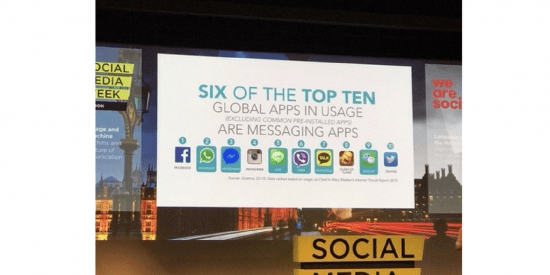
Key take away: When developing chatbots aim for a more human conversation with customers and focus on the copy before the code
If I could summarise what I learnt in three points, it would be:
- Look to be more human and authentic when speaking to customers
- Embrace VR and consider how you could integrate it into your marketing strategy
- Stop interrupting your users feed by shouting irrelevant information at them. Instead, focus on meaningful content that you users actually want to see and start from there.
Overall SMW London was a fantastic conference, packed with informative and insightful strategies to take back to the office. If you work in or love social media I would definitely recommend attending in 2018.