What do you think is the best, i.e. most useful marketing model?
You may have noticed we're fans of using practical models as tools to support marketing strategy development. We believe a clear, simple model gives us a framework to assess how we're doing things now compared to our competitors and plan growth strategies for the future. They're also great for communicating the purpose and reason behind a strategy you are pursuing.
But there's a problem - over the years, the number of marketing frameworks available has increased. Some are academic, based only on theory, but have no "real world" credentials. Whereas others have been developed with no consideration of universal marketing strategy and planning fundamentals.
So many marketing models have been developed over the years that it can be overwhelming to know what to use and when. That's where our RACE Growth System could help you.
Our RACE Growth System is our easy-to-use, easy-to-follow, strategic marketing framework that's been proven to get results. Our practical, data-driven, marketing framework empowers marketers and business owners to use customer insights and analysis to prioritize marketing strategies for rapid growth. You can download our free template to learn more about the RACE model.
Free digital marketing plan template
Our popular marketing planning template is structured across the Smart Insights RACE Framework. Join Smart Insights as a Free Member to download our digital marketing plan template today
Access the Digital marketing plan template
Which are the most popular marketing models?
Since I'm a digital marketer, I have my own views on the relevance of these, indeed in my books, I have often included them. In fact, most are included in my Digital Marketing: Strategy, Implementation and Practice book.
Our top 12 marketing models
- The RACE Framework
- 7 Ps of Marketing
- USP
- BCG Matrix
- Brand Positioning Map
- Customer Lifetime Value
- Growth Strategy Matrix
- Loyalty Ladder
- PESTLE
- Porter's 5 Forces
- Segmentation Targeting Positioning
- SOSTAC
1. The RACE Framework
Our RACE Framework is a popular marketing framework created in 2010 for Startups, SMEs, and international corporations, since it can scale up or down according to your short-term and long-term objectives. It was designed to work as both a marketing framework and digital marketing framework - read this article to learn more about what these frameworks need to contain.
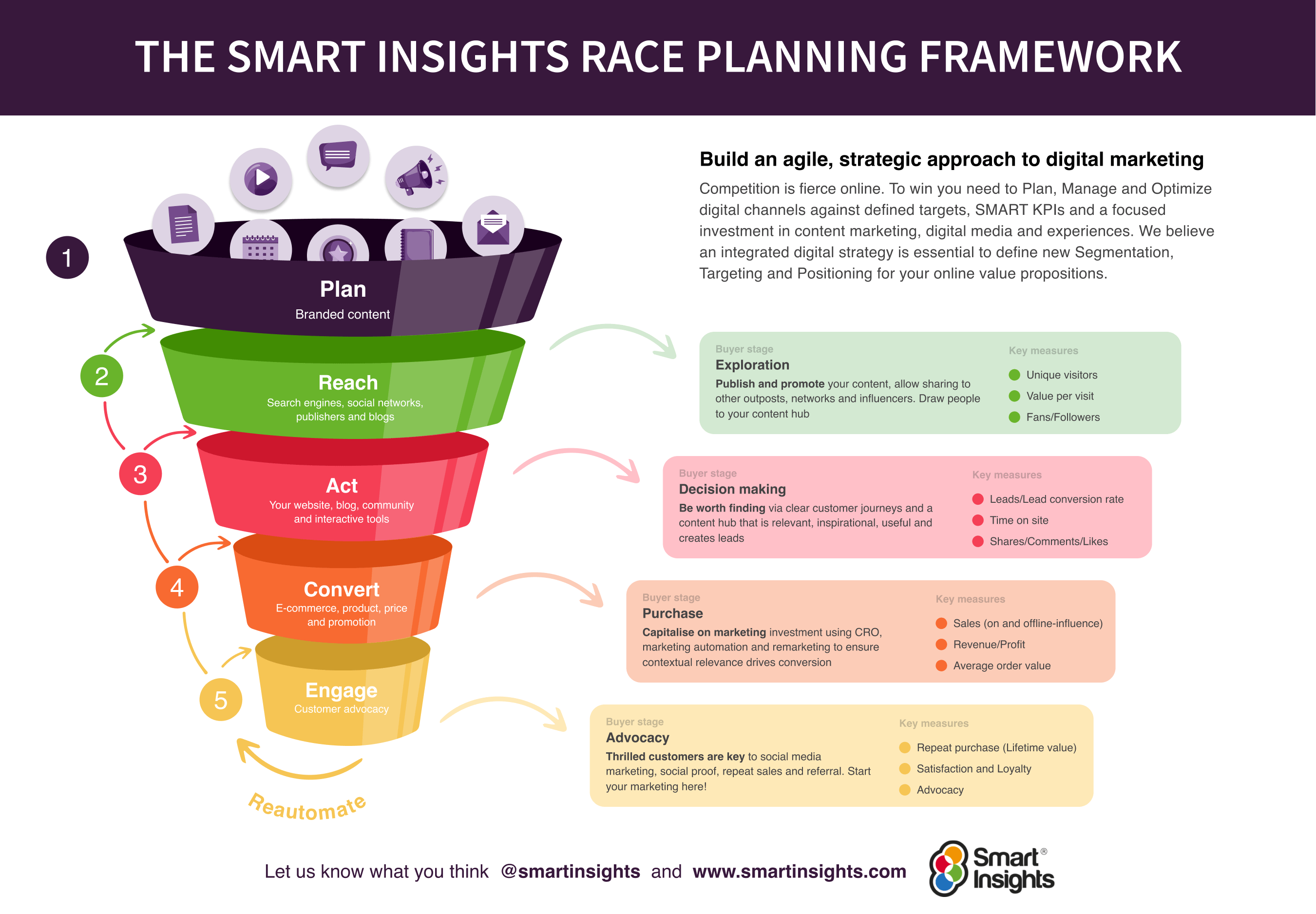
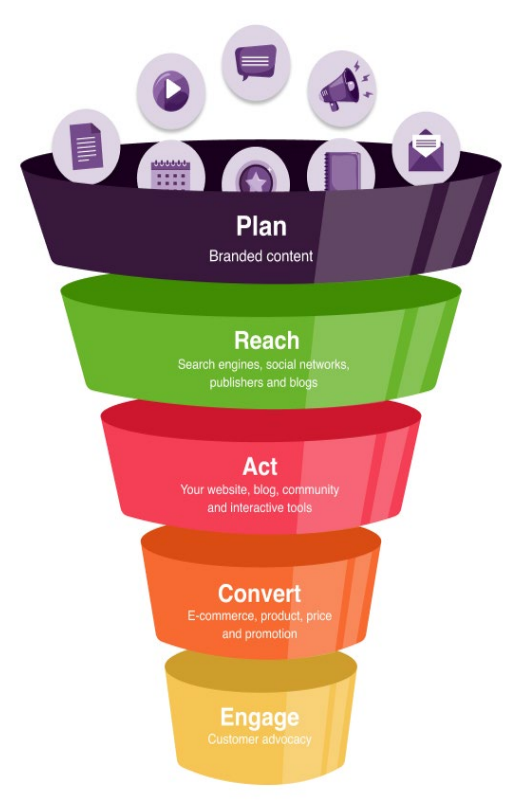
Marketers find it useful to use RACE to structure their marketing strategies, since the framework guides marketers through each funnel stage of planning, reaching, acting, converting, and engaging. For discussion of the advantages and disadvantates of using linear funnel-based model see Dave Chaffey's more recent article on the best marketing frameworks.
Smart Insights Free Members can also download an editable digital marketing plan template featuring our popular RACE Growth System, a simple structure to put your plans into place using our Opportunity > Strategy > Action model to identify marketing activities for growth at each stage of the funnel.
Free digital marketing plan template
Our popular marketing planning template is structured across the Smart Insights RACE Framework. Join Smart Insights as a Free Member to download our digital marketing plan template today
Access the Digital marketing plan template
Hierarchy of response frameworks such as AIDA, are often formed into funnel models to assist planning. The RACE framework is an example of a funnel model. Since these models are linear, they have been criticized for this, since commentators believe they are an oversimplification and don't reflect the non-linear nature of decision-making influenced by multiple digital channel touchpoints.
Recently, BCG in their 2025 article, It’s Time for Marketers to Move Beyond the Linear Funnel, also asserted that we need to move beyond the linear marketing funnel model to what they called 'influence maps'. Read our article on alternative digital marketing and marketing frameworks for further discussion.
2. 7 Ps of Marketing
The 7P's of the Marketing mix model are Product, Price, Place, Promotion, People, Process, and Physical evidence - these elements of the marketing mix form the core tactical components of a marketing plan.
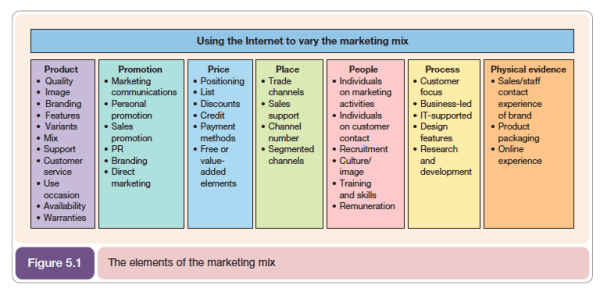
I think it's right this is at the start of the list since it's still widely used and I think is a simple way to think through how a company markets its products. A good model to explain marketing strategy to someone who isn't a marketer. But it suffers from a push mentality completely out-of-keeping with modern digital marketing approaches of listening to and engaging customers, such as through social media marketing.
3. USP
Unique Selling Proposition is the concept that brands should make it clear to potential buyers why they are different and better than the competition.
This is a simple concept and an essential message to communicate online since the core brand message often isn't clear. Digital websites need to define their digital value proposition well.
4. Boston Consulting Group Matrix
This well-known, essential MBA model categorizes products offered by a business in a portfolio based on their performance rating them as Stars, Cash Cows, Dogs, and Question Marks as below.
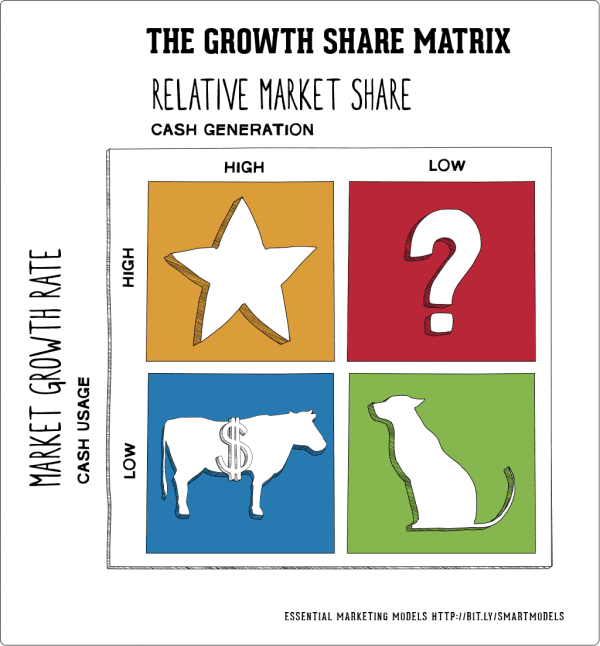
- 1. Dogs: These are products with low growth or market share.
- 2. Question marks or Problem Child: Products in high growth markets with low market share.
- 3. Stars: Products in high-growth markets with high market share.
- 4. Cash cows: Products in low growth markets with high market share
I find this isn't so applicable in the online marketing world for small and medium businesses - it's more of a Big Business corporate strategy model.
See Annmarie's post on the BCG Matrix model for more details.
5. Brand positioning map
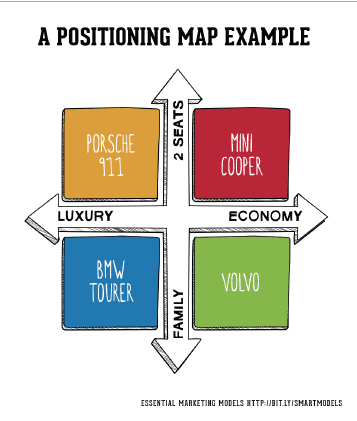
This model allows marketers to visualize a brand’s relative position to competitors in the marketplace by plotting consumer perceptions of the brand and competitor brands against the attributes that drive purchase.
This is a great concept for understanding how customers see a brand. I can't recall many descriptions of this being applied online. I have seen it used as part of user-testing though in comparing different websites?
The creation of an engaging online brand is so important to success in digital marketing, that's why we created our brand positioning template for Business Members.
6. Customer Lifetime Value marketing models
Customer Lifetime Value is the concept used to assess what a customer is worth, based on the present value of future revenue attributed to a customer’s relationship with a product.
A different class of models to others, this is more of calculation model - covered in Chapter 6 of my Internet Marketing Book. CLV is mainly important online for transactional sites and certainly investment decisions like allowable cost per acquisition (CPA) must be taken with future customer purchases and attrition rates considered.
7. Growth strategy matrix
The Ansoff model is a matrix that can be used to identify alternative growth strategies by looking at present and potential products in current and future markets. The four growth strategies are market penetration, market development, product development, and diversification.
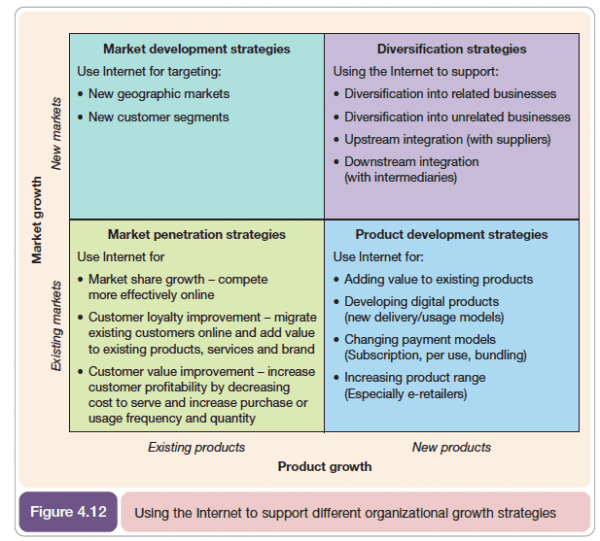
Ansoff's model dates back to the 1960s, but I still cover it in the books to show how companies should "think out of the box" with new opportunities for their digital strategies by considering new opportunities for market and product development rather than simply market penetration which misses the opportunities of digital marketing for me.
8. Loyalty ladder marketing models
Loyalty models show the steps a person takes before becoming loyal to a brand as they move through the stages of prospect, customer, client, supporter, and advocate. There are a number of different loyalty models, taking slightly different forms, but the key element of loyalty ladders is the demonstration of the value of engaging and retaining current customers.
Loyalty models are useful as a way of thinking through the opportunities to generate lifetime value.
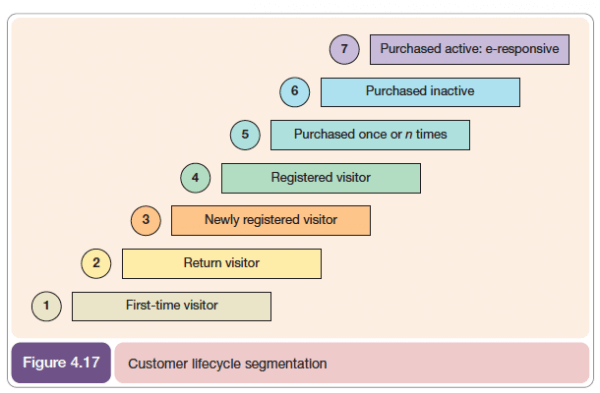
Loyalty ladders are due credit for their focus on the customer journey before and after their first purchase. Our customer lifecycle model charts the customer experience across each stage of RACE: Reach > Act > Convert > Engage.
As you can see, engagement activity helps move lapsed customers back through the cycle to repeat purchases.
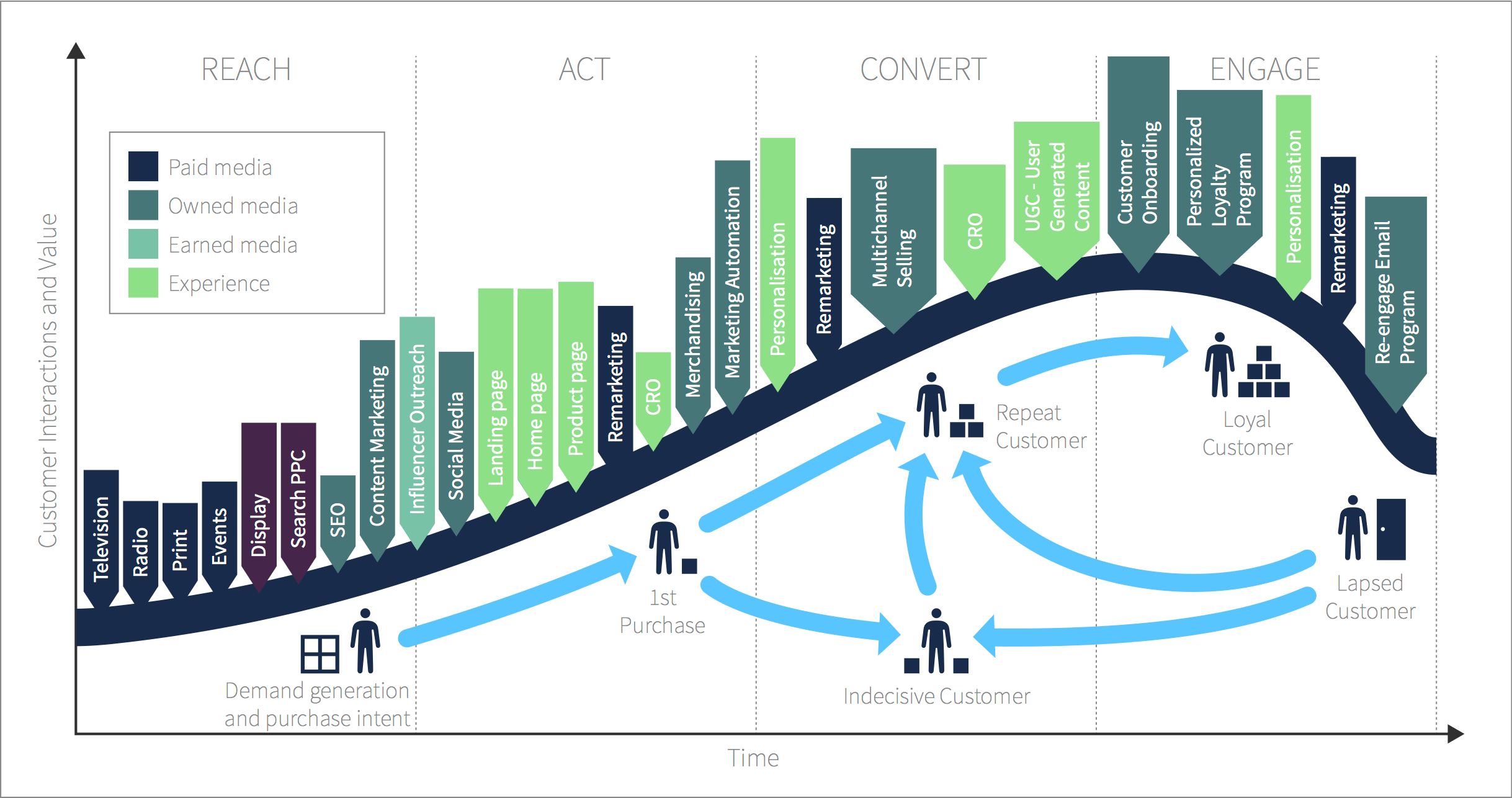
If you're looking to perfect your customers' experiences of your brand, our RACE Growth System has a step-by-step checklist to help you plan, manage, and optimize the right marketing activities to engage, convert and reach new customers.
Through RACE, you'll set goals, prioritize strategies, and optimize the marketing models and techniques you need to achieve growth.
Free digital marketing plan template
Our popular marketing planning template is structured across the Smart Insights RACE Framework. Join Smart Insights as a Free Member to download our digital marketing plan template today
Access the Digital marketing plan template
9. PESTLE
As an extension of the traditional PEST model, this analysis framework is used to assess the impact of macro-environmental factors on a product or brand - political, economical, social, technological, legal, and economic.
TBH PESTLE/PEST/DEEPLIST make me groan - to me they're a text book approach which is far removed from improving results. I find students tend to review these in-depth at the expense of creating innovative strategies.
However, PESTLE is still widely taught and Annmarie Hanlon is a fan so to explain it's value to me and others she has this in-depth post on how to use the PEST or PESTLE model.
10. Porter’s Five Forces
The Five forces in Porter's model are Rivalry, Supplier power, Threat of substitutes, Buyer power, and Barriers to entry and are used to analyze the industry context in which the organization operates.
Yes this one features in my books and I reference a classic 2001 paper by Porter on applying the Five Forces to the Internet. But, I personally think it has limited practical value - yes we know customers have more bargaining power online. So what?! I also think it under-represents the power of intermediaries like comparison sites and publishers in the online world.
11. Segmentation, Targeting, and Positioning
This three-stage STP process involves analyzing which distinct customer groups exist and which segment the product best suits before implementing the communications strategy tailored for the chosen target group.
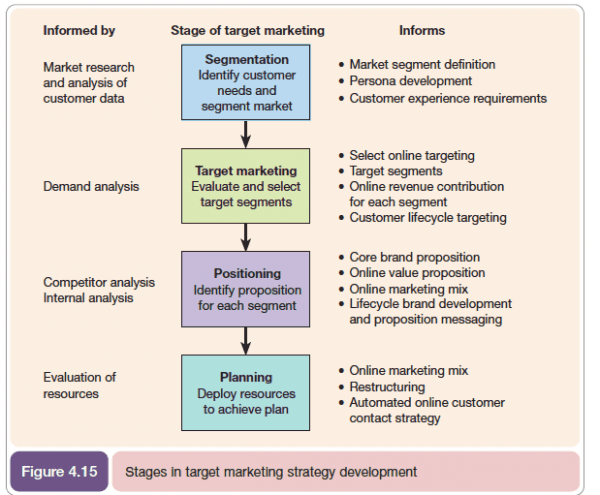
As a model which is focused on delivering relevant products, services and communications to the customer and so generating value for an organisation, this is essential for every marketer to understand and apply in practice.
12. PR Smith's SOSTAC® model
This acronym stands for Situation, Objectives, Strategy, Tactics, Actions, Control and is a framework used when creating marketing plans.
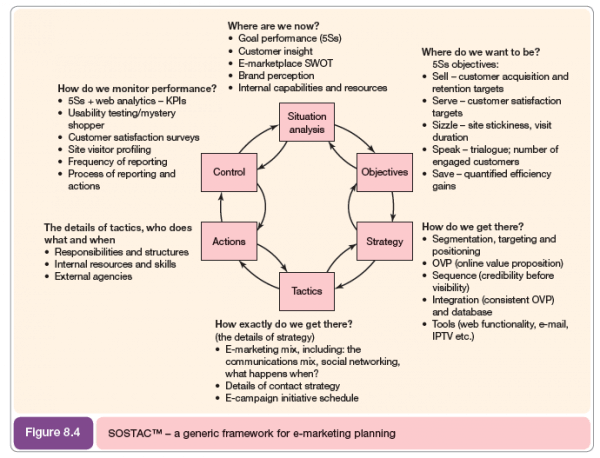
I'm a big fan of using PR Smith's SOSTAC® model as a way of planning and implementing strategies. It features in all my books and I know Paul Smith, who created it well - he's my co-author on Emarketing Excellence.
PR Smith (2011) The SOSTAC ® Guide - to writing the perfect plan by PR Smith (2011), published by www.prsmith.org and available at Amazon.
PR Smith (2020) SOSTAC® Guide to your Perfect Digital Marketing Plan, Amazon.
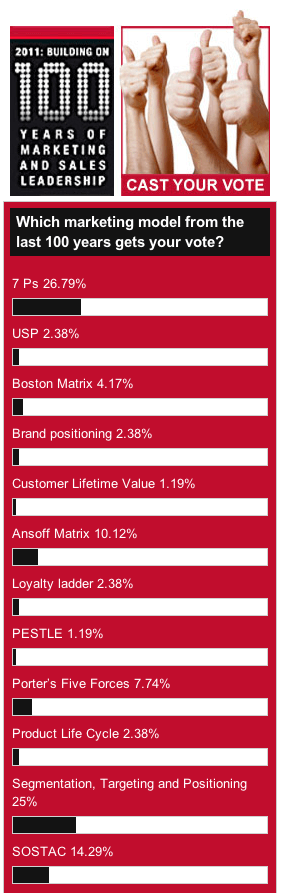
Finally, I wanted to thank the Chartered Institute of Marketing who prompted the idea for this post when they were celebrating their centenary and they ran voting around different models. It also prompted the idea for a free guide to help explain the value of models for planning.