A summary of the 2015 ranking factors analysis
Value: [rating=5]
Recommended link: Moz SEO Ranking factors 2015 edition
SEOs everywhere have now been following the SEOmoz (now Moz) ranking factors for a very long time - I think I start recommending them in training ten years ago in 2005!
Over time, the analysis has become more complex with a move from trusted experts' opinion to additional correlation based analysis. In many ways, I prefer the original breakdown of on and off page factors for its simplicity - as shown below, but there are many more factors to consider now of course.
You can get the full detailed report from the link above. In this summary I highlight the main ranking factors, with a brief analysis of the implications for marketers who aren't full-time SEO.
The Experts' opinions on ranking factors
The best quick summary on ranking factors for non-specialists is, for me, still the Experts' analysis. Here's the latest from 2015, where respondents rated the relative levels of influence exerted by broad areas of ranking factors on a scale of 1 (not influential) to 10 (highly influential):
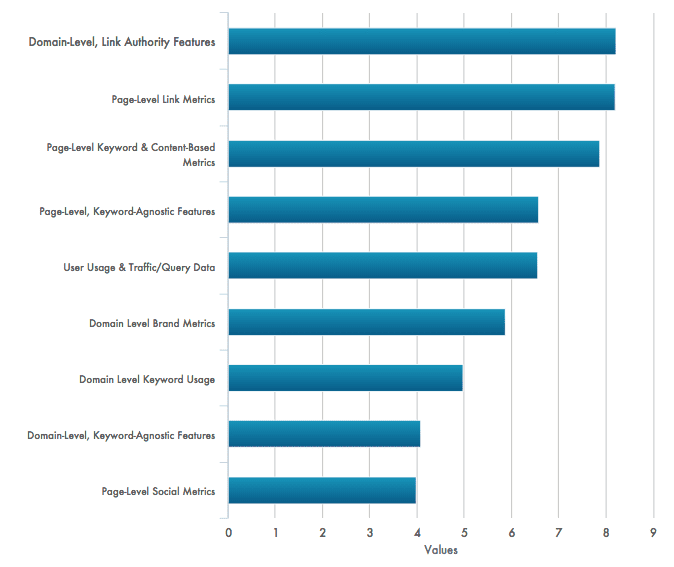
This shows, according to Moz, that
- 1. Links (to the domain overall and individual pages) are still believed to be the most important part of the algorithm. 'Link-building is not dead' as some content marketers have proclaimed, but 'link earning' is where we should be focusing.
- 2. Keyword usage on the page is still fundamental, and other than links is thought to be the most important type of factor.
- 3. SEOs think social sharing has an influence but it is relatively low
Studies according to correlation studies
For the study, Dr. Peters examined the top 50 Google results of 16,521 search queries, resulting in over 700,000 unique URLs (methodology). Moz cautions, as Kristian Petterson does in this Smart Insights post that correlation does not equal causation. However, correlation studies give a quantitative method of showing the potential relative influence of different factors.
The full report has many correlations of which this analysis, at a page level shows that at page level overall page authority is most important, particularly unique linking domains, but with internal links having some influence.
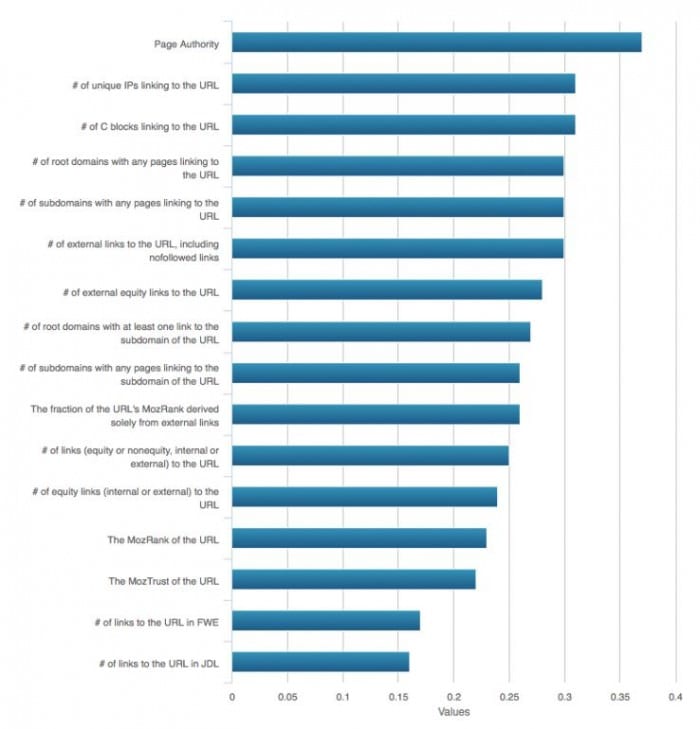
There is also an even longer chart for the main on-page SEO factors see this LOOOONG chart.
This confirms that simple measures of the number of keywords like the number of keyword matches in the title or main heading doesn't have an influence as it would have in the early days of SEO. Instead, semantic similarity, as shown by techniques like Latent Dirichlet Allocation or TF*IDF are significant today. Essentially, this means that's it's important to not only target specific keywords in titles, headings or body text, but to clearly show the theme of a piece of content by using synonyms and related concepts for a theme. This LDA SEO analysis article on Moz explains more.
Further correlations based on site engagement (dwell time) show that these also have an influence as many have speculated since Google can detect time between queries.
Summary of ranking factors in 2015
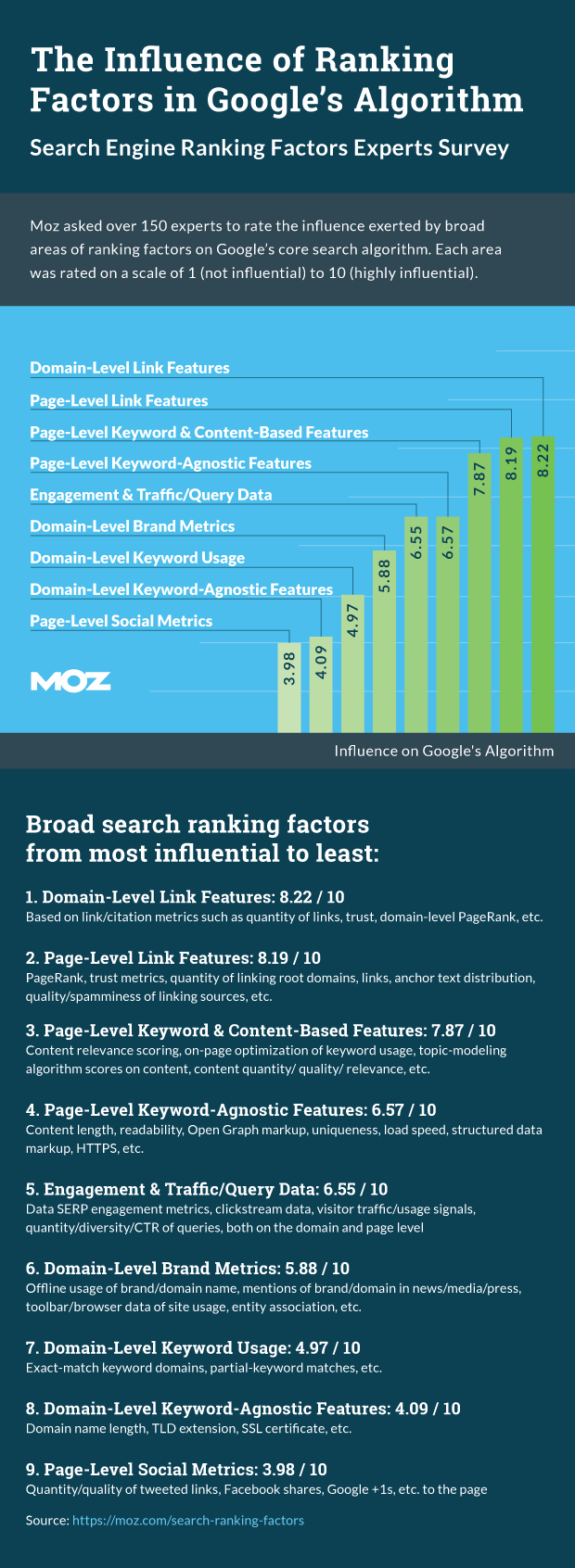
There is a lot more depth in the full report, but if you don't have time, here is the infographic summary.
The main SEO ranking factors - 2007 style
For historical interest and to make this post more actionable, I have retained this summary from previous versions of this post since it could help newbies understand the SEO ranking factors better since it mentions specific ranking factors. I have used the summary below of the main on and off-page SEO factors based on v2 ranking factors report on my training courses and books for a long time since they give a one-page snapshot. I continue to do so before showing the newer data since it shows the relative importance of factors like the title tag well and the relative unimportance of the meta keywords...
On-page optimisation:
- <title> tag = 4.9/5
- Keyword frequency and density = 3.7/5
- Keyword in headings = <h1> = 3.1, <h2> = 2.8
- Keyword in document name = 2.8
- Meta name description = 2/5
- Meta name keywords = 1/5
This is useful to highlight the myth of the importance of meta tag which so many generalist marketers seem to cling to... I would rate the meta name factors even lower.
Off-page optimisation:
- Link anchor text contains keyword = 4.4/5
- More backlinks (higher PageRank)= 4/5
- Link Popularity within the Site's Internal Link Structure=4/5
- Page assessed as a hub = 3.5/5
- Page assessed as an authority = 3.5/5
- Link velocity (rate at which changes) = 3.5/5
This Slideshare presentation from Mozcon is a good way to browse the latest correlations covering specific such as the type of anchor text which is most effective in ranking.