Targeting different demographics with Facebook advertising
You will be aware that Facebook is one of the largest potential sources of Internet traffic and engagement; it's more popular than Google in some countries! You've probably also heard that if the number of Facebook users were equivalent to a country it would be the 3rdlargest country in the world after India and China with 400 million users.
So if you're not looking at Facebook to engage your audience and promote your products and services, you are missing a big opportunity.
You will know you can set up a Facebook Page for your company. But did you know you can advertise on Facebook, using Facebook Ads on a pay per click (CPC) or impressions (CPM) model?
This is a similar option to Google Adwords but the main difference is you can micro-target your audience with the a number of features for which I will share tips below.
What are Facebook Ads?
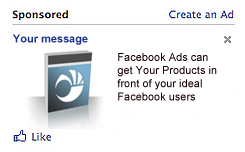 Facebook Ads can be seen in the right side column on Facebook pages where they have an allocated space. In that space, up to three ads may show at one time on any given page. These right-hand spaces might include three Facebook ads or one Facebook ad and one banner ad. In the second case, the banner ad will always appear below the Facebook ad.
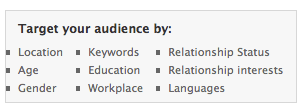
Facebook Ads are different to previous pay per click internet marketing tools where you had to select keywords to target your audience as you now can choose your ideal profile. You can target your ad by location, sex, age, keyword, relationship status, job title, workplace, or college. As you select each targeting criterion, Facebook will display the approximate number of users that your targeting encompasses "€“ really impressive!
Marketing Using Facebook on YouTube
The structure of the Ad is the title or headline, the image (110x80 pixels max), and the body text. You have a small area to attract your audience to click, read on for my top 5 tips.
Step 1 Set Your Goals and Identify Your Audience?
Before setting up a campaign, you should define the goals. Is the goal of the campaign to drive traffic? raise awareness? build Facebook fans? or generate leads?
This will define the purpose of the whole campaign, so it's important to get this step clarified before starting. As a marketer paying for clicks, the goals will help identifying what is most important to you when driving traffic to a page on Facebook or your own website. You should focus on making sure your advert is highly targeted to the most relevant, appropriate audience.
So, the next action is to think about who will be interested in the product or service you want to advertise. Is there a main age group, sex, location etc that buys (or is interested in) that product or service more than the others. Targeting this group will give you the best chance of finding success.
Step 2 Targeting Options
Facebook has a number of different targeting options, make sure you set the criteria is relevant to your business. For example if you have a service that only sells in a certain location, make sure you select the relevant country, city and the advert is better received if it is in that country's primary language.
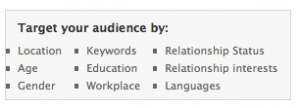 Think like the audience - what interests might they have that would qualify them as being interested in the campaign?
It is important to have a clear target segment in mind when launching a Facebook Ad so that you can take full advantage of the fine targeting that is possible based on the following filters:
- General demographics such as location, age and sex.
- Birthday - This is one of Facebook's latest advertising targeting filters and helps you to engage on a more personal level with customers on their birthdays wishing them a happy birthday with the offer of a free gift can only help your conversion rates.
- Education - You can use this factor to target based on people's level of education or on the schools that people went to e.g. announcing a ten year university reunion.
- Workplaces - Often you will know the types of or specific companies your target audience work for. If you want to gain new customers or spread awareness of your product within specific organizations this filter can be priceless.
- Relationship - Married? Single? In a relationship? This helps you target people based on their relationship status e.g. a bar or club targeting single people. But don't forget! Selecting any of these settings will remove all users that haven't selected a relationship status in their profile.
- Interested In - If a user's sexual preferences are relevant to whatever you are advertising this can be useful.
- Languages - It might seem obvious but trust me, a lot of people fall in to the trap - don't display ads to your target audience in a language they don't understand! Geo target your campaigns well. If you don't ship to Spain, don't advertise there. If you do, make it clear for your international visitors. If you offer free shipping in the ad, show different ads to locations that don't qualify.
Step 3 Using Images
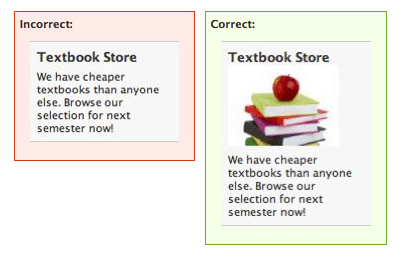
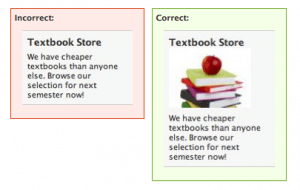 The image of the ad is a key part, make it attractive and relevant in your advert that is appropriate for the product or service being advertised. The maximum image size is 110 pixels wide by 80 pixels tall, so any text in images that are shrunk down to that size may be hard to read.
Ads without images will underperform compared to those ads with images. It"€™s difficult to tell exactly what type of image will bring the most clicks so you really need to split test multiple images.
Step 4 Keep the Ad Copy Simple
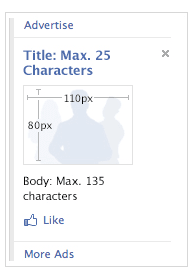 Create your advert so that it is as simple and easy to read as possible. Avoid long sentences or complex punctuation. Try to use simple, grammatically correct, complete sentences and language. It is good practice to use proper punctuation, punctuate the end of sentences, put spaces after full stops and commas, and avoid using hyphens instead of full stops.
Read the Facebook ad guidelines! Do not ignore these. If you do you have zero chance of getting your ad approved.
Don't try to fit every detail about your product or service into the advert. Make it clear what your product or service is so a user can tell what your website will be about, but save the details for your landing page.
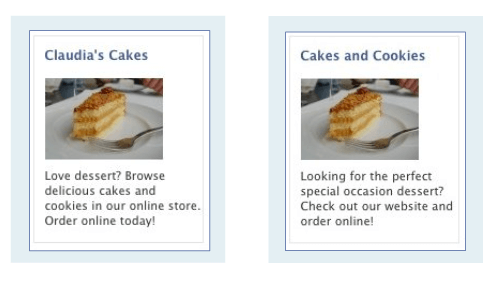
The Facebook ad copy is also very important for a good, attention-grabbing ad. While the image pulls in the users eyes, the title and body text are what cause the user to click onto the ad. In your copy try to ask questions, write like a testimonial and appeal to the user.
Step 5 Call to Action
Your advert should communicate a call-to-action along with the benefits of your product or service and avoid common ad mistakes. A call-to-action encourages users to click on your advert and this should explain to the user exactly what you expect them to do when they reach your landing page.
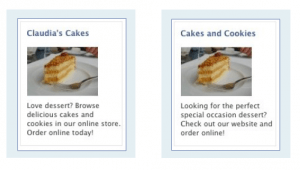
Useful call-to-action phrases include: buy, sell, order, browse, download, sign up and get a quote. Calling out the users attributes is an excellent opportunity to engage for example if you a targeting an audience who went to a certain college, mentioning that college in the copy would work well.
Summary
I would advise Marketers and Advertiser try this tool for yourselves, all you need is a Facebook account, which is free! Browse Facebook case studies to get an insight into how other companies are using this platform successfully. Once your own campaigns are up and running it is important to check monitor and make changes to the targeting, bid price, ad copy, and the array of other options that need to be tweaked and tested to ensure the campaign stays up to date. It is also critically important to measure the campaign budget and ensure that the spend is appropriate and generating a return. If the campaign is not reaching enough people, or the impressions are not high enough, the bid prices or targeting may need to be adjusted to make sure the campaign continues to run effectively and achieve the goals you set out at the start.
When you get some campaigns up and running which are successful, multiply the campaigns that do work and then cut out the ads with low click through rates. Let us know what you think of Facebook ads? What type of ads have made you click? and let us know about your challenges and share your stories below.