Facebook Insights team used a mixed methodology of data to analyse wedding planning behaviour and how mobile messaging apps are benefiting users.
This post is a vasriation of our usual #chartoftheday posts, as we summarise two studies from Facebook's insight division.
I was delighted to listen to the research managers at Facebook IQ, Facebook’s insight division, during their webinar as part of Qualtrics #MRWeek (Market Research Week). Naturally I was fascinated by their approach to how they take insights from one of the world's largest data sources: Facebook, as well as how they complement the data with other research too.
After scanning through the Facebook IQ website I found two brilliant studies, both are summarised below.
The first is about how conversation is changing due to the rise of mobile messaging applications. The Facebook Messaging Survey was actually undertaken with Nielsen with 12,500 respondents who are aged 18+ and have used messaging apps within the last 30 days. In this study, Facebook data was not integrated, but the research has some fascinating insight with could have business benefit. The research was published August 2016.
How mobile messaging apps are changing the conversation
56% of respondents expect the amount of mobile messaging they use to increase over the next two years and 59% are messaging more now than they did two years ago. Over half (53%) indicate they are more likely to buy from a retailer they can send a direct message to and nearly 7 in 10 (67%) expect to communicate more with businesses via messaging apps.
76% of respondents say messaging has improved their life.
Source: Facebook IQ and Nielsen: http://insights.fb.com/2016/08/04/more-than-a-message-the-evolution-of-conversation/
Facebook: Wedding planner
Now let's turn to a study which comprised of analysing Facebook’s own data, combined with Instagram data and a survey.
Three quarters (75%) believe that putting wedding photos on Facebook is a great way of celebrating their big day with more people, in addition a quarter (25%) used a personalised wedding hashtag on Instagram.
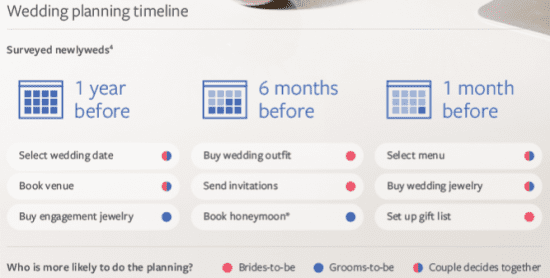
As can be seen from the data above, wedding dates and venues are booked a year in advance, with the outfits 6 months before and the menu 1 month before the big day.
Grooms are 1.72 times more likely to choose the #honeymoon destination and 65% of honey moons were bought online. Saturday is the most popular day to get married, with August being the most popular month.
Source: Facebook IQ http://insights.fb.com/2016/08/31/weddings-from-hashtags-to-honeymoons/